
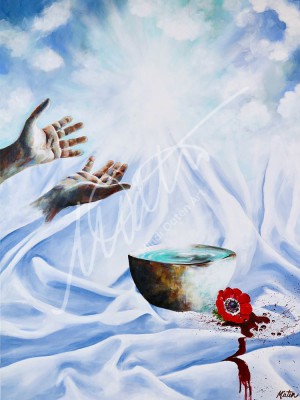
Covenant Blessings & Discipline
Discover Jesus as: Atonement Leviticus 26 Read on Bible Gateway (HCSB)
Lesson
Audio Only
Teaching Notes
INTRO
Today, we are studying Leviticus 26. As a reminder, Moses wrote Leviticus. Our one word in Genesis was Seed, and we saw how the seed pointed to the Messiah. Our one word in Exodus was Deliverer, and we saw Jesus as the Deliverer of His people bringing them out of Egypt. Our one word in Leviticus is Atonement. This word atonement means substitution, imputation, or death. Jesus took on our guilt and sin and died on our behalf.
TEACHING
Leviticus 26:1: God forbade Israel from making and worshipping idols or carved images - “for I am Yahweh your God.” The Mosaic covenant was conditional. This meant the people had to do something for God to keep His covenant. Nelson’s commentarypointed out that good leaders make sure their people know what they should and should not do, as well as clearly state the consequences for keeping or not keeping those expectations.1In Leviticus 26, Moses established what the Israelites were supposed to do, and what they were supposed to refrain from doing, to fulfill the covenant of the Lord. He also clarified the consequences if they didn’t fulfill the commands of the Lord. Wiersbe offered four reasons why the Israelites should have obeyed God’s commands: (1) “Because of who God is”; (2) “Because of what God did”; (3) “Because of where God dwells”; and (4) “Because of what God promised.”2
Leviticus 26:2: “You must keep My Sabbaths and revere my sanctuary; I am Yahweh.” God rested after six days of creation (Genesis 2:2) and declared the seventh day as holy (Genesis 2:3). God also established the Sabbath as a day of rest for the Israelites (Exodus 20:8–10). Thus, to revere something means to honor it. Because God dwelt in His sanctuary (the tabernacle), the Israelites could be in His presence.
Leviticus 26:3–5: Moses set forth God’s conditions: “If you follow My statutes and faithfully observe My commands.” When the Israelites were faithful, God promised to give them rain at the right time so the land would yield an abundant food supply. In fact, the land would produce so much that threshing would continue until the grape harvest, which would continue until it was time to sow again. God promised them plenty of food to eat as they lived securely in the land. However, they constantly tried to make it rain by worshiping Baal.
Leviticus 26:6–8: God made additional promises to Israel: I will make peace in the land. You will lie down with nothing to frighten you. I will remove dangerous animals. No sword will pass through your land. When you talk about Israel today, we don’t see this. Since there’s no peace in Israel right now, maybe it’s because they are not doing these things. God’s presence among them would enable them to pursue and overpower enemies who far outnumber them: “Five of you will pursue 100, and 100 of you will pursue 10,000.”
Leviticus 26:9: God’s promise to make them fruitful so they multiplied in number brought His previous promises to mind. In Genesis 1:28, God blessed Adam and Eve: “Be fruitful, multiply, fill the earth, and subdue it.” In Genesis 12:1–3, God promised Abram, “I will make you into a great nation, I will bless you, I will make your name great, and you will be a blessing. I will bless those who bless you, I will curse those who treat you with contempt, and all the peoples on earth will be blessed through you.” In Genesis 15:5, God promised Abram that his offspring would be as numerous as the stars in the sky.
Leviticus 26:10–13: God promised not to reject them, but to dwell with them and walk among them. God promises that He will not reject us. If you feel the spirit of rejection, it is not from Jesus, but the enemy. In Exodus 32, Aaron and all the Israelites messed up when they made the golden calf. But even though they messed up, God said, “I . . . will be your God, and you will be My people.” Paul repeated God’s restriction against idol worship and His promise to dwell among His people in 2 Corinthians 6:16. God broke their bonds of slavery in Egypt so they could live in freedom. He did the same for us. God wants a relationship with us every single day so we can experience His presence. Why wouldn’t you sign up for this?
Leviticus 26:14–17: Beginning in verse 14, God described the consequences the Israelites would face if they failed to obey God and broke their covenant with Him. MacArthur said the “wasting disease” could have been tuberculosis or leprosy.3 Their eyes would fail, and life would ebb away. They would sow seed that their enemies would eat. When God turned against them, they would be defeated by their enemies. They would flee even though no one chased them.
Leviticus 26:18–22: If these conditions didn’t cause Israel to obey God, He promised to discipline them “seven times” for their sins. The phrase “seven times” was repeated in verses 21, 24, and 28. God would make the sky like iron (no rain) and the land like bronze (hard ground) so it could not produce a crop. If Israel acted with hostility toward God, He would multiply the plagues “seven times” for their sins. God would send wild animals to attack them and their livestock, which indicated an extreme economic downturn.
Leviticus 26:23–26: If Israel refused to accept God’s discipline, He would strike them seven times for their sins. He would bring the swords of foreign nations “to execute the vengeance of the covenant.” God would send pestilence among them and deliver them into enemy hands. God would cut off their supply of bread so that ten women would have to use the same oven. They would not have enough food to eat.
Leviticus 26:27–33: If Israel didn’t obey, then God would act with “furious hostility” and discipline them “seven times” for their sins. The famine would be so great that they would eat the flesh of their sons and daughters. Such cannibalism was described in 2 Kings, Lamentations, and Jeremiah. God spelled out the consequences of their failure to keep the covenant. He would destroy their high places, cut down their altars, and pile their dead bodies on their idols. God would reject them! He would reduce their cities to ruin, refuse to smell the pleasing aroma of their sacrifices, devastate the land, allow their cities to become ruins, scatter them among the nations, and allow other nations to chase after them.
Leviticus 26:34–39: God scattered the Israelites into exile (Assyrian and Babylonian) so He could restore the land because they didn’t honor the Sabbath. Those left behind were so fearful of their enemies that even the sound of a leaf brought them fear. They stumbled over each other as they fled before their enemies. They perished among the nations because of their sin.
Leviticus 26:40–46: God knew the Israelites would sin against Him, so He offered an option that allowed them to restore their relationship with Him: “But if they will confess their sin and the sin of their fathers—their unfaithfulness that they practiced against Me.” When they confessed their sins, God promised to remember His covenant with Jacob, Isaac, and Abraham. God promised not to reject, destroy, or break covenant with the Israelites because He would remember His covenant with their fathers, whom He brought out of Egypt. What was God saying? God promised to give them a second chance.
CLOSING
The cross is our second chance. To the Israelites, it didn’t make sense that God would continually pour out His love for them. They were always messing up, but so do we. In the Old Testament they had the blood because they sacrificed animals on the Day of Atonement to receive forgiveness. But we don’t have to do that anymore because Jesus said that He is our second chance. God is always giving us another option. Today my prayer is that you will take that option and turn to Him.
Earl Radmacher, Ronald B. Allen, and H. Wayne House, eds., Nelson’s New Illustrated Bible Commentary (Nashville: Thomas Nelson, 1999), p. 190.
Warren W. Wiersbe, The Bible Exposition Commentary: Genesis–Deuteronomy (Colorado Springs, CO: David C. Cook, 2001), pp. 301–302.
John MacArthur, The MacArthur Bible Commentary (Nashville: Thomas Nelson, 2005), p. 163.
Questions
-
What was the Mosaic covenant (Leviticus 26; Deuteronomy 28)? How did this differ from the covenants God made with Abraham (Genesis 17:1–14) and other biblical covenants? (Genesis 9:8–17)
-
If the Israelites obeyed what God commanded in Leviticus 26:1–3, they would be rewarded for their obedience with the promises outlined in verses 4–13. Do you find conditional rewards based on obedience hard to comprehend? What is your reward for obedience to the Lord now (Matthew 25:21; Galatians 6:9; Colossians 3:23–24)? How does this encourage you to be obedient to what God asks of you?
-
In verses 14–39, God explained what He would do as a result of disobedience to His commands in verses 1–3. However, in verses 40–42, He gave them an opportunity to receive pardon from their punishment. What is our final pardon of eternal punishment and condemnation today? (John 3:16; 14:6; Acts 4:11–12; 1 John 1:9)
-
Paul quoted Leviticus 26:12 in 2 Corinthians 6:16. How do these verses challenge and encourage you? Why do you think Paul chose to quote this verse to the Corinthians?
-
What did the Holy Spirit highlight to you in Leviticus 26 through the reading or the teaching?

Daily Word
Laura Martin Leviticus 26:11-13
“I will place My residence among you, and I will not reject you. I will walk among you and be your God, and you will be My people. I am Yahweh your God, who brought you out of the land of Egypt, so that you would no longer be their slaves. I broke the bars of your yoke and enabled you to live in freedom.”
If the Israelites followed God’s statutes and faithfully observed His commands, the Lord promised to bless them abundantly! Not only would He bless the work of their hands, but His presence would be with them, bringing them ultimate peace and freedom. They had a choice to follow God or go their own way. God even gave them a second chance through confessing their sins, offering blood sacrifices, and turning back to Him. God desires strongly for His people to follow Him and trust Him.
The same is true today. The Lord, through the blood of Jesus, longs for you to follow Him and His ways each day. In Him, there is freedom, love, and peace. As a believer, the Holy Spirit takes residence in you, and He is with you always. Rest in that promise today, and make a choice to seek the Lord your God with all your heart, soul, mind, and strength.
“I will place My residence among you, and I will not reject you. I will walk among you and be your God, and you will be My people. I am Yahweh your God, who brought you out of the land of Egypt, so that you would no longer be their slaves. I broke the bars of your yoke and enabled you to live in freedom.”
— Leviticus 26:11–13
FURTHER SCRIPTURE
- Isaiah 57:15 — “For the High and Exalted One who lives forever, whose name is Holy says this: ‘I live in a high and holy place, and with the oppressed and lowly of spirit, to revive the spirit of the lowly and revive the heart of the oppressed.’”
- 1 Corinthians 3:16 — “Don’t you yourselves know that you are God’s sanctuary and that the Spirit of God lives in you?”
- 1 John 4:12 — “No one has ever seen God. If we love one another, God remains in us and His love is perfected in us.”
Lesson and Daily Word
Each day has two parts: the Lesson and the Daily Word. Use these buttons to go from one to the other.
Teaching Notes and Questions
Next to the video, these tabs show the Teaching Notes and the Questions. Your answer to a question saves when you leave the answer box.
The Bible passage
This link opens the passage on Bible Gateway, and that gives the passage its tick. If you read it in your own Bible, tick it by hand in Progress.
Your progress on this lesson
A part ticks itself when you play the video or audio to the end, read the notes or the Daily Word to the end, or answer every question. You can also tick a part by hand here.
Downloads
Here you can save the video, the audio and the lesson as PDF files. Downloads do not count toward your progress.
Need help?
Use this button to send us a question or tell us about a problem. You can also take this tour again from there.