
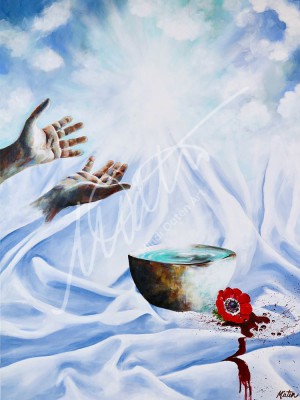
Dedicating Persons and Things
Discover Jesus as: Atonement Leviticus 27 Read on Bible Gateway (HCSB)
Lesson
Audio Only
Teaching Notes
INTRO
Welcome to the final lesson in Leviticus! After 72 lessons this might be one of the hardest. This lesson is about vows. When we think of vows, we think of wedding vows. We just studied Leviticus 26 where God said, “If you keep My commands, then I’ll give you an abundance of food, My presence, and peace in the land, but if you don’t do these things, then I will bring terror, disease, war, and hostility.” Now, Moses addressed making vows. Vows had nothing to do with the Law. R. K. Harrison said, “A vow to God placed a person or property in a special consecrated relationship which stood outside the formal demands of the law.”1Vows represent a special deal that someone makes with God.
Constable gave these descriptions of vows:
- We are not commanded to make vows at all.
- Vows are natural desires of people who make them because they love God or want something from Him.
- God expected His people to make vows.
- God expected them to actually keep their vows.2
Moses Moses recorded some extreme guidelines for the Israelites who made vows to the Lord. The importance of keeping a vow is confirmed throughout Scripture. Proverbs 20:25 says, “It is a trap for anyone to dedicate something rashly and later to reconsider his vows.” Before you flippantly make a vow to God, give it some thought. Ecclesiastes 5:4–5 says, “When you make a vow to God, don’t delay fulfilling it, because He does not delight in fools. Fulfill what you vow. Better that you do not vow than that you vow and not fulfill it.” When you make a vow to the Lord, you had better make sure you are going to do it.
Jesus also addressed the importance of carefully considering the vow we make to follow Him. In Luke 14:26–31, Jesus said: “If anyone comes to Me and does not hate his own father and mother, wife and children, brothers and sisters—yes, and even his own life—he cannot be My disciple. Whoever does not bear his own cross and come after Me cannot be My disciple. For which of you, wanting to build a tower, doesn’t first sit down and calculate the cost to see if he has enough to complete it? Otherwise, after he has laid the foundation and cannot finish it, all the onlookers will begin to make fun of him, saying, ‘This man started to build and wasn’t able to finish.’ Or what king, going to war against another king, will not first sit down and decide if he is able with 10,000 to oppose the one who comes against him with 20,000?”
If you make a vow, then your lifestyle, words, and actions better back it up. When you commit yourself to following after the Lord, you have to count the cost. That’s what Moses was after. That’s what Jesus is after.
TEACHING
Leviticus 27:1–4: God gave Moses specific instructions for the Israelites who made a special vow to the Lord. Making a special vow to dedicate persons to the Lord required payments to the priests of different amounts based on the age and sex of the person dedicated. For the 20 to 60 year-old age range, the cost was 50 shekels of silver for males and 30 shekels for females.
Leviticus 27:5–6: For those aged five to 20 years old, the cost was 20 shekels for a male and ten shekels for a female. If the person was one month to five years old, the cost was five shekels for a male and three shekels for a female. The parents made this vow before the Lord for the child. Later in Scripture, we see this demonstrated in the life of Hannah. In 1 Samuel 1:8–11, Elkanah saw Hannah crying and refusing to eat because she was distressed over her barrenness. Hannah went to the tabernacle where she prayed and wept before the Lord and pleaded, “LORD of Hosts, if You will take notice of Your servant’s affliction, remember and not forget me, and give Your servant a son, I will give him to the LORD all the days of his life, and his hair will never be cut” (v. 11). Hannah made a vow to God, which she fulfilled after Samuel was born.
Leviticus 27:7–8: If the person was 60 years and older, the cost was 15 shekels for a male and ten shekels for a female. Those who were too poor to pay the assessment, presented the person to the priest, who then set the value according to what the one who made the vow could afford.
Leviticus 27:9–13: Next, God talked about offering animals in their vows. When offered as part of a vow, the animal became holy, so the person could not exchange or make a substitution, either good or bad, for the offered animal. If the vow involved an unclean animal, one that was not acceptable as an offering, the priest would determine its value. If the owner wanted to redeem the unclean animal, he had to add one-fifth to its value.
Leviticus 27:14–25: These verses addressed vows made with property. When a man consecrated his house to the Lord, the priest assessed its value. To redeem the house, the man had to pay the entire value plus one-fifth. When a man consecrated any part of his field to the Lord, its value was assessed at 50 shekels to every five bushels of barley seed required to plant it. If the field was consecrated in the Year of Jubilee, its value remained as set. If consecrated after the Year of Jubilee, the priest determined the value according to the number of years that remained until the next Year of Jubilee. If the person who consecrated the field wanted it back, he had to pay the value plus one-fifth, and ownership transferred back to the man who consecrated it.
Leviticus 27:26–29: Some things were not redeemable. No one could consecrate the firstborn of their livestock because it already belonged to the Lord. If it was an unclean animal, it could be bought back by adding one-fifth to its value. Nothing that a man devoted to the Lord, whether man, animal, or land, could be sold or redeemed. A person could not take back his vow to the Lord. If he did, he would be put to death.
Leviticus 27:30–34: A tithe of everything from the land, grain from the soil or fruit of the trees, belonged to the Lord. If a man wanted to redeem any of his tithe, he had to add one-fifth to its value. Every tenth animal of a shepherd’s flock was holy to the Lord. God gave Moses these commands for the Israelites on Mount Sinai.
Wiersbe said there were three types of tithes that the Jews offered:
A tithe to the Levites/priests (Numbers 18:21–32).
A tithe that was “brought to the sanctuary and eaten before the Lord” (Deuteronomy 14:22–27).
“A tithe every three years to the poor”3 (Deuteronomy 14:28–29).
A tithe was money committed to the Lord, but a vow didn’t always mean that.
CLOSING
God expects us to keep our commitments to Him. We need to be honest with our dealings with Him. We are no different from the Israelites. We all need redemption, but it only comes through the great High Priest Himself. As Peter said, “For you know that you were redeemed from your empty way of life inherited from the fathers, not with perishable things like silver or gold, but with the precious blood of Christ, like that of a lamb without defect or blemish” (1 Peter 1:18–19).
What we have been talking about throughout the whole book of Leviticus is redemption through the blood of Christ. I don’t think we realize how much Christ has done for us. Jesus said, “I am your Atonement. I am your lamb without blemish.” Leviticus is a book with a lot of do’s and a lot of don’ts, but what I love about it is that there is hope. And this hope comes through the blood of Christ, and we all need to be redeemed.
R. K. Harrison, Tyndale Old Testament Commentary: Leviticus (Downers Grove, IL: InterVarsity Press, 1980), p. 235; quoted in Thomas Constable, Dr. Constable’s Expository (Study) Notes: Leviticus, p. 219; available online athttps://planobiblechapel.org/tcon/notes/pdf/leviticus.pdf.
Constable, p. 218.
Warren W. Wiersbe, The Bible Exposition Commentary: Genesis–Deuteronomy (Colorado Springs, CO: David C. Cook, 2001), p. 305.
Questions
-
What is a vow? What are examples of vows that you have made in your life?
-
What payment was to be made to the priest when making a vow (Leviticus 27:2–8)? Why do you think God instituted a payment system for making vows?
-
Read Ecclesiastes 5:3–7. How does this help you understand how God sees vows? What is the difference between making a vow to God and one made to men?
-
What does it mean to “redeem” something in Leviticus 27 (vv. 13, 15, 19, 27–28, 31)? What price was paid in order to redeem something? How does this compare to Christ in 1 Peter 1:18–19?
-
Do you see your decision to follow Jesus as a vow? What does God expect of us when we vow to follow Jesus? (Luke 14:25–33)
-
What did the Holy Spirit highlight to you in Leviticus 27 through the reading or the teaching?

Daily Word
Laura Martin Leviticus 27:9
“If the vow involves one of the animals that may be brought as an offering to the LORD, any of these he gives to the LORD will be holy.”
As Leviticus comes to an end, God gave Moses final commands for the Israelites. Specifically, they discussed making vows to the Lord and how the vows could be redeemed (essentially breaking the vows through a determined sum of money).
As believers, there is a cost to following Christ. Jesus said if you want to be His disciple, you must bear your own cross and follow Him. Jesus said believers who do not count the cost and hold loosely to all earthy things cannot be His disciples.
However, in all this, the beautiful truth is that Christ gave His life for you. Through His precious blood, Jesus came as the atonement for sinners. And life with Christ is free and full when you surrender all and follow Him. He is our forever hope.
“If the vow involves one of the animals that may be brought as an offering to the LORD, any of these he gives to the LORD will be holy.”
— Leviticus 27:9
FURTHER SCRIPTURE
- Luke 14:27 — “Whoever does not bear his own cross and come after Me cannot be My disciple.”
- Luke 14:33 — “In the same way, therefore, every one of you who does not say good-bye to all his possessions cannot be My disciple.”
- 1 Peter 1:18–19 — “For you know that you were redeemed from your empty way of life inherited from the fathers, not with perishable things like silver or gold, but with the precious blood of Christ, like that of a lamb without defect or blemish.”
Lesson and Daily Word
Each day has two parts: the Lesson and the Daily Word. Use these buttons to go from one to the other.
Teaching Notes and Questions
Next to the video, these tabs show the Teaching Notes and the Questions. Your answer to a question saves when you leave the answer box.
The Bible passage
This link opens the passage on Bible Gateway, and that gives the passage its tick. If you read it in your own Bible, tick it by hand in Progress.
Your progress on this lesson
A part ticks itself when you play the video or audio to the end, read the notes or the Daily Word to the end, or answer every question. You can also tick a part by hand here.
Downloads
Here you can save the video, the audio and the lesson as PDF files. Downloads do not count toward your progress.
Need help?
Use this button to send us a question or tell us about a problem. You can also take this tour again from there.