
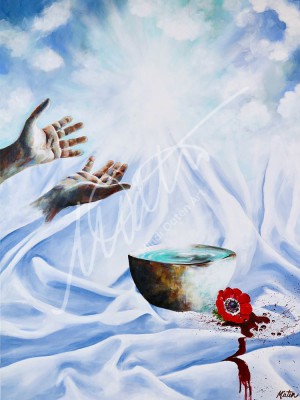
Sabbath Years and Jubilee
Discover Jesus as: Atonement Leviticus 25 Read on Bible Gateway (HCSB)
Lesson
Audio Only
Teaching Notes
INTRO
Yesterday, we learned about the Sabbath’s importance and the seven feasts the Israelites were commanded to celebrate. The purpose of the Sabbath and the feasts was to remember what God had done and would do for the Israelites. Every festival also points to the Messiah. As a recap, the seven festivals are:
- Passover
- Feast of Unleavened Bread
- Firstfruits
- Pentecost
- Feast of Trumpets
- Day of Atonement
- Feast of Booths
God gave the Israelites a new calendar. Today, we’re going to dive into what this looked like over the course of 50 years.
TEACHING
Leviticus 25:1–2: We know God is the one who owns the land (v. 2). We will also see that God owns the people (v. 55). Wiersbe noted that God truly is the “landlord.”1As the landlord, God wants to be sure His people know what to do. Verses 1–7 and 18–22 outline God’s rules for rest for the land.
Leviticus 25:3: The Israelites were to “sow your field for six years,” that is, to plant six years of crops.
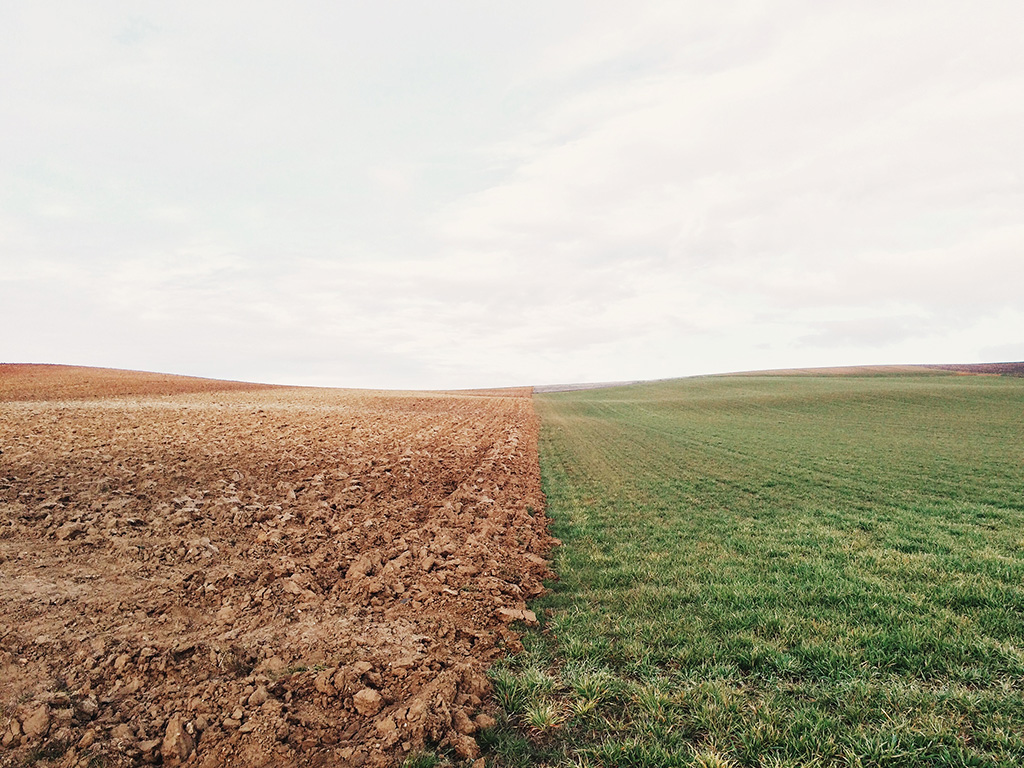
Leviticus 25:4: The seventh year was to be a Sabbath of complete rest. The Israelites were to work the land for six years. But in the seventh year, they were to do no work—they were not to sow the field or prune the vineyard in the seventh year. They were not to touch the land.
Leviticus 25:5: They were instructed not even to reap what grew on its own.
Leviticus 25:6–7: They could feed themselves, their slaves, their hired hands, the foreigners who stayed with them, and the livestock from what the land produced in the Sabbath year. Why is it healthy to give land rest? If you continually work it, you’re breaking it down so that it doesn’t have any natural nutrients left. Constable said that God didn’t want the Israelites to “work the land to death.”2Why was it important to stop working for the seventh year? It was a time to regather themselves and be refreshed.
Leviticus 25:8–17: Not only did the land rest, but both land and financial debts were released (Deuteronomy 15:1–11). Each year, during the Feast of Booths, all Israel assembled and read from the book of law (Deuteronomy 31:9–13). God wanted the Israelites to go back to the law so they could do it for another six years. Over the course of time, the Israelites forgot the law and festivals and didn’t follow them anymore (Jeremiah 25:8–11). They stopped doing all this. The whole land would become conquered by their enemies. Why? Because they didn’t obey God’s law. When there’s a standard that God has given (Leviticus 18), and we don’t follow it, there’s always a consequence (Leviticus 20). God told them to let the land rest. Instead, they played god and were so thickheaded about working the land that they worked it to death. So God sent them away for 70 years.
Leviticus 25:18: “You are to keep My statutes and ordinances.” Apparently, that didn’t happen. Because they didn’t keep God’s ordinances, they missed out on the blessings of verse 19.
Leviticus 25:19: “The land will yield its fruit so that you can eat, be satisfied, and live securely in the land.” They lost their land because they didn’t keep the Sabbath. They lost their land because they kept doing the work.
Leviticus 25:20–21: God promised to take care of the Israelites by giving them so many crops in the sixth year that it would be enough for three years!
Leviticus 25:22: Why did the Israelites need provision for three years? Since they wouldn’t sow in the seventh year, they would sow in the eighth year, but the crop wouldn’t come until the ninth year. They needed provision for years six, seven, and eight. God was not only going to provide for seven years but for the next 50 (Leviticus 25:8)! But the Israelites didn’t trust the Word of the Lord. All of this was just for the seven-year time period, but let’s look at the Year of Jubilee by going back to verse 8.
Leviticus 25:8–12: Moses outlined seven sets of seven years in which the seventh year was a Sabbatical year. In the 50th year, the trumpet blew on the Day of Atonement. This was the day the high priest went before the Lord to sacrifice the animals for atonement. Holiness was even present in the Israelite calendar. The Year of Jubilee was holy.
Leviticus 25:13–17: Wiersbe identified four words that God called for during the Year of Jubilee:
Repentance (v. 9): God called for repentance on the Day of Atonement.
Release (v. 10): They were to make sure everyone had been released!
Rest (v. 11): They were not to sow, reap, or harvest but to eat what had been given to them.
Restoration (vv. 13–17): both property and land.3
Leviticus 25:18–23: Fruit came from observing the Sabbath years and Year of Jubilee. God owned the land, so it was never permanently sold. The poor and the rich were equal. No one could ever have more than another for the long term because everything evened out in the Year of Jubilee. When a person walks through this process of repentance, release, rest, and restoration, they have been revived!
CLOSING
Do you want to know how you ultimately get this revival? Isaiah prophesied that a coming Messiah was going to do these things. The Spirit of the Lord has anointed the Messiah to bring good news to the poor, heal the brokenhearted, and proclaim liberty for the captives and freedom for the prisoners (Isaiah 61:1). Isaiah described what happened in the Year of Jubilee! He went on to say, “and to proclaim the year of the LORD’s favor.” The year of the Lord’s favor was the Year of Jubilee!
The Israelites went through a time of repentance, release, rest, and restoration so they could start all over again, and I believe the way that we start all over again (according to Luke 4) is by turning to Christ. We turn to Him for freedom! The way we experience the Year of Jubilee in our own lives is through Jesus Christ.
Warren Wiersbe, Be Holy. (Wheaton, IL: Victor Books, 1996), p.149.
Thomas Constable, Dr. Constable’s Expository (Study) Notes: Leviticus, p. 200; available at https://planobiblechapel.org/tcon/notes/pdf/leviticus.pdf
Wiersbe, p.153.
Questions
-
When does the Sabbatical year occur? When does the Jubilee year occur? (Leviticus 25:2, 8–9)
-
Why did God command the Israelites to give the land a Sabbath of complete rest on the seventh year (Leviticus 25:4)? What was God’s blessing for obeying this command? (Leviticus 25:20–22)
-
In Leviticus 25:23, God reminded the Israelites that the land actually belonged to Him and that they were just foreigners. How did that bring them hope? How does knowing this world isn’t our home give us hope? (Exodus 19:5; 1 Chronicles 29:15; Hebrews 11:13–16)
-
Were the Israelites faithful to keep the Sabbath years for the land? What was their punishment (Leviticus 25:4; 26:34, 43; 2 Chronicles 36:21; Jeremiah 25:11)? How have you been a good steward of God’s land?
-
What was the incredible promise that God gave for obeying His command about the land (Leviticus 25:18–22)? What promises has the Lord made to you and fulfilled because of your obedience and His faithfulness?
-
What did the Holy Spirit highlight to you in Leviticus 25 through the reading or the teaching?
Daily Word
Laura Martin Leviticus 25:4-5; Leviticus 25:17-18
“But there will be a Sabbath of complete rest for the land in the seventh year, a Sabbath to the LORD: you are not to sow your field or prune your vineyard. You are not to reap what grows by itself from your crop, or harvest the grapes of your untended vines. It must be a year of complete rest for the land. ” — Leviticus 25:4-5 “You are not to cheat one another, but fear your God, for I am Yahweh your God. You are to keep My statutes and ordinances and carefully observe them, so that you may live securely in the land.” — Leviticus 25:17-18
The Lord gave Moses clear instructions for the Israelites to observe a Sabbath rest for the land every seventh year. The Lord explained in detail how this would work. The Israelites would have a sufficient crop every sixth year to provide enough to carry them through the Sabbath year and even the year following the Sabbath. God promised the Israelites that they would live securely in the land if they kept His statutes and ordinances and carefully observed them. Can you imagine physically not working for an entire year, trusting the Lord to provide everything you need? And yet, what was their alternative? They could have taken matters into their own hands, doing what they wanted and what they thought best.
In the same way, the Lord instructs you to rest in Him, trusting He will provide as you follow His ways. So why is it so hard to let go of control, rest with unwavering faith in God’s promises, and do things His way? Today, seek the Lord for rest, and trust in His ways and His plans for your day. Let go of control and walk by faith.
“But there will be a Sabbath of complete rest for the land in the seventh year, a Sabbath to the LORD: you are not to sow your field or prune your vineyard. You are not to reap what grows by itself from your crop, or harvest the grapes of your untended vines. It must be a year of complete rest for the land.”
— Leviticus 25:4–5
“You are not to cheat one another, but fear your God, for I am Yahweh your God. You are to keep My statutes and ordinances and carefully observe them, so that you may live securely in the land.”
— Leviticus 25:17–18
FURTHER SCRIPTURE
- Psalm 147:7–9 — “Sing to the LORD with thanksgiving; play the lyre to our God, who covers the sky with clouds, prepares rain for the earth, and causes grass to grow on the hills. He provides the animals with their food, and the young ravens, what they cry for.”
- Matthew 6:24 — “No one can be a slave of two masters, since either he will hate one and love the other, or be devoted to one and despise the other. You cannot be slaves of God and of money.”
- Matthew 11:28–29 — “Come to Me, all of you who are weary and burdened, and I will give you rest. All of you, take up My yoke and learn from Me, because I am gentle and humble in heart, and you will find rest for yourselves.”
Lesson and Daily Word
Each day has two parts: the Lesson and the Daily Word. Use these buttons to go from one to the other.
Teaching Notes and Questions
Next to the video, these tabs show the Teaching Notes and the Questions. Your answer to a question saves when you leave the answer box.
The Bible passage
This link opens the passage on Bible Gateway, and that gives the passage its tick. If you read it in your own Bible, tick it by hand in Progress.
Your progress on this lesson
A part ticks itself when you play the video or audio to the end, read the notes or the Daily Word to the end, or answer every question. You can also tick a part by hand here.
Downloads
Here you can save the video, the audio and the lesson as PDF files. Downloads do not count toward your progress.
Need help?
Use this button to send us a question or tell us about a problem. You can also take this tour again from there.