
The Sabbath and The Feasts
Discover Jesus as: Atonement Leviticus 23-24 Read on Bible Gateway (HCSB)
Lesson
Audio Only
Teaching Notes
INTRO
Leviticus 23 and 24 are about a calendar. Wiersbe wrote, “God gave Israel a calendar that was tied to the rhythm of the seasons and the history of the nation. It was an unusual calendar because it not only summarized what God had done for them in the past, but it anticipated what God would do for Israel in the future.”1There were seven feasts and festivals. Some of these feasts and festivals were more celebratory than others. I want to unfold these seven feasts and festivals, and how every one of them points to the Messiah.
TEACHING
Leviticus 23:1–2: We hear people mention Yom Kippur. It is one of God’s appointed festivals. They all point to the Messiah. God wanted them to have appointed times on their calendar to celebrate and remember. It could last for one day, several days, or several weeks.
Leviticus 23:3–4: Every seventh day, the Israelites were to do no work. This was not to be mistaken for the festivals. Anything that involved work could not be done. Today in old city Jerusalem, you can’t even carry a camera on the Sabbath. We observe Sunday because that was the day Jesus came back to life. Don’t get hung up on what day it is, but take a day of rest. Find your own Sabbath. These sacred assemblies were to be proclaimed at their appointed times.
Leviticus 23:5: Passover is on the first month at twilight on the fourteenth day of the month (March/April) and is celebrated for only one day. The Israelites were to kill the perfect lamb, take hyssop and dip it in the blood, and put it on the doorposts and lintels of their homes. This was first done in Egypt so that the Spirit of Death would pass over their firstborn children inside the home.
In Matthew 26:17, Jesus celebrated the Passover. How does the Passover point to Christ? First Corinthians 5:7 says to clean out the old yeast before making a new batch. We are indeed unleavened, for Christ our Passover Lamb has been sacrificed. Jesus came to fulfill the Old Testament.
Leviticus 23:6: The Festival of Unleavened Bread was on the fifteenth day of the same month and lasted for seven days (March/April). During these days, one was to eat unleavened bread. Yeast was symbolic for sin. No yeast meant no sin.
Leviticus 23:7–8: The first day held a sacred assembly, and they were not to work. The Israelites were to present a fire offering for seven days. Then, on the seventh day, they held a sacred assembly and were not to work. The first and seventh days were the same. They were to eat unleavened bread every single day. There are three festivals which the males are required to participate in, and this is one of them. Second Corinthians 5:21, “He made the One who did not know sin to be sin for us, so that we might become the righteousness of God in Him.” Unleavened bread speaks to the sinlessness of Christ.
Leviticus 23:9–14: Firstfruits was celebrated in March or April. The Israelites were to bring the best of the barley harvest. The priest waved the sheaf to the Lord, thanking Him for the harvest. For just one day, the Firstfruits was celebrated on the sixteenth day of the first month of Nissan, right in line with Passover and the Festival of Unleavened Bread. MacArthur says, “Firstfruits symbolized the consecration of the whole harvest to God and was a pledge of the whole harvest to come.”2First Corinthians 15:20 says, “But now Christ has been raised from the dead, the firstfruits of those who have fallen asleep.” The firstfruits point to the resurrection of Christ. Christ is the firstfruits of those who have fallen asleep.
Leviticus 23:15–22: Pentecost was celebrated seven complete weeks from the day they brought the sheaf offering, counting 50 days until the day after the seventh Sabbath. They were to present a new grain offering to the Lord in May/June. “Fifty” in Greek means Pentecost. The Israelites were to bring two loaves of bread baked with yeast, four quarts of flour, seven male lambs, a year old and without defect, one young bull, and two rams. Then they would sacrifice one male goat as a sin offering and two lambs that were a year old as a fellowship offering.
The priest would wave two lambs before the Lord as a wave offering together with the bread as firstfruits. They made a proclamation and were not to do any work. This was the wheat harvest. They were not to reap to the very edges of the land but were to leave them for the poor people. Acts 1:5 says, “For John baptized with water, but you will be baptized with the Holy Spirit not many days from now.” Acts 2:4 says, “Then they were all filled with the Holy Spirit and began to speak in different languages, as the Spirit gave them ability for speech.” This was another festival that was mandatory for the males to participate in. In the Christian mindset, this starts with Easter and extends for 50 days.
Leviticus 23:23–25: Festival of the Trumpets was celebrated on the seventh month on the first day of the month for one day (Sept/Oct). This was one complete day of rest, commemoration, and jubilation. There was a sacred assembly and an offering made to the Lord by fire. In Israel, this is known as Rosh Hashanahand you will see people blowing trumpets. Matthew 24:31 says, “He will send out His angels with a loud trumpet, and they will gather His elect from the four winds, from one end of the sky to the other.” Israel’s regathering by Christ has not taken place yet. This is the second coming of the Messiah.
Leviticus 23:26–32: On the Day of Atonement, everybody would put their sins on one goat and then send that goat into the desert. They would then kill a second goat. This was celebrated on the tenth day of the seventh month (Sept/Oct) for just one day. This was the day of repentance. Jews know it as Yom Kippur. They had a sacred assembly and did no work. The Israelites were to practice self-denial and present a fire offering. They were making atonement for themselves before the Lord. First Corinthians 15:3 says, “For I passed on to you as most important what I also received: that Christ died for our sins.” Ephesians 5:2 says, “And walk in love, as the Messiah also loved us and gave Himself for us, a sacrificial and fragrant offering to God.”
Leviticus 23:33–44: Festival of Tabernacles was also known as Festival of Booths and was celebrated on the fifteenth day of the seventh month (Sept/Oct) and lasted for seven days. On the first day, they were not to do any work as they celebrated that God brought the people out of Egypt and put them in booths. They made little booths out of trees and lived in them for the seven days. This was another festival that all males must attend (Deuteronomy 16:16). They still do this today. You can walk down their sidewalks and see the booths. Zechariah 14:16 says, “Then all the survivors from the nations that came against Jerusalem will go up year after year to worship the King, the Lord of Hosts, and to celebrate the Festival of Booths.” This has not happened yet. Zechariah was prophesying.
CLOSING
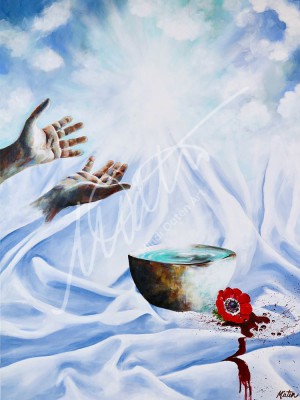
These are the seven festivals, and they all point to Jesus! Pretty cool picture. There’s a lot more here that we will cover tomorrow.
Warren W. Wiersbe, The Bible Exposition Commentary: Genesis–Deuteronomy (Colorado Springs, CO: David C. Cook, 2007), p. 227.
John MacArthur, The MacArthur Bible Commentary (Nashville: Thomas Nelson Publishers, 2005), p. 160.
Questions
-
Name the seven annual feasts Israel celebrated as listed in Leviticus 23.
-
What was the significance of the one-week celebration of the Festival of Unleavened Bread (Exodus 12:14–20)? How has Christ fulfilled this celebration (1 Corinthians 5:7–8)?
-
How long did the Feast of Harvest occur after Passover (Leviticus 23:15–16)? How were the Israelites commanded to celebrate Feast of Harvest (also known as Pentecost)? How was the celebration of Pentecost described in the New Testament (Acts 2:1–4)? The Feast of Harvest was a joyous celebration. How can you continually celebrate your joy in the Holy Spirit (Romans 14:17)?
-
The details for the priests regarding the Day of Atonement are found in Leviticus 16. What was the responsibility of the people during this day (Leviticus 23:26–32)?
-
Look for the connection in the following questions regarding the festivals and Christ: During what festival was Jesus crucified (Leviticus 23:5; John 19:14)? During what festival was He buried and then resurrected?
-
What did the Holy Spirit highlight to you in Leviticus 23—24 through the reading or the teaching?

Daily Word
Laura Martin Leviticus 23:1
“The LORD spoke to Moses: ‘Speak to the Israelites and tell them: These are My appointed times, the times of the LORD that you will proclaim as sacred assemblies.’”
The phrase “sacred assembly” occurs eleven times in just one chapter. These assemblies served as a time for people to set aside their routine work and activities and focus on worshipping the Lord. The Lord described each of the eight different days designated as sacred assemblies, such as Passover, Festival of Unleavened Bread, and Day of Atonement. You too were created to worship the Lord. It may be through fasting, sacrifices and offerings, rejoicing in His goodness, or resting in His promises.
As a New Testament believer, you are no longer instructed to celebrate these specific sacred assemblies. However, Paul instructed believers to rejoice always and in everything give thanks! Today, give thanks, and remember the Lord’s faithfulness in your life. Give thanks for the trials that have strengthened your faith and the joys in life that display God’s goodness and kindness! The Lord is worthy of your praise and thanksgiving!
“The LORD spoke to Moses: ‘Speak to the Israelites and tell them: These are My appointed times, the times of the LORD that you will proclaim as sacred assemblies.’”
— Leviticus 23:1-2
FURTHER SCRIPTURE
- Lamentation 3:22–23 — “Because of the LORD’s faithful love we do not perish for His mercies never end. They are new every morning; great is Your faithfulness!”
- 1 Corinthians 10:31 — “Therefore, whether you eat or drink, or whatever you do, do everything for God’s glory.”
- 1 Thessalonians 5:16–18 — “Rejoice always! Pray constantly. Give thanks in everything, for this is God’s will for you in Christ Jesus.”
Lesson and Daily Word
Each day has two parts: the Lesson and the Daily Word. Use these buttons to go from one to the other.
Teaching Notes and Questions
Next to the video, these tabs show the Teaching Notes and the Questions. Your answer to a question saves when you leave the answer box.
The Bible passage
This link opens the passage on Bible Gateway, and that gives the passage its tick. If you read it in your own Bible, tick it by hand in Progress.
Your progress on this lesson
A part ticks itself when you play the video or audio to the end, read the notes or the Daily Word to the end, or answer every question. You can also tick a part by hand here.
Downloads
Here you can save the video, the audio and the lesson as PDF files. Downloads do not count toward your progress.
Need help?
Use this button to send us a question or tell us about a problem. You can also take this tour again from there.