
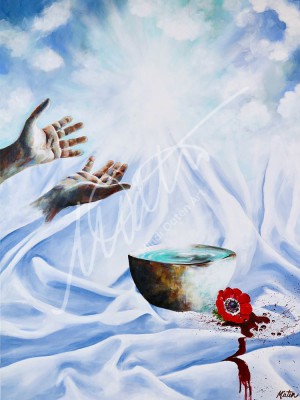
Day of Atonement
Discover Jesus as: Atonement Leviticus 16 Read on Bible Gateway (HCSB)
Lesson
Audio Only
Teaching Notes
INTRO
Chapter 16 is the center of Leviticus, and it’s in the center, the heart, of the Pentateuch. So far, we’ve talked about animals, skin diseases, and bodily discharges, and it’s been exhausting. We did see hope in chapter 14 with the option for the lepers to be cleansed. Leviticus 16 points to our one word for the book of Leviticus: Atonement. This word atonementmeans substitution. It means that Jesus is our substitution. He took what we deserved. Imputation means transfer of guilt. We are sinners, but Jesus took our guilt. Jesus took death so we may have life. Atonement is the word that pointed to the Messiah. In this chapter, we see Atonement come to life.
TEACHING
Leviticus 16:1–2: The Lord spoke to Moses after the death of Aaron’s two sons, Nadab and Abihu, and said that Aaron could not go into the Holy Place whenever he wanted (as his sons had done). If you play games with God, you’ll die. The Lord wanted them to know how to approach the Holy of Holies correctly. God set the stage. In the Old Testament, this was the Day of Atonement (Yom Kippur), and it was also seen in the New Testament as the Fast (Acts 27:9).
John MacArthur simplified the 15 steps for the Day of Atonement.1To make this easier to follow, each step is listed below, with the appropriate verse numbers from chapter 16.
- The high priest washed and dressed in a specific way (v. 4).
- The high priest offered the bull as a sin offering for himself and for his family (vv. 3, 6, 11). This blood took on the guilt and death meant for Aaron and his family as a sin offering. In this, Aaron admitted his sins also. In humility, he was being obedient to the Lord.
- The high priest entered the Holy of Holies with the bull’s blood, the incense, and the fiery coals from the altar of the burnt offering (vv. 12–13). The fire that entered the Holy of Holies had to come from the Lord Himself.
- The high priest sprinkled the bull’s blood seven times on the mercy seat that was on top of the Ark of the Covenant (v. 14). Mercy seat means “place of atonement.” The substitutionary blood was placed on top of the mercy seat and brought about atonement for himself and eventually all of the people of Israel.
- The high priest left the Holy of Holies and went back to the courtyard. He casts lots for the two goats: one lot for the Lord and the other for azazel (vv. 7–8). This was the most important sin offering for the entire year because it covered all their sins, even the ones they had failed to specifically acknowledge!
- The high priest sacrificed one goat as a sin offering for the people. It was proper protocol for Aaron to take care of his own sin before offering a sacrifice for the people (vv. 5, 9, 15; Numbers 6).
- The high priest reentered the Holy of Holies and sprinkled the blood on the mercy seat and on the Holy Place (vv. 15-17; Exodus 30:10).
- The high priest then returned to the altar of burnt offering and cleansed it with the blood of the bull and the goat (vv. 11, 15, 18–19).
- The goat that wasn’t killed (the scapegoat) was “dispatched” into the wilderness (vv. 20–22). Aaron placed his hands on the goat’s head and confessed Israel’s sins over it. The scapegoat carried all the sins into the wilderness.
- The goat keeper led the scapegoat into the wilderness and was required to cleanse himself (v. 26).
- The high priest removed his special clothes. He then washed himself again and put on his regular high priest clothes (vv. 23–24a).
- The high priest offered two rams as a burnt offering, one for himself and one for the people (v. 24b).
- The fat of the sin offering was burned (v. 25).
- The bull, goat, and sin offerings, were carried outside of the camp to be burned (v. 27).
- The one who burned the sin offering had to cleanse himself (v. 28).
There’s no more tabernacle today. There’s actually no more temple today. If there’s no tabernacle or temple, there are no more goats to sacrifice. Jewish people are no longer sacrificing animals for their sins. That’s because all this pointed to something more. This Day of Atonement pointed to the ultimate substitutionary Atonement, Jesus Christ. We no longer have to go through all this because we have the Messiah. This was good for then, but it no longer applies today. How do I know? Because there’s no longer a temple, so the Jewish people can no longer find atonement (through these sacrifices). Jesus has taken care of it once and for all. Jesus brings life through His blood (Leviticus 17:11).
Now, let’s see what the scapegoat looks like through the lens of Christ:
Matthew 20:28: Jesus came to give His life as a ransom for many. Jesus was the scapegoat. He took on our sins for us, and He was killed for us.
John 1:29: John the Baptist recognized Jesus as “The lamb of God who takes away the sins of the world.”
2 Corinthians 5:21 gives us an ongoing picture of substitutionary atonement. Jesus, who knew no sin, took on our sin. When we don’t give Him our sins, things stay inside of us and discharges start happening. We bring things on ourselves when we try to carry the sin ourselves.
Galatians 1:4: Since there’s no longer a temple or a tabernacle, we need someone to take our sin for us. Jesus said, “I will take it for you, I will be your Atonement.”
Galatians 3:13: Christ has redeemed us. He took our curse.
Hebrews 9:28: Jesus was offered once, and His sacrifice paid for the sins of all. The Israelites had to do this process over and over, but not Jesus. When Jesus comes again, He will come bearing salvation.
Hebrews 10:1–10: The sacrifices on the Day of Atonement had to be made every year because they pardoned sin temporarily. “We have been sanctified through the offering of the body of Jesus Christ once and for all” (v. 10).
1 Peter 2:24: Jesus bore our sins when He was crucified so that “we might live for righteousness; you have been healed by His wounds.”
The Day of Atonement made sense because it pointed to Jesus, who did all these things so that we can be forgiven.
CLOSING
Leviticus 16:12 says, “Then he must take a firepan full of fiery coals from the altar before the LORD and two handfuls of finely ground fragrant incense and bring them inside the veil.” The high priest had to take the bull’s blood inside the veil (verse 12). In Matthew 27:51, when Jesus’ blood was shed, that veil was split in two because the temple was no longer needed. Hebrews 9:15 says, “Jesus is the mediator of a new covenant, so that those who are called might receive the promise of the eternal inheritance, because a death has taken place for redemption from the transgressions committed under the first covenant.” Jesus is the answer now. Because of His death, His shed blood, we can receive redemption.
John MacArthur, The MacArthur Bible Commentary (Nashville: Thomas Nelson, 2005), pp. 153-154.
Questions
-
Once a year, the Israelites participated in the Day of Atonement. What was the purpose of it (Leviticus 16:29–30)? For how long were they truly cleansed from their sin? (Hebrews 10:1–4)
-
The high priest had to wash before putting on his “holy garments”, which were linen garments like the other priests wore, and not the embroidered ephod or the breast piece with the precious stones. How did this point to Philippians 2:5–7 and Hebrews 2:17?
-
A bull was offered by the high priest as a sin offering for himself and his household before he could atone for the sins of the people. As our High Priest, why didn’t Jesus offer a bull, either literally or figuratively? (Hebrews 4:1; 7:26–28)
-
What was the purpose of the scapegoat? (Luke 23:13–25)
-
The high priest put the incense on the fire before the Lord (Leviticus 16:12–13), and the cloud of incense covered the mercy seat. What did the incense represent? (Psalm 141:2; Luke 1:10; Revelation 5:8; 8:3–4)
-
According to Leviticus 16:15, who offered the sin offering? How did Christ fulfill this according to Hebrews 7:27; 9:14, 25–26?
-
Only the high priest could enter the Holy of Holies behind the veil (Leviticus 16:17; Hebrews 9:7). How, when, and why did this change? (Matthew 27:51; Hebrews 4:16; 10:19–20)
-
What did the Holy Spirit highlight to you in Leviticus 16 through the reading or the teaching?

Daily Word
Laura Martin Leviticus 16:30
“Atonement will be made for you on this day to cleanse you, and you will be clean from all your sins before the LORD.”
The Day of Atonement was a significant annual event for the Israelites. Just in case their sins hadn’t been covered by any of the various offerings, this day purified them and allowed them to be clean before the Lord. The Israelites went through many ceremonial steps. They placed their wrongdoings on a goat and sent it into the wilderness in an effort to get rid of their sin.
In the New Covenant, Jesus is the Lamb of God who takes away your sin. As believers in Christ our Messiah, you no longer have to go through the ceremonies and rituals to find freedom and forgiveness. You are freed from your sin and can live in righteousness because of Christ’s own sacrifice. Now that’s something to celebrate and give thanks for!
“Atonement will be made for you on this day to cleanse you, and you will be clean from all your sins before the LORD.”
— Leviticus 16:30
FURTHER SCRIPTURE
- Leviticus 16:22 — “The goat will carry on it all their wrongdoings into a desolate land, and he will release it there.”
- John 1:29 — “The next day John saw Jesus coming toward him and said, ‘Here is the Lamb of God, who takes away the sin of the world!’”
- 2 Corinthians 5:21 — “He made the One who did not know sin to be sin for us, so that we might become the righteousness of God in Him.”
Lesson and Daily Word
Each day has two parts: the Lesson and the Daily Word. Use these buttons to go from one to the other.
Teaching Notes and Questions
Next to the video, these tabs show the Teaching Notes and the Questions. Your answer to a question saves when you leave the answer box.
The Bible passage
This link opens the passage on Bible Gateway, and that gives the passage its tick. If you read it in your own Bible, tick it by hand in Progress.
Your progress on this lesson
A part ticks itself when you play the video or audio to the end, read the notes or the Daily Word to the end, or answer every question. You can also tick a part by hand here.
Downloads
Here you can save the video, the audio and the lesson as PDF files. Downloads do not count toward your progress.
Need help?
Use this button to send us a question or tell us about a problem. You can also take this tour again from there.