
Bodily Discharges
Discover Jesus as: Atonement Leviticus 15 Read on Bible Gateway (HCSB)
Lesson
Audio Only
Teaching Notes
INTRO
Leviticus 11 described clean and unclean animals. Leviticus 12 dealt with women’s menstrual cycles and purification after childbirth. Leviticus 13 talked about skin diseases. Then it got better in Leviticus 14, where the cleansing rituals for people whose skin diseases had healed were described. Remember, the priest went out to the lepers, just like Jesus came to seek and save the lost. We discussed the ritual of cleansing, the process for going from unclean to clean.
TEACHING
Leviticus 15:1: The Lord always spoke to Moses and Aaron, the prophet and the priest.
Leviticus 15:2–15: These verses address unnatural discharges for males. Remember, the role of the priest included distinguishing between the holy and the common, the clean and unclean (Leviticus 10:10). Whenever a man had a discharge from his body, he was unclean. Commentators say this was probably diarrhea or constipation. Anyone who touched the unclean person or their belongings (bedding, furniture, saddle) had to wash and was also unclean until evening. Commentator John McArthur said any kind of uncleanness—ceremonial, natural, physical, and spiritual—prevented people from worshipping in the tabernacle.1In Matthew 23:25–28, Jesus pronounced woes on the Pharisees who focused on outward cleanliness while neglecting internal purity. There’s something about this image of physical discharge that is like spiritual discharge. Spiritual discharge is like a religious toxin. A discharge is unnatural whether it is spiritual or physical. When the man was cured of the discharge, he had to wait seven days, wash himself and his clothes, and sacrifice two turtledoves/pigeons to the priest at the tent of meeting.
Leviticus 15:16–18: These verses addressed natural discharges for males. After reading these requirements, you could take the view that a man and woman having sex was a bad thing because they were considered unclean. But, notice that nobody has to offer any sacrifices. Within marriage, it was okay to have intercourse; it’s not unnatural. They only had to wash and remained unclean until evening. Wiersbe said, “God established marriage for the blessing and benefit of mankind.”2These verses were a blessing. This was how God designed it. Sex is not sinful. This discharge was messy, but all you had to do was clean it up.
Leviticus 15:19–24: These verses addressed natural discharges for females. During menstruation, the woman and all her belongings (bedding, furniture) were considered unclean, as well as anyone who touched her. In 2 Samuel 11:4, David saw Bathsheba when she was bathing to purify herself from her uncleanliness. In Genesis 31:26–35, Rachel took Laban’s household idols when Jacob took his family back to his father’s land. She put them under her seat on the camel. When she told Laban that she was unclean because of her period, he didn’t ask her to get up. Laban knew he would be unclean if he touched her or her belongings.
If a man slept with her during her menstruation and got blood on him, he remained unclean for seven days, and every bed he touched would be unclean. Wiersbe said, “God created sex for pleasure as well as for procreation, but pleasure that isn’t
disciplined soon becomes bondage and then torture.”3There were times not to have sexual relations. Hebrews 13:4 instructs us to keep the marriage bed undefiled, keep it clean.
Leviticus 15:25–30: These verses addressed unnatural discharges for females. When a woman had a discharge of blood that was longer than her menstruation or at the wrong time for her menstruation, she was unclean and anything she touched was unclean. Wiersbe pointed out, “A prolonged hemorrhage would be both physically painful and religiously disastrous, for the woman would be perpetually unclean.”4When she was cured of the discharge, after seven days she would bring two turtledoves or pigeons to the priest for him to sacrifice at the tent of meeting to make atonement for her.
An example of this was given in Mark 5:25–34. A woman who suffered from bleeding for 12 years, despite consulting many doctors and spending everything she had for treatment, had become even worse. She heard about Jesus, so she entered the crowd. Everyone she touched became unclean! When she touched Jesus’ robe, He technically became unclean. But when she touched His robe, instantly the flow of blood ceased. She sensed she had been cured of her affliction. When we pray for healing in others, it’s okay to ask them if they sensed or felt anything! Jesus asked who touched Him because He knew that power had gone out from Him. Because of her faith in Jesus, He told her to go in peace for she had been healed.
CLOSING
The reality is that we all have to go through the human things. Why do we have all these lists? What good does it do for us to understand the difference between holy and common, clean and unclean? John MacArthur said, “When one considers that God was training a people to live in His presence, it becomes apparent that these rules for maintenance of personal purity, pointing to the necessity of purity in the heart, were neither too stringent nor too minute.”5should honor what the Lord is asking because He wants us to be holy. These lists of discharges, natural and unnatural, point to us being holy in real human life.
John MacArthur, The MacArthur Bible Commentary (Nashville: Thomas Nelson, 2005), pp. 152–153.
Warren W. Wiersbe, The Bible Exposition Commentary: Genesis–Deuteronomy (Colorado Springs, CO: David C. Cook, 2001), p. 1273–274.
Wiersbe, p. 274.
Wiersbe, p. 275.
MacArthur, p. 153.
Questions
-
Throughout Leviticus 15, if anyone touched an unclean person with a discharge or touched something they sat on or laid on, they also became unclean. Contrast that with Exodus 29:37. What happened if a person touched the altar that had been consecrated?
-
In Leviticus 15:25 and 27, a woman with an ongoing discharge of blood was unclean, and whomever she touched became unclean and had to change their clothes and bathe. In Mark 5:25–34, a woman in this condition touched Jesus’ garment. Do you think He became unclean? Why or why not?
-
Why do you think Leviticus 15:12 instructed them to break an earthen vessel if someone with a discharge touched it? In 2 Corinthians 4:7–10, believers are referred to as earthen vessels. In our uncleanness (sin), why are we not destroyed? (1 John 1:9)
-
According to Leviticus 15:31, what was the purpose of the laws in chapter 15? How does Christ separate us from our “uncleanness” so that we will not die? (Romans 6:21-22; 1 John 1:7)
-
What did the Holy Spirit highlight to you in Leviticus 15 through the reading or the teaching?

Daily Word
Laura Martin Leviticus 15:30-31
“The priest is to sacrifice one as a sin offering and the other as a burnt offering. In this way the priest will make atonement for her before the LORD because of her unclean discharge. You must keep the Israelites from their uncleanness, so that they do not die by defiling My tabernacle that is among them.”
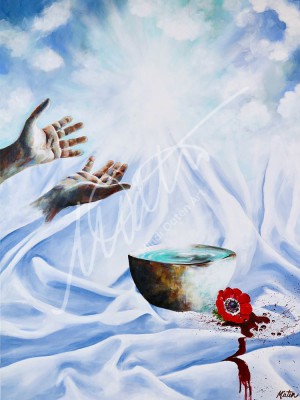
The Lord clearly sees all things, and nothing is hidden from His eyes. Even in the middle of bodily discharge, the Lord knows, He sees, and He makes a way for His people to come back into His holy presence.
In the same way the priests made atonement for the Israelites, Jesus made atonement for you. He sees the sin you think is hidden from Him. He says, “I am here to forgive you and reconcile you to Myself.” He longs for you to have a pure heart and clean hands. Turn to Him, and He will receive you as you are, purifying you with His grace-filled love.
“The priest is to sacrifice one as a sin offering and the other as a burnt offering. In this way the priest will make atonement for her before the LORD because of her unclean discharge. You must keep the Israelites from their uncleanness, so that they do not die by defiling My tabernacle that is among them.”
— Leviticus 15:30–31
FURTHER SCRIPTURE
- Psalm 24:3–4 — “Who may ascend the mountain of the LORD? Who may stand in His holy place? The one who has clean hands and a pure heart, who has not set his mind on what is false, and who has not sworn deceitfully.”
- Hebrews 4:13 — “No creature is hidden from Him, but all things are naked and exposed to the eyes of Him to whom we must give an account.”
- 1 Peter 1:22–23 — “By obedience to the truth, having purified yourselves for sincere love of the brothers, love one another earnestly from a pure heart, since you have been born again—not of perishable seed but of imperishable— through the living and enduring word of God.”
Lesson and Daily Word
Each day has two parts: the Lesson and the Daily Word. Use these buttons to go from one to the other.
Teaching Notes and Questions
Next to the video, these tabs show the Teaching Notes and the Questions. Your answer to a question saves when you leave the answer box.
The Bible passage
This link opens the passage on Bible Gateway, and that gives the passage its tick. If you read it in your own Bible, tick it by hand in Progress.
Your progress on this lesson
A part ticks itself when you play the video or audio to the end, read the notes or the Daily Word to the end, or answer every question. You can also tick a part by hand here.
Downloads
Here you can save the video, the audio and the lesson as PDF files. Downloads do not count toward your progress.
Need help?
Use this button to send us a question or tell us about a problem. You can also take this tour again from there.