
Two Warnings
Discover Jesus as: Atonement Leviticus 17 Read on Bible Gateway (HCSB)
Lesson
Audio Only
Teaching Notes
INTRO
Our one word for Genesis is Seed. How did the seed throughout Genesis point to Christ, the Seed? Our one word for Exodus was Deliverer. Jesus is our Deliverer and will deliver His people out of the wilderness. Our one word for Jesus in the book of Leviticus is Atonement. In chapter 16, when all the sin was put onto a goat, it brought forgiveness to the people. Leviticus 17 is all about the blood.
Hebrews 9:11–14 says that Jesus’ blood cleansed us and redeemed us once and for all. Wiersbe cited the work of Leon Morris, which states the word “blood” is found 460 times in all the Scriptures, 362 times in the Old Testament, and 13 times in Leviticus 17.1Hebrews 10:10 says, “We have been sanctified through the offering of the body of Jesus Christ once and for all.” First Peter 3:18 also emphasized Christ “suffered for sins once for all.” First John 2:2 says Jesus was the propitiation for the sins of the whole world. The key verse is Leviticus 17:11: “For the life of a creature is in the blood, and I have appointed it to you to make atonement on the altar for your lives, since it is the lifeblood that makes atonement.”
The Time to Revive wristband includes these key Scripture verses from the Old Testament: Ecclesiastes 7:20 – SIN. Deuteronomy 24:16 – DEATH. Leviticus 17:11 – BLOOD. Dr. Martin DeHaan said, “No man ever dies until his blood ceases to circulate.”2Isaiah 53:5 – FAITH. Jeremiah 31:33 – LIFE.
TEACHING
Leviticus 17:1–2: told Moses to speak to Aaron, his sons, and all the Israelites. In these verses, God gave two major warnings.
Leviticus 17:3–9: Warning #1—Forbidden Sacrifices. Offering sacrifices anywhere other than the entrance to the tent of meeting was strictly forbidden. Nelson’s commentarystates this warning did two things.3First, God didn’t want people killing animals just to kill them on their own. There needed to be purpose and accountability. Second, God was trying to prevent them from offering sacrifices to idols. Even if it really was a sacrifice to the Lord, they still needed to come to the tabernacle to do this, because God is a jealous God (Exodus 20:4-5; 34:14; Isaiah 42:8).
Leviticus 17:5–6: Sacrifices could no longer be offered in the open country. They were now offered before the priest at the entrance of the tent of meeting. Fellowship sacrifices meant you had a relationship with the Lord. It was a celebration. Why would they want to do that out in the open if it was a fellowship offering? They would want to do it with other people. They missed the point if they did it themselves. The priest sprinkled the blood on the Lord’s altar as a pleasing aroma to the Lord.
Leviticus 17:7: “They must no longer offer their sacrifices to the goat demons that they have prostituted themselves with.” This means they had offered some sacrifices that were not appropriate. The goat demon was a god the Egyptians and other ancient cultures worshipped.4The god may have been represented in the form of goats and satyrs. In Genesis 47:1–6, when Israel settled in Goshen, there was a good chance they entered into this worship of satyrs.5
Leviticus 17:8–9: Any person, Israelite or foreigner, who offered sacrifices anywhere other than the tent of meeting “must be cut off from his people.” There are multiple interpretations for “cut off from his people.” The phrase might have meant killed, excommunicated, or taken to a different place. The warning was for them to stop their false worship and bring their offerings to the Lord instead.
Leviticus 17:10–16: Warning #2—Eating Blood and Carcasses Prohibited. God promised to turn against anyone who ate blood and to cut him off from his people. This went back to the issue of clean and unclean. Blood was the substitution; it made atonement for the people. None of the people of Israel were allowed to eat blood (v. 12).
In John 6:54, Jesus said, “Anyone who eats My flesh and drinks My blood has eternal life.” Partaking in Jesus’ blood gives us life. Hebrews 9:22 reminds us that shedding of blood has to take place before we can receive forgiveness. Life doesn’t come from false worship and sacrificing to idols, so we must not misuse blood because we understand where it comes from.
Leviticus 17:13–16: Anyone who hunted down a wild animal or bird was commanded to bury its blood in the dirt. MacArthur said it was customary for hunters to pour out the blood of their kill as an offering to the god of the hunt.6practice was strictly forbidden for God’s people.
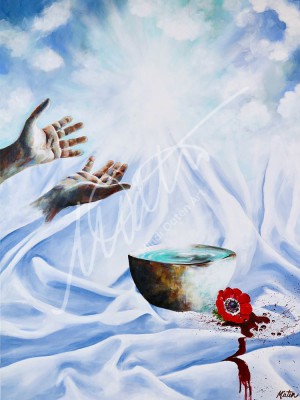
Leviticus 17 gave two warnings: don’t participate in false worship and don’t misuse the blood. In the Old Testament, the high priest took care of the blood on their behalf. It’s the same with Jesus. If we misuse the blood and try to do it ourselves, it doesn’t work.
CLOSING
It’s appropriate to close this lesson with a discussion of the power of Jesus’ blood:
- 1 Peter 1:19: Jesus’ blood is precious.
- Romans 5:9: By Jesus’ blood, we are justified.
- Ephesians 1:7: In Jesus’ blood, we have redemption.
- Revelation 1:5: By Jesus’ blood, we are set free.
- Hebrews 13:12: By Jesus’ blood, we are sanctified.
- 1 John 1:7: By Jesus’ blood, we are cleansed.
- Acts 20:28: Jesus purchased us with His blood.
Leviticus 17 emphasized that we don’t have to do anything. Jesus purchased our freedom. He gave us sanctification, justification, and redemption. Jesus cleansed us, washed us, and set us free because He purchased us with His own blood. That is true Atonement.
Warren W. Wiersbe, The Bible Exposition Commentary: Genesis–Deuteronomy (Colorado Springs, CO: David C. Cook, 2001), p. 278.
Martin R. DeHaan, “The Chemistry of the Blood,” available from https://www.jesus-is-savior.com/BTP/Dr_MR_DeHaan/Chemistry/01.htm.
Earl Radmacher, Ronald B. Allen, and H. Wayne House, eds., Nelson’s New Illustrated Bible Commentary (Nashville: Thomas Nelson, 1999), p. 177.
Thomas Constable, Dr. Constable’s Expository (Study) Notes: Leviticus, p. 144; available online at https://planobiblechapel.org/tcon/notes/pdf/leviticus.pdf.
Nelsons, p. 177.
John MacArthur, The MacArthur Bible Commentary (Nashville: Thomas Nelson, 2005), p. 155.
Questions
-
The Lord no longer allowed men to offer sacrifices anywhere but before the tabernacle. Why was this? (Leviticus 17:7; Exodus 20:3–6)
-
What was the consequence if they did not follow the Lord’s command to bring their sacrifices to the doorway of the tent of meeting? (Leviticus 17:4, 8–9) Why was this so strongly enforced?
-
How were those hunting supposed to deal with their catch according to Leviticus 17:13?
-
Notice that the command to not eat blood included the strangers among them. In Leviticus 17:11, what was the purpose of blood? What was the consequence for those who ate it? (Leviticus 17:10)
-
What did the Holy Spirit highlight to you in Leviticus 17 through the reading or the teaching?

Daily Word
Laura Martin Leviticus 17:11
“For the life of a creature is in the blood, and I have appointed it to you to make atonement on the altar for your lives, since it is the lifeblood that makes atonement.”
The Lord instructed His people once again. This time, He specifically outlined how they were to make sacrifices before Him. Thirteen times the word “blood” was mentioned in this chapter. The power of blood brings forgiveness in both the Old and New Testaments.
The blood serves as the atonement in your life. God sent His Son Jesus and purchased your forgiveness with His blood. In Christ alone, and in no other, we have abundant life. Seek Him, and you will find life abundantly because of the blood of Christ.
“For the life of a creature is in the blood, and I have appointed it to you to make atonement on the altar for your lives, since it is the lifeblood that makes atonement.”
— Leviticus 17:11
FURTHER SCRIPTURE
- John 10:10 — “A thief comes only to steal and to kill and to destroy. I have come so that they may have life and have it in abundance.”
- Ephesians 1:7 — “We have redemption in Him through His blood, the forgiveness of our trespasses, according to the riches of His grace.”
- 1 John 2:2 — “He Himself is the propitiation for our sins, and not only for ours, but also for those of the whole world.”
Lesson and Daily Word
Each day has two parts: the Lesson and the Daily Word. Use these buttons to go from one to the other.
Teaching Notes and Questions
Next to the video, these tabs show the Teaching Notes and the Questions. Your answer to a question saves when you leave the answer box.
The Bible passage
This link opens the passage on Bible Gateway, and that gives the passage its tick. If you read it in your own Bible, tick it by hand in Progress.
Your progress on this lesson
A part ticks itself when you play the video or audio to the end, read the notes or the Daily Word to the end, or answer every question. You can also tick a part by hand here.
Downloads
Here you can save the video, the audio and the lesson as PDF files. Downloads do not count toward your progress.
Need help?
Use this button to send us a question or tell us about a problem. You can also take this tour again from there.