

The Lord's Love For Israel
Discover Jesus as: Unconditional Love Hosea 9-11 Read on Bible Gateway (HCSB)
Lesson
Audio Only
Teaching Notes
INTRO
Hosea was one of the minor prophets. He was a prophet to the northern and southern kingdoms of Israel. God had Hosea go through a broad array of experiences as part of his prophecy. First, Hosea was told by God to marry Gomer. They had three children. The names of the children were indicative that God was scattering the Israelites and that He would not care for them in their present state. Gomer becomes promiscuous or was possibly a prostitute. And Hosea had to watch all this unfold.
TEACHING
Hosea 11: God told Hosea that he had to unconditionally love his wife, who did not care for him. Basically, his wife said to Hosea that he was not good enough for her. The image of Hosea and giving unconditional love to Gomer represents the image of God doing the same for Israel. God proved that He had Unconditional Love for Israel.
Israel was thick-headed. Hosea stated that Israel was like a stubborn cow. God said to Hosea that He would scatter his children and not care for them. They would either be killed or at least held in captivity.
On Hosea 11:9, J. Vernon McGee wrote that the verse referred to Israel as backsliding heifers:
“At this time, Israel was beginning to look to prosperity as the indication that everything was all right in the nation. In other words, they were trying to increase the value of their money, and they were attempting to increase the productivity of the land. But God said they were nothing but a backsliding heifer. He had blessed them with prosperity, and that had blinded them to the reality of their spiritual condition.”1
They looked more to the land and its prosperity than to God.
Previously Israel had looked to false prophets and false religions. Now they had turned to prosperity and material possessions. Hosea compared Israel to a prostitute. Israel felt its security was in the land, but was about to lose the land. If Israel wanted to keep their lifestyle, it would lead to the nation’s death and destruction. Parents would be handing their children over for death. Sinful lifestyles led to shorter life spans. MacArthur explains, “Agricultural prosperity had resulted in spiritual corruption (cf. Ezekiel 16:10-19).”2 Israel had turned away from the Lord, its first love. God would ultimately judge the nation.
Hosea 11:1-4: Here is the picture of God loving His people so much that He took them out of Egypt. The people He brought out of Egypt would then be part of the lineage of Jesus. That explained why Hosea stated that the word from God was that, out of these people, He would call His son. What is seen through these passages is that God loved His people and God loved His Son. Both were pulled out of Egypt.
But the more that the people of Israel heard the truth, the more they sacrificed offerings to Baal and worshipped other idols. Hosea 12:10 explains that God spoke to the people through the prophets. But it appeared that the more Hosea spoke to the people, the more they left and turned away from God.
In verse 1, a progression started with the image of a child and a father. As God was with the people, He tried to teach them. The people had forgotten that God had given life to them. Israel was going after its own heart and Gomer was going after her own heart.
The image in verse 4 was that God led the people with ropes of love. Nelson’s Commentary explains, “The image of v. 3 changes as God is compared to a farmer and Israel to a beast of burden. The Lord placed restraints––cords and bands––on Israel, but His regulations, rather than being overly strict or harsh, reflected His concern for the people’s wellbeing.”3 God was showing them the path and the process.
Hosea 11:5-7: In verses 5-7, the Scripture addressed the punishment that was to come. The nation of Israel would not return to the land of Israel. There was not a humble spirit in the people. They refused to repent.
Verse 7 was the second reference of backsliding. There were three major references to backsliding in Hosea: 4:16, 11:7, and 14:4. The term “backslider” was often used by prophets. MacArthur explains that the term “is used here in such a way as to clarify who is a backslider. He belongs in the category of the fool, the wicked, and the disobedient and he is contrasted with the godly wise. It is a word that the prophets used of apostate unbelievers.”4 Jeremiah 3:6 gives reference to the prostitute and the unfaithful, in comparison to Israel.
Hosea 11:8-9: Verse 8 contains the theme verse for all of Hosea. God’s compassion was stirred and His heart was touched. There was still sympathy for the people. Romans 5:8 referenced the same unconditional love as expressed in verse 8. God would not come to His people in rage.
Hosea 11:10-12: In verse 10, the image of God is a lion. It is a peaceful picture. Constable states, “In the future, the Israelites would follow the Lord (cf. vv. 2, 5). He would again announce His intentions like a roaring lion (Hosea 5:14; 13:7; Amos 1:2; 3:8). However, this time it would not be as a lion about to devour its prey, but as a lion leading its cubs to safety. The Israelites would follow Him, ‘trembling from the west’ (Hosea 3:5; Exodus 19:16).” 5
The reference of the people coming from the west was of the people coming from all parts of the land and coming back to God. Coming from the east would have been a return from captivity. This was the gathering of people back into God’s presence.
CLOSING
Hosea 11:8 is like a window into the heart of God, Unconditional Love. God’s love would not let them go. This was a picture of the returning of God’s children using the image of Hosea’s children returning to him to explain it. The lion roaring was an image of God calling all people to come back to Him. Ultimately the people would return back to the land and back to God (Isaiah 11:11-12). It was a picture of hope. God’s love would not let the people go.
J. Vernon McGee, Thru the Bible Volume 3: Proverbs-Malachi, (Nashville Thomas Nelson Publishers, 1983), p. 644.
John MacArthur, The MacArthur Bible Commentary (Nashville: Thomas Nelson Publishers, 2005), p. 978.
John MacArthur, The MacArthur Bible Commentary (Nashville: Thomas Nelson Publishers, 2005), p. 978.
MacArthur, p. 712.
Thomas Constable, Constable’s Expository (Bible Study Notes): Hosea; p. 90, available at https://planobiblechapel.org/tcon/notes/pdf/hosea.pdf.
Questions
-
In Hosea 9:1, Hosea accused Israel of harlotry or whoredom. How does James 4:4 describe this kind of spiritual “adultery”? Does the Lord hold Israel to a different standard concerning idol worship than the other nations?
-
Read Hosea 9:16a and Mark 11:13-14, 20. How are these two passages similar? Do you think the passage in Mark could be symbolic as well as literal?
-
In Hosea 10:5, Hosea mentioned Beth-aven. The meaning of this name is believed to be “House of wickedness.” Why did the Lord refer to the city of Bethel (House of God) as Beth-aven? What was significant about Bethel in the Old Testament? (Genesis 28:11-19; Judges 20:18; 26-28; Hosea 12:4)
-
In Luke 23:30, Jesus quoted Hosea 10:8. What was the situation at the time He quoted Hosea, and why do you think He quoted it?
-
When you read Hosea 10:12-13, do you think of Galatians 6:7-8? Do you see a pattern of Scripture using planting and reaping analogies? (Proverbs 11:18; Hosea 10:13; Luke 6:38; 1 Corinthians 3:6-9; 2 Corinthians 9:6; Galatians 6:7-9)
-
In Matthew 2:15, the writer quoted Hosea 11:1. Who was Matthew referencing? Who else in Israel’s past was called out of Egypt? How do you think Matthew recognized this as a Messianic prophecy?
-
What did the Holy Spirit highlight to you in Hosea 9—11 through the reading or the teaching?
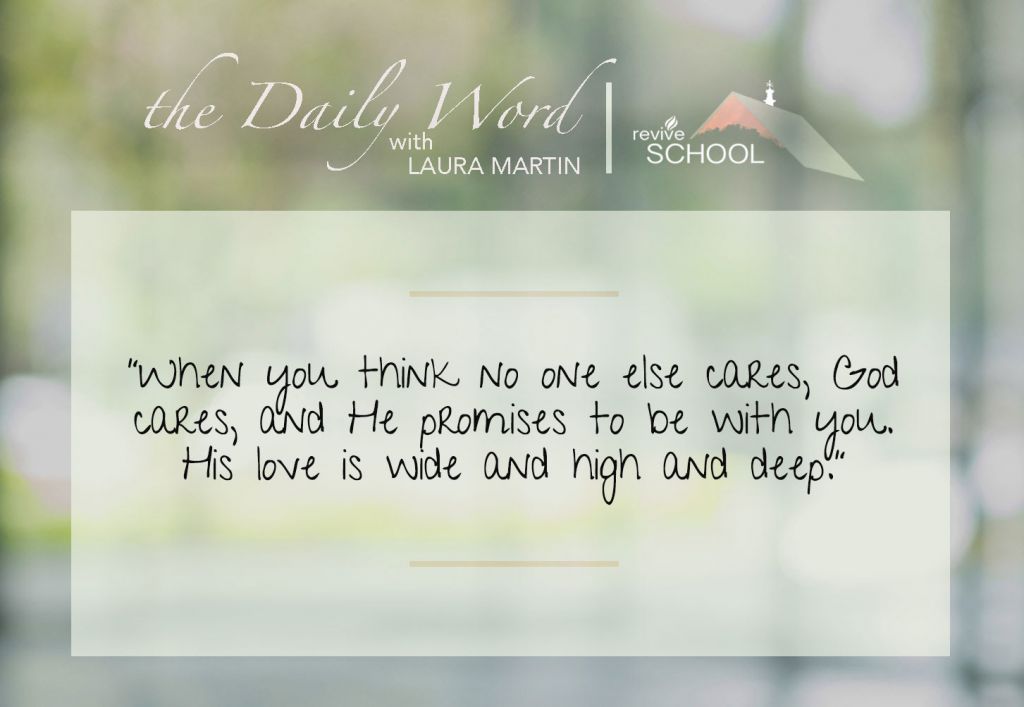
Daily Word
Laura Martin Hosea 11:8
“How can I give you up, Ephraim? How can I surrender you, Israel? How can I make you like Admah? How can I treat you like Zeboiim? I have had a change of heart; My compassion is stirred!”
FURTHER SCRIPTURE
- Hosea 11:1, 4 — “When Israel was a child, I loved him, and out of Egypt I called My son… I led them with human cords, with ropes of love. To them I was like one who eases the yoke from their jaws; I bent down to give them food.”
- Romans 5:8 — “But God proves His own love for us in that while we were still sinners, Christ died for us!”
- Ephesians 3:17-19 — “And that the Messiah may dwell in your hearts through faith. I pray that you, being rooted and firmly established in love, may be able to comprehend with all the saints what is the length and width, height and depth of God’s love, and to know the Messiah’s love that surpasses knowledge, so you may be filled with all the fullness of God.”
Lesson and Daily Word
Each day has two parts: the Lesson and the Daily Word. Use these buttons to go from one to the other.
Teaching Notes and Questions
Next to the video, these tabs show the Teaching Notes and the Questions. Your answer to a question saves when you leave the answer box.
The Bible passage
This link opens the passage on Bible Gateway, and that gives the passage its tick. If you read it in your own Bible, tick it by hand in Progress.
Your progress on this lesson
A part ticks itself when you play the video or audio to the end, read the notes or the Daily Word to the end, or answer every question. You can also tick a part by hand here.
Downloads
Here you can save the video, the audio and the lesson as PDF files. Downloads do not count toward your progress.
Need help?
Use this button to send us a question or tell us about a problem. You can also take this tour again from there.