

False Repentance
Discover Jesus as: Unconditional Love Hosea 5-8 Read on Bible Gateway (HCSB)
Lesson
Audio Only
Teaching Notes
INTRO
Hosea is a minor prophet. The only difference between major prophets, (Isaiah, Jeremiah, Ezekiel, Daniel), and minor prophets is the length of the book. God asked Hosea to live out his prophetic ministry. God commanded Hosea to marry Gomer. Jezreel, meaning “God scatters” was their son. They later had a daughter whose named meant “No compassion,” and a son named “Not my people.” Even though God’s people would be scattered, even though He wouldn’t show them compassion, and even though they would be treated as if they were not His people, God constantly showed His people Unconditional Love. This was modeled in the life of Hosea.
Gomer was a promiscuous wife. We’re not sure if she was promiscuous before they were married or if her behavior started after they were married. Either way, Gomer was unfaithful to Hosea. In the process of being unfaithful, she didn’t value Hosea. Gomer became a picture of Israel who was unfaithful to the Lord and who didn’t value Him. God led Hosea to unconditionally love his wife as a picture of how God loves His people.
TEACHING
Hosea 5: As J. Vernon McGee noted, chapter 5 begins with a denunciation of Israel’s leadership, both the priests and the king, by God.1 Everyone in Israel would stumble because of their wickedness (v. 5). As tragedy began to strike the nation, the people would go looking for God, but God did not respond (v. 6). Even Unconditional Love can be tough love. Once Ephraim realized “his sickness,” he turned to Assyria for help and not to the Lord (v. 13). This was the unfaithfulness represented by Gomer. Unfortunately for Israel, the king of Assyria “cannot cure you or heal your wound” (v. 13). God compared the judgment that would fall on Israel to a lion tearing them apart and carrying them away (v. 14). Afterwards, God’s presence would depart until Israel recognizes “their guilt and seek My face” (v. 15). Sometimes we have to hit absolute rock bottom before we are ready to repent and seek the Lord.
Hosea 6:1-3: The people of Israel spoke in the first three verses. They recognized that the damage that has been done to them has been at the Lord’s hand: “He has torn us; He has wounded us” (v. 1). While they were technically correct, Wiersbe noted that the language used described “a nation’s false repentance.”2 The people have not taken responsibility for their own sin. Their attitude seems to be, “Since God did this to us, He’s going to have to fix it.” While the people talked about knowing God and pursuing Him, there was a complete absence of repentance.
Hosea 6:4-6: God responded by comparing the Israelites’ faithfulness to him to “the morning mist” and “dew that vanishes” (v. 4). God was more concerned with the condition of the Israelites’ hearts and their relationship with Him than He was with the practice of their religion (v. 6). The Israelites could play the part, but God wanted more than just their religious observance. Samuel had expressed the same sentiment: “Then Samuel said, ‘Does the Lord take pleasure in burnt offerings and sacrifices as much as in obeying the Lord? Look: to obey is better than sacrifice, to pay attention is better than the fat of rams. For rebellion is like the sin of divination, and defiance is like wickedness and idolatry. Because you have rejected the word of the Lord, He has rejected you as king’” (1 Samuel 15:22-23). David expressed the repentant attitude that the Lord sought: “You do not want a sacrifice, or I would give it; You are not pleased with a burnt offering. The sacrifice pleasing to God is a broken spirit. God, You will not despise a broken and humbled heart” (Psalm 51:15-16).
Hosea 6:7: God accused Israel of violating the covenant they made with Him. The covenant to which the Lord referred was the Mosaic covenant made between God and Israel at Mt. Sinai: “Now if you will listen to Me and carefully keep My covenant, you will be My own possession out of all the peoples, although all the earth is Mine, and you will be My kingdom of priests and My holy nation.’ These are the words that you are to say to the Israelites” (Exodus 19:5-6). Israel’s betrayal of their covenant with God was reminiscent of Adam’s betrayal of God all the way back in the garden (v. 7).
Hosea 6:8-11: Gilead and Shechem, referenced in verses 8-9 for the sins they committed, were meant to be cities of refuge. Israel’s sin was so great that even the cities of refuge had become places that harbored sin. Nelson’s Commentary points out that these were cities that were meant to provide calm environments in which people could find refuge, but they have become contaminated with sin.3 If it could get worse, God had personally witnessed His people’s infidelity (v. 10). While the Lord singled out Israel (the Northern Kingdom) for their infidelity, MacArthur noted, “the prophet reminds them that they have a day of reckoning also awaiting them.”4
God desired that Israel have a broken and contrite heart over their sin. But Israel was content to make a show of repentance and ask God to help them, even though they had no conviction of their own sin. Isaiah described the kind of heart that God requires: “For the High and Exalted One who lives forever, whose name is Holy says this: ‘I live in a high and holy place, and with the oppressed and lowly of spirit, to revive the spirit of the lowly and revive the heart of the oppressed’” (Isaiah 57:15). Hosea portrayed the Israelites as lacking this kind of lowly and contrite heart. They were more concerned with how they would get out of the terrible situation in which they found themselves and they were counting on God to bail them out without repentance.
Hosea 7: In spite of everything, God promised that He would heal His people. But they would “be exposed” when healing came (v. 1). God had seen all of Israel’s sins. As a result, they had “become like a silly, senseless dove” that bounced back and forth between Egypt and Assyria looking for relief (v. 11).
Hosea 8: God continued to depict Israel’s unfaithfulness to Him. On top of everything else, they added idolatry to their offenses. God’s frustration reached a high point: “How long will they be incapable of innocence (v. 5)"?
CLOSING
Isn't this how we function in we live a lifestyle of sin, looking for the next fix? It doesn't work. Hosea 6, 7, and 8, is about Israel faking it so they could keep having their fixes through sin! In spite of everything, God still loved His people. In obedience to his call, Hosea still loved Gomer.
J. Vernon McGee, “Notes on Hosea,” https://www.blueletterbible.org/Comm/mcgee_j_vernon/notes-outlines/hosea/hosea-outline.cfm.
Warren Wiersbe, The Wiersbe Bible Commentary: Hosea (Colorado Springs: David C. Cook, 2002), p. 322.
Earl Radmacher, Ronald B. Allen, and H. Wayne House, eds., Nelson’s New Illustrated Bible Commentary (Nashville: Thomas Nelson, 1999), p. 1032.
John MacArthur, The MacArthur Bible Commentary (Nashville: Thomas Nelson, 2005), p. 977.
Questions
-
Where else in Scripture is the latter and the former rain mentioned as in Hosea 6:3 (Joel 2:23; Acts 2:17-21)? Are there any differences between the two references?
-
Jesus said that love/mercy is more important than burnt offerings (Matthew 9:13; 12:7). Are those passages teaching the same thing as in Hosea 6:6? Why?
-
The people of Israel were compared to a half-baked cake (Hosea 7:8). What are the issues with a half-baked cake? Why were they compared to cake?
-
What did the Holy Spirit highlight to you in Hosea 5—8 through the reading or the teaching?
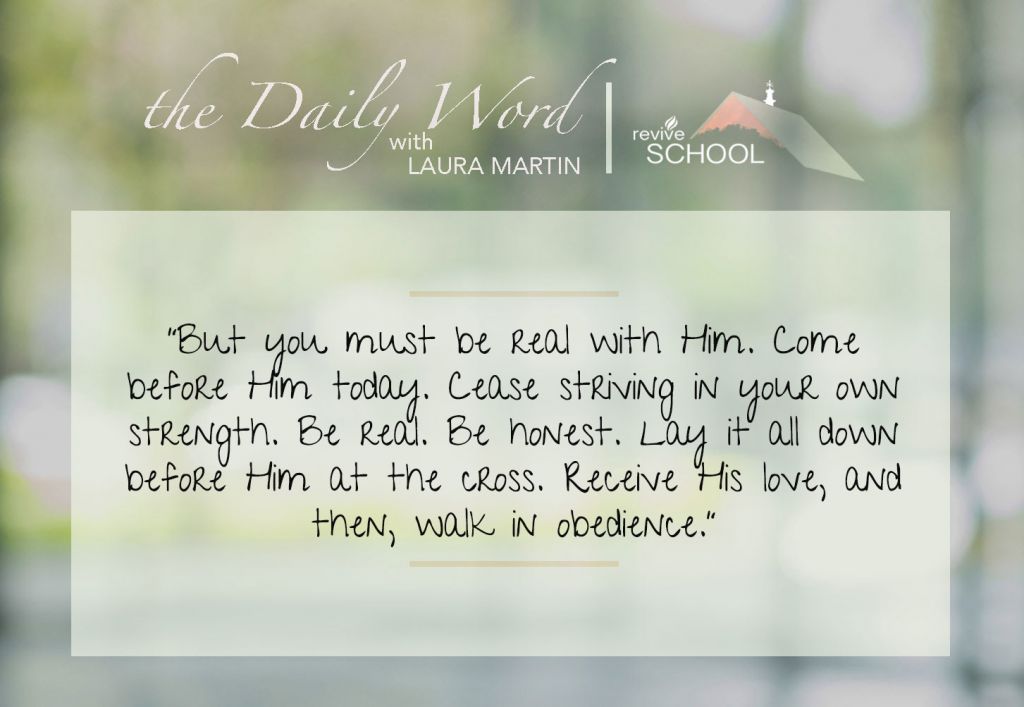
Daily Word
Laura Martin Hosea 6:6
“For I desire loyalty and not sacrifice, the knowledge of God rather than burnt offerings.”
FURTHER SCRIPTURE
- 1 Samuel 15:22 — “Then Samuel said: Does the Lord take pleasure in burnt offerings and sacrifices as much as in obeying the Lord? Look: to obey is better than sacrifice, to pay attention is better than the fat of rams.”
- Psalm 51:16-17 — “You do not want a sacrifice, or I would give it; You are not pleased with a burnt offering. The sacrifice pleasing to God is a broken spirit. God, You will not despise a broken and humbled heart.”
- Isaiah 57:15 — “For the High and Exalted One who lives forever, whose name is Holy says this: ‘I live in a high and holy place, and with the oppressed and lowly of spirit, to revive the spirit of the lowly and revive the heart of the oppressed.’”
Lesson and Daily Word
Each day has two parts: the Lesson and the Daily Word. Use these buttons to go from one to the other.
Teaching Notes and Questions
Next to the video, these tabs show the Teaching Notes and the Questions. Your answer to a question saves when you leave the answer box.
The Bible passage
This link opens the passage on Bible Gateway, and that gives the passage its tick. If you read it in your own Bible, tick it by hand in Progress.
Your progress on this lesson
A part ticks itself when you play the video or audio to the end, read the notes or the Daily Word to the end, or answer every question. You can also tick a part by hand here.
Downloads
Here you can save the video, the audio and the lesson as PDF files. Downloads do not count toward your progress.
Need help?
Use this button to send us a question or tell us about a problem. You can also take this tour again from there.