
Extravagant Disobedience
Discover Jesus as: Something Greater 1 Kings 7 Read on Bible Gateway (HCSB)
Lesson
Audio Only
Teaching Notes
INTRO
The focus for the beginning of this chapter was building structures. Moses’s instructions for Israel’s king said: “However, he must not acquire many horses for himself or send the people back to Egypt to acquire many horses, for the LORD has told you, ‘You are never to go back that way again.’ He must not acquire many wives for himself so that his heart won’t go astray. He must not acquire very large amounts of silver and gold for himself” (Deuteronomy 17:16–17). These instructions have a connection in the next several chapters.
TEACHING
1 Kings 6:38—7:1: The study of 1 Kings 7 begins with 1 Kings 6:38. The temple was completed with every detail in seven years, during the 11th year of Solomon’s reign. It took Solomon 13 years, nearly twice as long to complete his own palace complex (1 Kings 7:1).
The complex was more than just one house. It included the private residence for Solomon and was the administrative center for the kingdom. There is a jarring transition between 1 Kings 6:38 and 1 Kings 7:1; an interruption that appears to be out of sequence chronologically. We are not sure how these two were built, if work took place on one through completion and then on the other, or if work would move back and forth between the two. These passages: 1 Kings 9:1 and 1 Kings 9:10 list the temple work and then the palace. In 1 Kings 3:1, the order is presented as palace first and then the temple. The writer wanted to make sure the reader saw the contrast; 13 years for the palace and seven years for the temple.
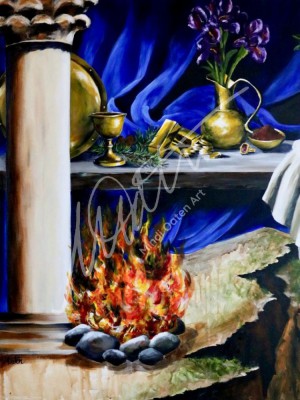
1 Kings 7:2–12: The details of the building, and the size and number of cedar beams and pillars, were extraordinary. The house was designed with many windows and doors, a long portico, and a canopy with pillars (vv. 2–6). Solomon created the hall of the throne where he would judge cases and fully covered it with paneling of cedar (v. 7). Famous decisions, such as the judgment about the baby claimed by two mothers, and receptions, such as when the Queen of Sheba arrived, were all held in this hall. Note the Queen of Sheba would not have seen the inside of the temple. When she talked about Solomon and all his glory; she was referring to his palace. The cedar smelled good and stood up well to insect damage, but it was very flammable as we will see at the end of Kings. Solomon had a similar house built for his wife, who was Pharaoh’s daughter. Other homes and apartments were built as well, all with expensive materials and costly stones (vv. 8–12).
Twelve verses describe the palace complex that took 13 years to build. The writer of 1 Kings did not seem to consider these buildings as important as the temple. The building of the temple was described in part of chapter 5, all of chapter 6, part of chapter 7, and its dedication was yet to come. How important was the palace to Solomon? Was the palace in danger of becoming the main thing? Did Solomon want something greater for himself than for God?
A comparison list in 'Lesson 62: 1 Kings 9—10' gives the difference between the greatness of King Jesus compared to that of King Solomon. When these two building projects are compared, it seems to suggest that priorities were out of order. It is unclear from the text whether this extravagance in the palace complex was positive as an example of God’s blessing or negative as an example of Solomon’s self-indulgence and divided heart. The New Testament emphasizes that indulgence can be sinful (Luke 12:17–21), but in some cases can be acceptable, such as the woman who anointed Jesus’ head (Mark 14:3–9). The bottom line is God is after the heart, not just what you build. Keep these things in mind as you move forward in 1 Kings: (1) Solomon used conscripted labor in both building projects (1 Kings 5:13–18). (2) Solomon used slave labor, enslaving non-Israelites who had remained in Israel (1 Kings 9:20–22). (3) In its final form, the use of forced labor will arouse great anger in the nation (1 Kings 12). All this came from a group of people who, 480 years before, had come out of slavery.
1 Kings 7:13–51: This section covers the final stages of the temple construction and temple furnishings. The author seems to relish in the minute details of the temple, possibly to emphasize the use of technical and artistic skills that were used to the glorify God. As you read this section, consider if you are using God-given gifts to create things for glory for your Creator. All the accessories described had a meaning, an influence, a testimony, or served as a visual aid. One of these craftsmen was Hiram, from Tyre, who was a bronze craftsman (vv. 13–14). He cast two hollow bronze pillars that were each 27 feet high and 18 feet in circumference. Hiram also created capitals to go atop the pillars that were seven-and-a-half feet high. Both the capitals and the pillars were covered with latticework gratings and wreaths of chain work (vv. 15–20).
The pillars were set up in the portico and given names—Jachin for the right pillar and Boaz for the left (vv. 21–22). The names of the pillars were important. The name Jachinmeant, “He will establish,” and was used to reinforce God’s promise to establish David’s throne and God’s strength to accomplish it (2 Samuel 7:12–16). The name Boazmeant, “in Him is strength.” Psalm 21:1 and 13 begins and ends with the word Boaz, and also include this picture of strength. Putting this together means He will establish the promise of God to establish David’s throne and in Him is strength, the power of God exalted to accomplish it.
Verse 26 describes the water reservoir placed on golden calves (which they were not told to do). The 11,000 gallons of water show God’s focus on cleansing. Notice inside the temple was seven menorahs, also not called for. Solomon had gilded the lily on his own. Take special notice of all these details as you read this chapter.
In verse 51, the temple was completed and King Solomon brought into the temple the consecrated things of his father. But then, Solomon waited 11 months to dedicate the temple in the holiest month of the year when Rosh Hashanah (New Year), Yom Kippur (Day of Atonement), and Sukkoth (Feast of Tabernacles) were all celebrated. He waited for Something Greater. The temple is now ready for the ark to come.
CLOSING
The glory of Solomon’s temple was intended to leave us breathless. Herod’s temple will put it to shame when it’s built. Gary Inrig wrote, “Followers of Christ need to remember this glory as we ponder that we, both as congregations and as individuals, are described as ‘God’s temple’” (1 Corinthians 3:1–17, 6:19–20).1What God desires from His people isn’t a building, but rather obedience. The nation of Israel later believed that the presence of the temple assured them of God’s favor. In fact, some of the prophet Jeremiah’s harshest sermons were directed against that false belief.
The readers of 1 Kings knew the temple didn’t protect them from God’s divine judgment because they were reading and hearing these words for the first time while in captivity in Babylon. The temple was in ruins. That is one of the reasons Kings was written—to answer the question for the Jews in exile in Babylon: How did we get here? The takeaway here is that any time we use a substitute for obedience to God, God allows judgment.
Gary Inrig, Holman Old Testament Commentary: 1 & 2 Kings (Nashville: Broadman & Holman, 2003), p. 43.
Questions
-
How long did it take Solomon to build the temple? How long did it take him to build his own house? What does this show about desiring comfort and luxury in his own life?
-
What were the names of the two pillars of bronze? What do these two names mean? How does this relate to the character of God?
-
What was the significance of the showbread in 1 Kings 7:48? (Leviticus 24:5–8)
-
The temple was impressive even by today’s standards. What goes through your mind to know that the same man that helped build this beautiful temple for the Lord was the same one, because of his sins, that brought judgment to Israel? (1 Kings 11:6)
-
What did the Holy Spirit highlight to you in 1 Kings 7 through the reading or the teaching?
Daily Word
Laura Martin 1 Kings 7:1
“Solomon completed his entire palace complex after thirteen years of construction.”
FURTHER SCRIPTURE
- Proverbs 5:1–2 — “My son, pay attention to my wisdom; listen closely to my understanding so that you may maintain discretion and your lips safeguard knowledge.”
- Isaiah 26:3 — “You will keep the mind that is dependent on You in perfect peace, for it is trusting in You.”
- Colossians 3:1–2 — “So if you have been raised with the Messiah, seek what is above, where the Messiah is, seated at the right hand of God. Set your minds on what is above, not on what is on the earth.”
Lesson and Daily Word
Each day has two parts: the Lesson and the Daily Word. Use these buttons to go from one to the other.
Teaching Notes and Questions
Next to the video, these tabs show the Teaching Notes and the Questions. Your answer to a question saves when you leave the answer box.
The Bible passage
This link opens the passage on Bible Gateway, and that gives the passage its tick. If you read it in your own Bible, tick it by hand in Progress.
Your progress on this lesson
A part ticks itself when you play the video or audio to the end, read the notes or the Daily Word to the end, or answer every question. You can also tick a part by hand here.
Downloads
Here you can save the video, the audio and the lesson as PDF files. Downloads do not count toward your progress.
Need help?
Use this button to send us a question or tell us about a problem. You can also take this tour again from there.