
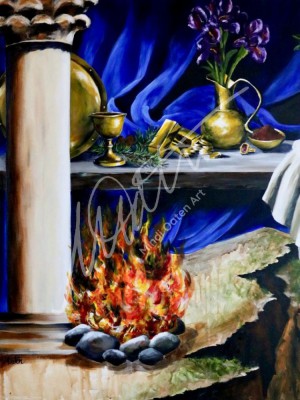
Solomon's Temple
Discover Jesus as: Something Greater 1 Kings 5-6 Read on Bible Gateway (HCSB)
Lesson
Audio Only
Teaching Notes
INTRO
We are running through the book of 1 Kings. It can be easy to get lost in the rhythm of ancient history. It can be tempting to skim over these stories and names. However, I believe there are seasons of the Christian life that are benefited by studying these stories. I want to encourage you to not skip over them. There are a number of perspectives we can gain from Scripture. In this passage, we will study the building of Solomon’s temple.
TEACHING
1 Kings 5:1: When the word had come that Solomon was the anointed king, Hiram, the king of Tyre, sent his servants to Solomon. Hiram had been a good friend of David. I believe Solomon learned a sense of kingdom rule and the importance of the alliances from his father David.
1 King 5:2–5: Solomon responded to Hiram, explaining his father was not able to build a temple because of the wars around him. Solomon also shared that because he had been experiencing peace, he planned to build his father’s temple.
In 2 Samuel 7:2, David had been the one who proposed that he build a house of God. I believe David was using natural reasoning, comparing how he lived to where the presence of the Lord had been dwelling and he concluded he would build a temple. The Lord told Nathan to go to David and tell him that it was not the time for him to build a temple. The building of the temple would happen in God’s timing not David’s. It is easy to insert personal preferences in what we believe is godly. The question is, how does God want to be worshipped versus how we want to worship?
1 Kings 5:6–9: Solomon told Hiram that Tyre had the best kind of trees and that Hiram’s people were the most qualified to cut them. Solomon then asked Hiram for his support of the building project through providing the trees and manpower. Solomon promised to pay for the trees, the work of the men, and he pledged his own servants to help with the project. When Hiram heard Solomon’s proposal, he rejoiced.
1 Kings 5:10–12: Solomon sent Hiram 125,000 bushels of wheat and 1,160 gallons of oil every year as the work continued. Because of the wisdom the Lord gave Solomon, there was peace and an alliance between Solomon and Hiram. God trained Solomon as a peacekeeper.
1 Kings 6:1–6: The temple for the Lord was not built until 480 years after the Israelites came out of Egypt. The temple was 125 feet long, 42 feet wide, and 62 feet high (25-inch cubit). Though we are used to big churches, it is difficult to really understand the size and ornate detail of the Solomon’s temple.
1 Kings 6:7: The stones used to build the outer walls of the temple were pre-cut so no noise (axe or hammer) would be made in the house of the Lord. When someone viewed the temple, they would see stone on the outside and gold on the inside.
1 Kings 6:14-38: The inside was built with cedars and other building materials fitting seamlessly together, and was covered with pure gold so that no rough wood or other materials were seen individually (vv.21-22).
Verse 23 describes in detail the ornateness of the inside of the temple. There were two cherubim built in the holy of holies that were 10 cubits high and wide (21 feet high and 21 feet wide). Where were the cherubim before in Scripture? Originally there were two cherubim that sat on the top of the ark roughly 5 feet tall. The new cherubim’s wings spread over the holy of holies, their outside wings touched the outside walls, and their inside wings touched the wings of the other cherubim. The idea was the mercy seat was where God came to dwell, but Solomon was trying to build a building for the glory of God to dwell (2 Samuel 7)
1 Kings 6:11: Let’s jump back to verse 11. In the middle of the description of all this beauty in the temple, the Lord spoke to Solomon, saying, “I will dwell in this place if you follow my ordinances.” He didn’t say I would dwell in the temple because it was so nice. God said He would come because of Solomon’s obedience. Sometimes we want to dress up our own ways and ideas. But God blesses one thing—our obedience. I wonder if I try to fit God into my own preferences? Solomon's temple was the first permanent dwelling place for God.
CLOSING
As we close, let’s look at the New Testament and who we are today (1 Corinthians 3:16–17). Paul was talking to all of us who have received the Spirit of God. We are now the temples where God dwells. Through the Holy Spirit, God can move and direct us (Acts 7:44–50). I wonder if at times we try to put God back into a temple or in pretty box when we try to put our ideas and preferences above God’s desire? My prayer has been that the Lord would help me not to make something that contains and strains, but that worships and satisfies.
Questions
-
How did Hiram show he always loved David (2 Samuel 5:11; 2 Chronicles 2:3)? How was the relationship between Hiram and David a benefit to Solomon?
-
Why was David not able to build the temple during his reign as king (1 Chronicles 22:8)? Why was Solomon able to build the temple during his reign? (1 Kings 4:24)
-
According to David’s census, how many men were available to help build the temple (2 Samuel 24:9)? How many Israelite men did Solomon use?
-
Why is it significant that both Jews and Gentiles assisted in the construction of the temple? (Isaiah 49:6; 56:6–7; Matthew 21:13; Ephesians 2:11–22)
-
Why do you think the Lord spoke to Solomon during the building of the temple (1 Kings 6:11–13)? What is most important to the Lord when serving Him? (Ephesians 6:6)
-
What did the Holy Spirit highlight to you in 1 Kings 5—6 through the reading or the teaching?

Daily Word
Laura Martin 1 Kings 6:11–13
“The word of the LORD came to Solomon: ‘As for this temple you are building—if you walk in My statutes, observe My ordinances, and keep all My commands by walking in them, I will fulfill My promise to you, which I made to your father David. I will live among the Israelites and not abandon My people Israel.’”
FURTHER SCRIPTURE
- Isaiah 66:2 — “My hand made all these things, and so they all came into being. This is the Lord’s declaration. I will look favorably on this kind of person: one who is humble, submissive in spirit, and trembles at My word.”
- 1 Corinthians 3:16 — “Don’t you yourselves know that you are God’s sanctuary and that the Spirit of God lives in you?”
- 1 Corinthians 6:19–20 — “Don’t you know that your body is a sanctuary of the Holy Spirit who is in you, whom you have from God? You are not your own, for you were bought at a price. Therefore, glorify God in your body.”
Lesson and Daily Word
Each day has two parts: the Lesson and the Daily Word. Use these buttons to go from one to the other.
Teaching Notes and Questions
Next to the video, these tabs show the Teaching Notes and the Questions. Your answer to a question saves when you leave the answer box.
The Bible passage
This link opens the passage on Bible Gateway, and that gives the passage its tick. If you read it in your own Bible, tick it by hand in Progress.
Your progress on this lesson
A part ticks itself when you play the video or audio to the end, read the notes or the Daily Word to the end, or answer every question. You can also tick a part by hand here.
Downloads
Here you can save the video, the audio and the lesson as PDF files. Downloads do not count toward your progress.
Need help?
Use this button to send us a question or tell us about a problem. You can also take this tour again from there.