
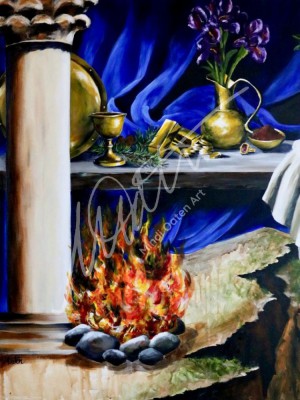
The Dedication of the House of God
Discover Jesus as: Something Greater 1 Kings 8 Read on Bible Gateway (HCSB)
Lesson
Audio Only
Teaching Notes
INTRO
We’re continuing through the historical books of the Old Testament. Constable states that 1 Kings 8 is “the most detailed account of a dedication service in the Bible. It is also one of the most theologically significant texts in 1 and 2 Kings.”1is going to give us the best picture of Israel’s House of God. As Solomon built the temple, he was building Something Greater. Jesus is greater than that. This chapter is also one of the longest—sixty-six verses long. Wiersbe divides the chapter this way: a house of God (vv. 1–11); a house of testimony (vv. 12–21); a house of prayer (vv. 22–53); a house of praise (vv. 54–61); and a house of fellowship (vv. 62–66).2
TEACHING
1 Kings 8:1–11: A House of God. Solomon brought together the elders of Israel—“the tribal heads and the ancestral leaders” were the “oldest living males within each extended family unit.”3God’s presence had been in the tabernacle but was going to be moved to a much better place in Jerusalem. God’s presence was being moved from a portable place to a permanent home (v. 1). They gathered in the seventh month, the most holy month and the festival of the tabernacles or the festival of booths, which happened 11 months after the completion of the temple (v. 2). All males of Israel were required to attend. The priests and Levites brought the ark, the tabernacle tent, and the worship utensils to Jerusalem (vv. 3–4). Meanwhile, Solomon and the people of Israel sacrificed more sheep and cattle than could be counted (v. 5). The priests placed the ark below the cherubim in the most holy place in the temple (vv. 6–8). The only things in the ark were Moses’s stone tablets with the Ten Commandments, and these were the only things that were not new in the temple (v. 9). When the priests came out, the shekinah glory of the Lord came down and filled the temple (vv. 10–11).
1 Kings 8:12–21: A House of Testimony (Solomon gave testimony about God’s presence coming into the temple (vv. 12–13). This mentality shows the dependence Israel had on being able to come to God’s presence. But God has never been limited to being inside a building, or a tent, or any other place. Solomon continued before the congregation while they all stood (v. 14). Solomon reminded them of God’s goodness and faithfulness to and through King David, and now, through him (vv. 15–21).
In 2 Samuel 7, God made a covenant with David, promising He would work through David (vv. 12–16). Solomon had built the temple for God that his father had wanted to build. God kept His promises. Ultimately, though God’s covenants with Abraham and David, they would be fulfilled in Jesus (Jeremiah 31:31–34).
1 Kings 8:22–53: A House of Prayer. (Solomon’s testimony became a time of prayer. He prayed with his hands stretched out toward heaven (v. 22), a normal posture of individual prayer (Exodus 9:29). It seems Solomon prayed out of the understanding that God fulfills His promises (vv. 23–24). Think about this—God’s promise to David would not have been fulfilled if Solomon hadn’t acted. Then, Solomon asked the Lord for His presence and His protection (vv. 25–30).
There’s so much in Scripture about extraordinary prayers: Moses’s prayer for Israel (Exodus 32:8–14); David’s prayer for pardon and confession (Psalm 51); Hezekiah’s petitions for deliverance and healing (2 Kings 19:14–19; 20:1–7); David’s prayer of surrender (Psalm 139); the prayer of Jabez (1 Chronicles 4:10); the Lord’s Prayer (Matthew 6:9–13); Jonah’s prayer for salvation (Jonah 2:29); David’s prayer for deliverance (Psalm 3); Hannah’s prayer (1 Samuel 2:1–10); Nehemiah’s prayer for success (Nehemiah 1:1—2:9); and Jesus’ prayer of submission (Luke 22:37–46). There are so many examples of people in Scripture coming before the Lord in the power of prayer. In verse 30, Solomon acknowledged that the people of Israel prayed toward Jerusalem from wherever they were, which continues today as well.
Wiersbe identified seven petitions Solomon asked of God:4
- For justice in the land (vv. 31–32; 2 Chronicles 6:22–23). Solomon asked that “the Lord would judge between the wicked and the righteous.”5
For military defeat (vv. 33–34; 2 Chronicles 6:24–25). Solomon asked for “the Lord to forgive the sins that had caused defeat in battle.”6
For drought in the land (vv. 35–36; 2 Chronicles 6:26–27). Solomon asked God for forgiveness of sin that had brought a drought on the land.7
For other natural calamities (vv. 37–40; 2 Chronicles 6:28–31). Solomon asked God’s forgiveness of sin that had brought calamities upon the nation in response to the prayers directed toward Jerusalem.8
For foreigners who came to pray (vv. 41–43; 2 Chronicles 6:32–33). Solomon asked God for mercy on foreigners who feared God and prayed toward Jerusalem.9
For armies in battle (vv. 44–45; 2 Chronicles 6:34–35). Solomon prayed God would make the armies victorious in battle when they prayed in the direction of Jerusalem.10
For defeat and captivity (vv. 46–53; 2 Chronicles 6:36–39). Solomon asked God to “bring about restoration after captivity” when they prayed in the direction of Jerusalem.11
1 Kings 8:54–61: A House of Praise. Solomon’s hands remained lifted toward heaven through the entire prayer. Verse 56 records, “Not one of all the good promises He made through His servant Moses has failed.”
1 Kings 8:62–66: A House of Fellowship. Solomon and the people offered fellowship offerings to the Lord of 22,000 cattle and 120,000 sheep. On the 15th day, Solomon sent the people of Israel home. They left “rejoicing and with joyful hearts for all the goodness that the Lord had done for His servant and for His people Israel” (v. 66).
CLOSING
All of this happened because from the beginning of chapter 8, the people of Israel came together to dedicate the emple to God. Constable states, “This was the biggest event in Israel, in terms of its theological significance, since God gave Israel the Law at Mount Sinai. Israel was finally in the romised Land with her God enthroned in a place of great honor. Now Israel was in position to fulfill her calling as a nation in the world as never before in her history”12(Exodus 19:5–6). First Kings 8 launche the prophetic word given in 2 Samuel 7.
Thomas Constable, Constable’s Expository Bible Study Notes: 1 Kings, p. 52; available online at http://planobiblechapel.org/tcon/notes/pdf/1kings.pdf.
Warren W. Wiersbe, The Exposition Bible Commentary: 1 Kings (Colorado Springs: David C. Cook, 2003), pp. 424-431.
John MacArthur, The MacArthur Bible Commentary (Nashville: Thomas Nelson Publishers, 2005), p. 404.
Wiersbe, pp. 427-429.
MacArthur, p. 405.
MacArthur, p. 405.
MacArthur, p. 405.
MacArthur, p. 405.
MacArthur, p. 405.
MacArthur, p. 405.
MacArthur, p. 405.
Constable, p. 57.
Questions
-
What was Solomon’s first act of dedication for the ark? How did Solomon follow in his father David’s footsteps? (2 Samuel 6:17)
-
What are some things Solomon highlighted in his prayer? Are you praying specifically in your own prayer life?
-
What was the distinguishing mark of the nation of Israel? (Exodus 33:13–23; 1 Kings 8:10–11; Romans 9:4)
-
What did it mean when Solomon knelt and spread out his hands toward heaven to pray? (Exodus 9:29, 33; 1 Kings 8:22, 54; 2 Chronicles 6:13; Psalm 63:4; Ezra 9:5; 1 Timothy 2:8)
-
How do you see the goodness and faithfulness of God in verses 15-21 (2 Samuel 7:2, 12-13, 25)? Why did God do these things and fulfill His promises?
-
What did the Holy Spirit highlight to you in 1 Kings 8 through the reading or the teaching?

Daily Word
Laura Martin 1 Kings 8:54–56
“When Solomon finished praying this entire prayer and petition to the LORD, he got up from kneeling before the altar of the LORD, with his hands spread out toward heaven, and he stood and blessed the whole congregation of Israel with a loud voice: ‘May the LORD be praised! He has given rest to His people Israel according to all He has said. Not one of all the good promises He made through His servant Moses has failed.’”
FURTHER SCRIPTURE
- Psalm 134:1–2 — “Now praise the Lord, all you servants of the Lordwho stand in the Lord’s house at night! Lift up your hands in the holy place and praise the Lord!”
- Daniel 6:10 — “When Daniel learned that the document had been signed, he went into his house. The windows in its upper room opened toward Jerusalem, and three times a day he got down on his knees, prayed, and gave thanks to his God, just as he had done before.”
- Revelation 7:11 — “All the angels stood around the throne, the elders, and the four living creatures, and they fell facedown before the throne and worshiped God.”
Lesson and Daily Word
Each day has two parts: the Lesson and the Daily Word. Use these buttons to go from one to the other.
Teaching Notes and Questions
Next to the video, these tabs show the Teaching Notes and the Questions. Your answer to a question saves when you leave the answer box.
The Bible passage
This link opens the passage on Bible Gateway, and that gives the passage its tick. If you read it in your own Bible, tick it by hand in Progress.
Your progress on this lesson
A part ticks itself when you play the video or audio to the end, read the notes or the Daily Word to the end, or answer every question. You can also tick a part by hand here.
Downloads
Here you can save the video, the audio and the lesson as PDF files. Downloads do not count toward your progress.
Need help?
Use this button to send us a question or tell us about a problem. You can also take this tour again from there.