
Adoration Through Praise
Discover Jesus as: King of Glory Psalms 148-150 Read on Bible Gateway (HCSB)
Lesson
Audio Only
Teaching Notes
INTRO
We are going to wrap up our study of the book of Psalms with Psalm 150. Each of the last five psalms begins with, “Praise the Lord! Hallelujah!” Each psalm increases and builds in praise and joy until we come to Psalm 150.
“Hallelujah” is a great word! In Hebrew “Hallelu” transliterates into the English word “praise.” Hallelu-jah literally means, “Praise God!” Pastor David Guzik explains, “Each book of Psalms closes with a doxology (Psalm 41:13; 72:18–19; 89:52; 106:48). This entire Psalm can be seen as a doxology that not only closes the fifth and final volume of the collected psalms, but also closes the entire book of Psalms. Psalm 150 contains no argument, no real teaching, no real explanation. It is an eloquent, passionate cry to all creation to give Yahweh the praise due to Him.”1
We are to position ourselves before the only One worthy of glory and honor.
TEACHING
Psalm 150:1-2: Pastor Joel Pankow described these verses as the “Hellelu-Why.”2 This all points to the Messiah. “In His sanctuary,” is a reference to the Temple, where God dwelled. Since Jesus died and rose again, God now “tabernacles” within his people, choosing not to dwell in a building. We are His temple and should therefore live out the implications of what that means.
“His acts of power” are displayed in creation. This phrase also carries with it the idea of God as champion because of the victory He has won through Jesus on the cross (Colossians 1:19–20). It’s a wonderful miracle that we stand before God as holy, something that is only possible through the forgiveness won by Christ. “His surpassing greatness” is a good reminder for us. We should praise Him simply for who He is. Our adoration of God is not meant to depend on mood, or feeling, or circumstance.
On every page of the Bible is the idea of worshipping God—that we are created and saved to the praise of His glory. But much of what passes for worship today misses the mark. Adoration is not about me and what God does for me. Adoration is all about Him—recognizing that I am for Him. I breath for Him. I live for Him. I spend my life for Him. Proclaiming God’s rightful worth and position.
In Mark 12:28-30, Jesus was asked, “Which command is the most important of all?” He answered, “Love the Lord your God with all your heart, with all your soul, with all your mind, and with all your strength.” Adoration calls for concentration—not a fierce mental concentration so much as a focusing of our love, an outpouring of wonder toward God. It is not about doing our duty—pleasing our spouse or parents—it’s about praising the Lord—Father, Son, and Holy Spirit—for who He is and what He has done.
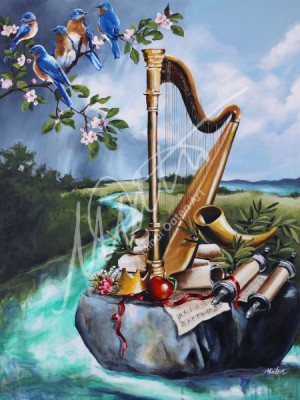
Psalm 150:3–5: Pastor Joel Pankow described these verses as the “Hellelu-How.”3 Psalm 150 describes an incredible praise band. In Israelite worship, the music was loud and boisterous. You know I could and would love to teach on each instrument and all the varieties and textures—but that’s not our purpose today. You can use anything to praise God. The psalmist made a list of a variety of musical instruments to use—trumpets, harps, lyres, tambourines, flutes—even dancing—you name it.
When the ark was brought back to Jerusalem, David illustrated something similar to this type of praise in 1 Chronicles 15:27–28. See also this instrumental theme with other “benchmark” verses (a short list): Exodus 15:20–21; Nehemiah 12:27; and 1 Corinthians 15:51–52. The point is that we are free to worship God with variety—using our talents and instruments to praise God’s name.
Psalm 150:6: Pastor Joel Pankow described these verses as the “Hellelu-Who.”4 Now let’s not take adoration for granted. There’s going to come a time when breath that comes through our nostrils will leave and won’t return any more. God has given each of us breath; we’re called now to breathe His praise. God does not care about eloquence, only sincerity and obedience. Your worship is acceptable as long as it comes from the heart. You don’t need to meet any other mold than that.
The psalmist didn’t say you have to be checked at the door with, “Let me hear your voice. Okay. I guess you can carry tune.” You don’t have to know how to play the lyre, a guitar, or a trumpet to praise God. All he asked was, “Do you have breath? Are you alive? Is your body warm? Then we’ll take you.” When you look at God’s Word, He even accepts praise from things that aren’t even human (Psalm 148:7–11; Revelation 5:13).
This song begins and ends with the command to praise the Lord. We’re to praise Him everywhere, with all means possible because of His mighty acts, because of who He is. We’re to praise Him with a wide variety of instrumentation and with triumphant expressions of worship. To live a lifestyle of adoration for the best instrument of praise is an individual wholly committed to Him.
Action Step #1: I invite you to step forward from the role of observer to participant. Adoration is not meant to be passive as if it’s something we watch or listen to. We are to be fully engaged in active worship, lifting our praise to God by engaging our head, heart, and hands. Ask yourself: If I’m just a worship-observer, what is keeping me from entering in? Take this obstacle to the Lord for help.
Action Step #2: Make it a habit in prayer to tell God how much you love Him. If you need help, try this: “Eternal Father of my soul, let my first thought today be of You, let my first impulse be to worship You, let my first speech be Your name, let my first action be to kneel in prayer. Amen.”5
CLOSING
The reason we are here, as Jesus said, is to let your light shine before men, they may see your good deeds and praise your Father in heaven (Matthew 5:16). We are here to praise the Lord. It isn’t really that difficult. When we realize the Hallelu-why that we are praising a God of compassion and mercy—the rest of it all comes into place. No matter who we are or how we do it, as long as we’re giving praise to God for His mercy and compassion in Christ—our light will shine and give glory to God.
“We never really adore Him until we arrive at the moment when we worship Him for what He is in Himself, apart from any consideration of the impact of His Divine Selfhood upon our desires and our welfare. Then we love Him for Himself alone. Then we adore Him, regardless of whether any personal benefit is in anticipation or not. Then it is not what He has done for us or what we expect Him to do for us, but what He has been from eternity before we existed, and what He is now even if we were not here to need Him, and what He will be forever . . . it is that which captivates us and evokes from us the selfless offering of self in worship. That is pure adoration. Nothing less is worthy of the name.”6
David Guzik, “Psalm 150–Let All Things Praise the Lord”; available at https://enduringword.com/bible-commentary/psalm-150/.
Joel Pankow, The Last Psalm Explains What “Hallelujah” Is All About, https://www.sermoncentral.com/sermons/the-last-psalm-explains-what-hallelujah-is-all-about-joel-pankow-sermon- on-worship-definition-59218?ref=SermonSerps, June 12, 2003.
Joel Pankow.
Joel Pankow.
Joel Pankow.
Albert E. Day, An Autobiography of Prayer (New York: Harper, 1952).
Questions
-
In Psalm 148, who is to be praised in heaven and on earth, and why is He to be praised?
-
What does it mean in Psalm 148:14 that God has exalted the “horn” (NKJV) of His people? (1 Samuel 2:1; Luke 1:69)
-
Read Psalm 149:1. Why is it important to God that we gather with other believers (Ephesians 5:19; Colossians 3:16; Hebrews 10:25)? What is the primary focus of gathering together for worship?
-
Psalm 149 is a call to praise God with our worship. Why must we be careful of how we worship Him (John 4:22–24; Colossians 2:16–23)? What is one virtue that brings God great joy? (Isaiah 66:1–2)
-
As the study of Psalms concludes with a psalm of praise, take time right now to praise the Lord for who He is. What mighty acts can you praise Him for in Scripture and in your own life? Be sure to praise Him for the little things.
-
What did the Holy Spirit highlight to you in Psalms 148—150 through the reading or the teaching?

Daily Word
Laura Martin Psalm 150:6
“Let everything that breathes praise the LORD. Hallelujah!”
Jesus said the greatest command is to love God with all your heart, all your soul, and with all your mind. Love God with everything. Praising God with everything you have shows your love to God. Just as you would encourage or praise a son or daughter to demonstrate your love for them, praise the Lord for the good things He has done.
Don’t let an off-tune singing voice, lack of musical gifting, or uncoordinated dance moves slow you down. You can praise the Lord with everything you are and with all you have. Anything that has the breath of life can praise the name of the Lord. So that includes you! Today, pause for a moment and praise the Lord. Simply say out loud, “Blessing and honor and glory and dominion to the One seated on the throne, and to the Lamb, forever and ever! Amen!” Life is full of highs and lows, but one thing that remains the same yesterday, today, and tomorrow is the Lord God Almighty. Hallelujah!
“Let everything that breathes praise the Lord. Hallelujah!”
— Psalm 150:6
FURTHER SCRIPTURE
- Psalm 148:7–11 — “Praise the Lord from the earth, all sea monsters and ocean depths, lightning and hail, snow and cloud, powerful wind that executes His command, mountains and all hills, fruit trees and all cedars, wild animals and all cattle, creatures that crawl and flying birds, kings of the earth and all peoples, princes and all judges of the earth.”
- Matthew 22:36–38 — “‘Teacher, which command in the law is the greatest?’ He said to him, ‘Love the Lord your God with all your heart, with all your soul, and with all your mind. This is the greatest and most important command.’”
Lesson and Daily Word
Each day has two parts: the Lesson and the Daily Word. Use these buttons to go from one to the other.
Teaching Notes and Questions
Next to the video, these tabs show the Teaching Notes and the Questions. Your answer to a question saves when you leave the answer box.
The Bible passage
This link opens the passage on Bible Gateway, and that gives the passage its tick. If you read it in your own Bible, tick it by hand in Progress.
Your progress on this lesson
A part ticks itself when you play the video or audio to the end, read the notes or the Daily Word to the end, or answer every question. You can also tick a part by hand here.
Downloads
Here you can save the video, the audio and the lesson as PDF files. Downloads do not count toward your progress.
Need help?
Use this button to send us a question or tell us about a problem. You can also take this tour again from there.