
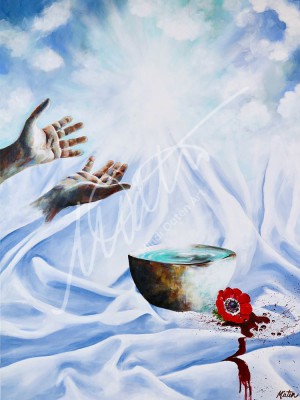
Sin Offering
Discover Jesus as: Atonement Leviticus 4-5 Read on Bible Gateway (HCSB)
Lesson
Audio Only
Teaching Notes
INTRO
In Leviticus 4, we see God giving Moses more instructions. Moses has just built the tabernacle, and now he and the Israelites needed to know how to use it. God was giving Moses the manual on how to interact with Him and have a relationship with Him. “These are the things that will allow you to be acceptable to Me,” God says. So farwe’ve seen:
Leviticus 1 – burnt offerings Leviticus 2 – grain offerings
Leviticus 3 – fellowship/peace offerings
In Leviticus 4, God starts to get very specific. He had to get specific because of sin. Rooker wrote, “The root ht’ for ‘sin’ occurs 595 times in the Old Testament, and Leviticus, with 116 attestations, has far more occurrences than any other Old Testament book.”1Leviticus is going to address the issue of sin. Today in Leviticus 4 and 5, we’ll see the root word of sin 53 times. We have to remember that God can actually forgive His people from sin. That’s what the sacrifice is all about—receiving atonement through death. Today we’re going to identify people groups that were sinning in the Israelites’ time.
TEACHING
Leviticus 4:1–2: What is unintentional sin? Constable wrote, “This category [unintentional sin] includes sin done: by mistake, in error, through oversight or ignorance, through lack of consideration, negligence, or by carelessness.”2
Wiersbe wrote, “They [the Israelites] had become defiled or disobedient and didn’t realize it. However, ignorance doesn’t cancel guilt.”3Even though sin is unintentional, you’re still guilty. Psalm 19:12: “Who perceives his unintentional sins? Cleanse me from my hidden faults.” Nelson’s commentary says, “Sin that occurred without the sinner realizing it still offended the holiness of God and polluted His earthly dwelling place, just as clothing may be soiled without the wearer knowing it. To be used again, both the clothing and the tabernacle required cleansing.”
Leviticus 4:3–4: The anointed priests were in in charge of the Israelites, so if one of them sinned, he brought guilt on everyone. He was then required to present a sin offering. The priest was to put his hand on the head and slaughter the bull.
Leviticus 4:5-7: The priest was to bring the blood into the tent of meeting. Blood is everywhere in Leviticus (Leviticus 3:2; 4:5). Receiving atonement requires death, which always requires bloodshed (Exodus 12:13; Isaiah 1:11; Genesis 25:30; Leviticus 17:11; Hebrews 9:22; Romans 5:9; and 1 Corinthians 11:25).
The priest was to dip his finger in the blood and sprinkle it seven times. This blood was from the bull (v. 3). The priest would do this in front of the veil. Then the priest was to put some of the blood on the altar of fragrant incense. Finally, the priest would pour out the rest of the blood at the base of the altar of burnt offering. The altar of fragrant incense did not typically have blood, but it was needed because this was the sin of the priests. The only other time blood was sprinkled on the altar of fragrant incense was the Day of Atonement (Hebrews 9:4).
Leviticus 4:8-10: The offerer was to remove the fat. This is a comparison to the fellowship sacrifice or peace offering.
Leviticus 4:11-12: The rest of the bull needed to be brought outside the camp. Hebrews 13:11–15: “For the bodies of those animals whose blood is brought into the most holy place by the high priest as a sin offering are burned outside the camp. Therefore, Jesus also suffered outside the gate, so that He might sanctify the people by His own blood. Let us then go to Him outside the camp, bearing His disgrace. For we do not have an enduring city here; instead, we seek the one to come. Therefore, through Him let us continually offer up to God a sacrifice of praise, that is, the fruit of our lips that confess His name. Don’t neglect to do what is good and to share, for God is pleased with such sacrifices.”
Jesus suffered outside the camp so that He could sanctify us with His blood. Jesus is everywhere in Scripture. It all points to Him. The writers of Scripture tie this together through the Holy Spirit.
Leviticus 4:13-21: If the whole community made a mistake and no one noticed it, then the assembly was to present a young bull as an offering. They were to present a young bull and go through the same process that the priests did (vv.1–12).
The elders would put their hands on the bull, representing the whole congregation. They would sprinkle the blood, put some on the horns, and pour out the rest at the altar. Then they would remove the fat and burn the rest outside the camp. They followed the same process as the sin offering for the priests. The Jewish tradition in this story says that the congregation was the Sanhedrin. The community involved the religious leaders. There was some form of authority in this community for it to require the same level of sacrifice as the priests.
Leviticus 4:22: Here we look at how the Israelites were to deal with the sins of a leader. Remember, all of this is in regard to unintentional sins. Now and forward, you will not see the blood poured around the altar of incense anymore. Now, it was just poured around the altar of burnt offering.
Leviticus 4:27: A common person was anyone who was not a leader or a priest. Female or male goats were accepted. Why was a female goat acceptable this time? Maybe the common people didn’t have as many resources to choose from?
Leviticus 4:31b: All of this continued to happen so that the priest could make atonement and the people could be forgiven. How does forgiveness happen? It’s always through the blood. Whether you were a priest, part of the community, a leader, or a common person, all could be forgiven through the sin offering.
Leviticus 5: Guilt Offerings. All of it points to Christ, our Atonement, who sets us free!
CLOSING
Hebrews 10:19¬22: “Therefore, brothers, since we have boldness to enter the sanctuary through the blood of Jesus, by a new and living way He has opened for us through the curtain (that is, His flesh), and since we have a great high priest over the house of God, let us draw near with a true heart in full assurance of faith, our hearts sprinkled clean from an evil conscience and our bodies washed in pure water.”
Through Christ we have a new way to approach God! Because of the blood of Christ, we have been forgiven. Our hearts have been sprinkled, and our bodies have been washed in pure water because of what Christ has done for us.
Mark F. Rooker, The New American Commentary: Leviticus (Nashville: Broadman & Holman Publishers, 2000), p.106.
Thomas L. Constable, Dr. Constable’s Expository (Bible Study) Notes; available at https://planobiblechapel.org/tcon/notes/pdf/leviticus.pdf, p. 47
Warren W. Wiersbe, The Exposition Bible Commentary: Genesis–Deuteronomy (Colorado Springs, CO: David C. Cook, 2007), p. 203.
Earl D. Radmacher, Ronald B. Allen, and H. Wayne House, eds., Nelson’s New Illustrated Bible Commentary (Nashville, TN: Thomas Nelson), p.156
Questions
-
The blood of the sin offering in Leviticus 4:5–6 was taken into the tabernacle and sprinkled in front of the veil. What are your thoughts about why this was done? Read the following verses: 1 Peter 1:2 and Hebrews 10:22. How would you describe these verses in connection with Leviticus?
-
The body of the sin offering was to be taken outside the camp to be burned by fire (Leviticus 4:11–12). Read Hebrews 13:11–13. How do these verses reference something greater? What do you think verse 13 means?
-
Some organs of the sin offering were to be removed and offered on the altar to the Lord, specifically the kidneys and the liver with the fat (Leviticus 4:8–10). What are the functions of these organs and fat in the body? Do you see a purpose for these parts to be offered on the altar?
-
The Lord made atonement available not only to those who could afford the animals for sacrifice but to the poor as well (Leviticus 5:7, 11). Does it appear the Lord wanted atonement available to all people once they were aware of their sin? Do you believe this is true for mankind today? (Joel 2:32; Acts 2:21; Romans 10:9–13; 2 Peter 3:9)
-
The New Testament references about sacrifices cannot be fully understood without learning about the sacrificial system. What new insights have you learned by studying the first few chapters of Leviticus? (Hebrews 10:1–22)
-
What did the Holy Spirit highlight to you in Leviticus 4—5 through the reading or the teaching?

Daily Word
Laura Martin Leviticus 5:10
“He must prepare the second bird as a burnt offering according to the regulation. In this way the priest will make atonement on his behalf for the sin he has committed, and he will be forgiven.”
In today’s reading, this phrase is repeated: “If a person sins, so the priest shall make atonement on his behalf for his sin which he has committed, and it will be forgiven to him.” It is important to understand what this means. Atonement means reconciliation. God provides a way for humankind to come back into a loving, peaceful relationship with Him, despite sin. Because God loves you, He seeks to reconcile Himself to you.
In the Old Testament, the high priests’ sacrifices accomplished atonement for themselves and for the people because of sin. In the New Testament, Jesus Christ gave His life as a ransom for you and for many. If you believe in Jesus Christ as your Savior, your sins are forgiven. Today, rest in that promise. Your sins are for-given as a child of God. Thank the Lord for this free gift of reconciliation to God.
“He must prepare the second bird as a burnt offering according to the regulation. In this way the priest will make atonement on his behalf for the sin he has committed, and he will be forgiven.”
— Leviticus 5:10
FURTHER SCRIPTURE
- Mark 10:45 — “For even the Son of Man did not come to be served, but to serve, and to give His life—a ransom for many.”
- Romans 5:11 — “And not only that, but we also rejoice in God through our Lord Jesus Christ. We have now received this reconciliation through Him.”
- Hebrews 7:27 — “He doesn’t need to offer sacrifices every day, as high priests do—first for their own sins, then for those of the people. He did this once for all when He offered Himself.”
Lesson and Daily Word
Each day has two parts: the Lesson and the Daily Word. Use these buttons to go from one to the other.
Teaching Notes and Questions
Next to the video, these tabs show the Teaching Notes and the Questions. Your answer to a question saves when you leave the answer box.
The Bible passage
This link opens the passage on Bible Gateway, and that gives the passage its tick. If you read it in your own Bible, tick it by hand in Progress.
Your progress on this lesson
A part ticks itself when you play the video or audio to the end, read the notes or the Daily Word to the end, or answer every question. You can also tick a part by hand here.
Downloads
Here you can save the video, the audio and the lesson as PDF files. Downloads do not count toward your progress.
Need help?
Use this button to send us a question or tell us about a problem. You can also take this tour again from there.