
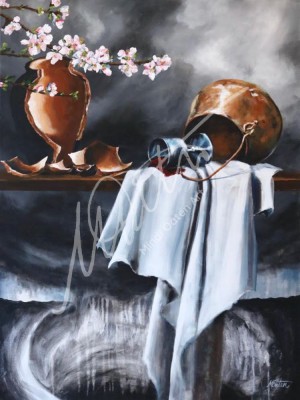
Restoration Through The New Covenant
Discover Jesus as: New Covenant Jeremiah 48-49 Read on Bible Gateway (HCSB)
Lesson
Audio Only
Teaching Notes
INTRO
There is so much in Jeremiah 48—49. First, I want to consider who the nations were and who had made alliances during this period of history. Damascus was the Syrian capital that was conquered by the Assyrians about the same time they captured the northern kingdom of Israel. Nineveh was the capital of Assyria. The remains of Nineveh are located on the outskirts of modern Mosul, Iraq, and it was destroyed by the Babylonians around 612 BC. Babylon was the capital city of the Babylonians, who were also referred to as the Chaldeans. Susa was the capital of the Persian/Medio-Persian empire and was the kingdom of Queen Esther much later. We are continuing our study on the judgment of the nations. Jeremiah’s messages for the nations were not just for those nations. Wood and McLaren wrote, “Jeremiah’s oracles may be ancient, but they are not archaic.”1 In all of these pronouncements, it is important to remember that Yahweh is the Holy God for all the nations. The undergirding lesson for these chapters is that Yahweh, the Lord God, would bring comfort to Judah, amidst the trials and captivity, and to the nations because they were included in God’s redemption plan.
God’s prophets were important in this process. Fee and Stuart describe the prophets as “covenant enforcement mediators.”2 The prophets were sent for Israel and Judah specifically but addressed all God’s creation. The oracles for the nations in chapters 48—49 can be outlined as follows:
- Moab trusted in themselves so they would be destroyed by Babylon. They would be restored (Jeremiah 48:1–47).
- Ammon took Gad for themselves, but they became a heap because they reached beyond themselves into the nations of God. They would one day be restored (Jeremiah 49:1–6).
- Edom’s wisdom departed, and they would be picked clean like grapes. There was no mention of restoration (Jeremiah 49:7–22).
- Damascus (Syria) still had a role to play, but their palaces would be desolated (Jeremiah 49:23–27).
- Kedar and Hazor were two areas of nomads and walled cities. All their camels and possessions would be plundered (Jeremiah 49:28–33).
- Elam would endure four destructive winds, but they were promised restoration (Jeremiah 49:34–39).
We do not know how Jeremiah delivered these oracles (written or spoken) or if he traveled to each place. There is a sense that they were “delivered” separately. Their connectivity is shown in the collection.
TEACHING
Jeremiah 48: Prophets brought God’s direct message, which was considered as important as though God had spoken the words directly to them. Moab was connected to the grandson of Lot through incest with his eldest daughter (Genesis 19:30–38). When Israel came to Canaan, at times Moab attacked and even ruled over them (Judges 3:12–14). Ruth came out of Moab and into the lineage of David. King David fought against and defeated Moab, and they became a vassal kingdom to Israel (2 Kings 1:1; 3:4–5). God had issues with Moab, which was pronounced through the prophets (Isaiah 15—16; Jeremiah 27; Ezekiel 25:8–11; Amos 2:1–3; Zephaniah 2:9). Note that Isaiah’s prophecy was fulfilled when Shalmaneser, king of Assyria, conquered Moab while Jeremiah’s prophecy was fulfilled when Nebuchadnezzar, the king of Babylon, conquered Moab. This second event took place five years after the destruction of Jerusalem, 23 years after the prophecy was first delivered by Jeremiah.
Interestingly, the message for Moab was lengthy compared to the size of the country. Most of the cities mentioned in this chapter were given by Moses to the Reubenites (Numbers 32:33–38; Joshua 13:15–23). The people of Moab would be shattered, and their god, Chemosh, would be sent into exile, along with his priests and officials (vv. 4-8). The god Chemosh required the sacrificing of children (2 Kings 3:27), and the king of Moab even sacrificed his son to that god. God’s punishment for their unrepentant wickedness was complete: “Make him drunk, because he has exalted himself against the Lord. Moab will wallow in his own vomit, and he will also become a laughingstock” (v. 26). Moab had laughed at what happened to Israel, but they would suffer the same fate as Israel (vv. 40–46). Verse 33 states, “Joy and celebration are taken from the fertile field and from the land of Moab. I have stopped the flow of wine from the winepresses; no one will tread with shouts of joy.” But there is hope of God’s restoration (v. 47).
Jeremiah 49:1–6: Jeremiah prophesied against Ammon (vv. 1–6), who also traced its origin to Lot through the son born to Lot by his youngest daughter (Genesis 19:30–38). Ammon was located on the east side of Jordan River and north of the Moabites. Ammon had been engaged in war with Israel from the days of the judges. Their god Milcom, sometimes referred to as Molech, also required child sacrifices (v. 1). Ammon would suffer God’s judgment, but they received His promise of restoration as well.
Jeremiah 49:7–22: The nation of Edom had descended from Jacob’s twin brother Esau. Edom joined Nebuchadnezzar to fight against Israel and took part in plundering the city and slaughtering the Jews. The prophesied destruction was outlined in verses 12–13. They lived in the secure city of Petra in “the clefts of the rock,” but God would bring them down even there.
Jeremiah 49:23–27: Damascus, along with Hamath and Arpad, were capital powers in the Syrian states known for their cruelty (Amos 1:3–5). Damascus would be defeated but not depopulated.
Jeremiah 49:28–33: The people of Kedar were sheep herders (Isaiah 60:7), traders (Ezekiel 27:21), and skilled archers (Isaiah 21:16– 17). It was a tribe of nomadic Arabic peoples descended from Ishmael (Genesis 25:13). Hazor included a town in the eastern desert and possibly some un-walled villages. Jeremiah stated these Arab tribes would have terror on every side (v. 29).
Jeremiah 49:34–39: Jeremiah stated Elam would share the same fate of Egypt. Elam traced its origins back to the days of Noah and was the oldest of Shem’s sons. The people of Elam were famous archers, and the archery bow was the symbol of their power (v. 35). Jeremiah said God would scatter the people of Elam throughout the world by the four winds He brought upon them from the four corners of the heavens (v. 36). Although the Babylonians conquered everyone else they never completely conquered Elam. Elam’s defeat would come from another direction (v. 38). But God promised they would be restored “in the last days” (v. 39). This promise was partially fulfilled after 539 BC when Elam, with Susa as its capital, became the center of Persia’s empire.
CLOSING
Philip Ryken writes, “Wealth did not save the Ammonites. They were not able to buy their way out of judgment. Wisdom did not save the Edomites, nor did their military might. Fame did not save the Arameans because God is no respecter of persons. Independence did not save the Bedouin; God found them in the wilderness and destroyed them just the same. Weapons did not save the Elamites.”3
Elam’s greatest fulfillment would come at Pentecost: “And they were astounded and amazed, saying, ‘Look, aren’t all these who are speaking Galileans? How is it that each of us can hear in our own native language? Parthians, Medes, Elamites; those who live in Mesopotamia, in Judea and Cappadocia, Pontus and Asia’” (Acts 2:7–9). Medes and Elamites were in Jerusalem when the Spirit was released on the early church! They were touched by the Spirit of God in the new covenant.
Fred W. Wood and Ross McLaren, Holman Old Testament Commentary: Jeremiah, Lamentations (Nashville: Holman Reference, 2006), p. 326.
Gordon Fee and Douglas Stuart, How to Read the Bible for All Its Worth (Grand Rapids, MI: Zondervan, 2014), p. 167.
Philip Ryken; quoted by David Guzik; https://www.blueletterbible.org/Comm/guzik_david_StudyGuide2017-Jer/Jer-49.cfm.
Questions
-
Jeremiah 48 speaks against Moab. Who were the Moabites, and what did they do to the nation of Israel? (Genesis 19:30– 37; Numbers 25:1–3)
-
In Jeremiah 48:7 Jeremiah talked about Chemosh. What was Chemosh (Judges 11:24; 1 Kings 11:7)? What was associated with Chemosh (2 Kings 3:26–27)? Do you think this still goes on today, either directly or indirectly? How so?
-
In Jeremiah 48:29 the pride of Moab was discussed. What is the definition of pride and when/why can it be a bad thing? Do you think it is wrong to be proud of someone in your family or circle of friends? Is there a difference in that kind of pride compared to the kind of pride Jeremiah talked about in regards to Moab? (Proverbs 16:18)
-
What god were the Ammonites known to worship (Leviticus 18:21; 20:3; 1 Kings 11:7)? How is this god similar to the idol Chemosh? What do you think made people believe that sacrificing children was an acceptable thing to do to please the gods? Meditate on this to try and wrap your head around how evil these people really were. Do you see any of this kind of evil in your own life?
-
What were some other reasons God destroyed whole nations (Genesis 19:1–13; Jeremiah 49:16, 18)? Can you think of any other examples in Scripture or even in today’s society that God would be willing to destroy whole nations? Why do you think He has been merciful thus far with people like ISIS or sex traffickers?
-
What did the Holy Spirit highlight to you in Jeremiah 48—49 through the reading or the teaching?
Daily Word
Laura Martin Jeremiah 48:47
“Yet, I will restore the fortunes of Moab in the last days. This is the LORD’s declaration. The judgment on Moab ends here.”
Jeremiah prophesied against many nations: Moab, Ammon, Edom, Damascus, Kedar, Hazor, and Elam. They had sought their own ways, formed their own gods, and boasted in themselves, not in the Lord. The Lord saw everything and brought about the judgment and punishment they deserved. Nevertheless, for some of the nations, the Lord would restore their lives in the last days.
God sees, and God restores. He is the loving, gracious Father. Today, the Lord sees your pride, your selfishness, your arrogance, your haughty heart, and the things you treasure. He sees. You cannot hide from the Lord. He will try to draw you back to Him with His everlasting love. Turn back to the Lord. Ask Him to search your heart to see if there is any offensive way in you. As the Lord reveals areas in your heart that need repentance, humility, or forgiveness, obey His leading. The Lord will restore you. The Lord will renew your heart. Make today the day you stop wandering away from Him. That thing you need to cease doing—stop it. That person you know you need to forgive—call them. That possession you need to sell—let it go. The Lord wants to restore you beyond what you can imagine.
“Yet, I will restore the fortunes of Moab in the last days. This is the Lord’s declaration. The judgment on Moab ends here.”
— Jeremiah 48:47
FURTHER SCRIPTURE
- Psalm 26:2–3 — “Test me, Lord, and try me; examine my heart and mind. For Your faithful love is before my eyes, and I live by Your truth.
- Psalm 139:23–24 — “Search me, God, and know my heart; test me and know my concerns. See if there is any offensive way in me; lead me in the everlasting way.
- Jeremiah 48:29–30 — “We have heard of Moab’s pride, great pride, indeed—his insolence, arrogance, pride, and haughty heart. I know his outburst. This is the Lord’s declaration. It is empty. His boast is empty.”
Lesson and Daily Word
Each day has two parts: the Lesson and the Daily Word. Use these buttons to go from one to the other.
Teaching Notes and Questions
Next to the video, these tabs show the Teaching Notes and the Questions. Your answer to a question saves when you leave the answer box.
The Bible passage
This link opens the passage on Bible Gateway, and that gives the passage its tick. If you read it in your own Bible, tick it by hand in Progress.
Your progress on this lesson
A part ticks itself when you play the video or audio to the end, read the notes or the Daily Word to the end, or answer every question. You can also tick a part by hand here.
Downloads
Here you can save the video, the audio and the lesson as PDF files. Downloads do not count toward your progress.
Need help?
Use this button to send us a question or tell us about a problem. You can also take this tour again from there.