
The Persecuted Prohpet
Discover Jesus as: New Covenant Jeremiah 12-14 Read on Bible Gateway (HCSB)
Lesson
Audio Only
Teaching Notes
INTRO
Scripture dissects us as we study God’s Word. We study God’s Word because it is useful to us, and it can work in our lives. We can expect the Holy Spirit to be present with us as we study His Word, and we can expect the Holy Spirit to speak to us. According to 2 Timothy 3:16-17, “All Scripture is inspired by God and is profitable for teaching, for rebuking, for correcting, for training in righteousness, so that the man of God may be complete, equipped for every good work.” Many things are useful in our life. If we are in God’s Word, it is because it has proven to be useful.
TEACHING
Jeremiah 12:1-4: Jeremiah was threatened because he was delivering God’s message. In Jeremiah 11:21, the people had threatened Jeremiah and told him not to prophesy any more. In Jeremiah 12, we see that Jeremiah has preached God’s word but seemed to feel depressed about it. He prayed to God, “You will be righteous, Lord, even if I bring a case against You. Yet, I wish to contend with You: Why does the way of the wicked prosper? Why do all the treacherous live at ease?” (v. 1). The question Jeremiah raised was the question of why the wicked prospered. Life does not seem to be fair. As Jeremiah demonstrated, it is always our best option to go directly to God with our questions and concerns about His will.
The people of Judah were going through a drought as part of their punishment. But Jeremiah had to live in the same land and suffer with the people. Jeremiah asked God what was fair about that situation.
In verse 3, Jeremiah reminded God that he had always been faithful to Him, but things did not seem to be fair. Every generation had asked the same question. But redemption was never fair. If all of life were fair, then we would eliminate the cross. The crucifixion was not fair. Generosity was not fair, but it was love; it was the gospel. Jeremiah understood that God would not be fair, but God would always be good.
There was a typical pattern that was seen with the prophets: first, there was sin; next, punishment; and finally, restoration. God dealt with human beings in different ways at each of these points. When the people were blessed, the pattern was that people turned away from God and not toward God. When people would forget God, God would have to turn them around. That turn around was the redemption piece of the equation. There was pride on the part of the people at the beginning of this pattern.
James 4:6 states, “God resists the proud, but gives grace to the humble.” When the people were in pride, God was trying to turn them around. It appeared God was against them.
Jeremiah 12:5–17: God then spoke to Jeremiah. God said that if Jeremiah believed things were difficult now, there were worse situations to come.
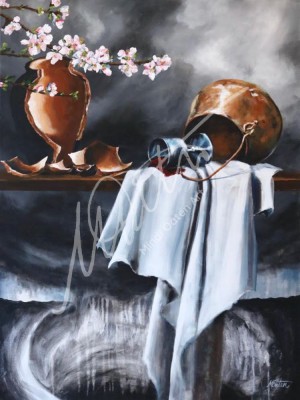
Jeremiah 13: In verse 1, there is a statement of what the Lord said to Jeremiah. God was speaking specifically to Jeremiah. Hearing the voice of God was key for Jeremiah. Then came the following of God’s directions. Hearing God correctly was the challenge. God instructed Jeremiah to buy a linen belt and to put it around his waist. God then told Jeremiah, who was wearing the belt, to take the belt to Perath (Euphrates) and hide the belt in a crevice in the rocks.
The location of Perath has been debated, but generally, it is believed to have been a few miles away from Anathoth. Many days after the belt was hidden, Jeremiah was told to go back and get the belt. The belt was ruined by this time. The action was to prove to Jeremiah how God would ruin the pride of the people of Jerusalem.
This passage was written as a visual—an obedience parable—that was acted out by Jeremiah. God used the analogy to communicate to the people. When the people were in pride, they were dirty or rotten. But when the people turned toward God, they became precious and close. God would ruin the pride of Judah.
In the book of Jeremiah, the people were in the punishment phase of that pattern that many of the prophets followed. The people had sinned, and Jeremiah was declaring the punishment to come. Eventually, Jeremiah would get to the restoration phase. The restoration words came in chapters 30—34.
Another analogy was introduced that used wine and wineskins. All the people, including the kings, would be filled with drunkenness. God would have no compassion, and the people would be destroyed. The frustrated Jeremiah would have had to keep making the same point over and over again. God’s hope was that somehow the people would be turned around and would come back to Him.
Jeremiah 14: Chapter 14 refers to the drought. There was no rain. By verse 7, the people had a sense that they had sinned against God, but they called on the goodness of God for their sake and for the sake of the name of the Lord. The people desperately needed rain, but God would not hear their prayers or accept their offerings.
Jeremiah had a difficult life. The circumstances with the people and the pride of Judah at this time were difficult to deal with, and difficult for Jeremiah to address, even with God’s help.
CLOSING
When God restores us and answers our prayers, we “dance in the rain” in the joy of God’s blessing. When we offer up our prayers to God and ask Him if there are areas of pride in our personal lives, it allows us the opportunity to experience God’s restoration. When God restores us and answers our prayers, we can live in a place of tremendous blessing.
Questions
-
Throughout the first four verses of Jeremiah 12, Jeremiah questioned God about why He allowed the wicked to prosper. Have you ever done this? What was God’s answer to Jeremiah? Have you ever had to wait on anything from God? Was this frustrating? What did you learn from it?
-
What did the Lord instruct Jeremiah to do in Jeremiah 13:1–5? What does this illustration show (Jeremiah 13:7)? How does this illustration show what God has planned for His people? (Jeremiah 13:8–11)
-
Do you think some of the things God asked Jeremiah to do (as well as some of the other prophets) had any similarities to the parables Jesus told in the New Testament? Why do you think God sometimes speaks through illustrations, parables, visions, or dreams?
-
Jeremiah 13:23 says, “Can the Ethiopian change his skin or the leopard its spots?” What does Jeremiah mean by this (Proverbs 27:22; Jeremiah 4:22; Matthew 19:24)? Can you relate to this? Why do you think it is so hard to change our ways sometimes? Do you ever think about the consequences of your actions and how they will affect others and your relationship with God?
-
In Jeremiah 14:11, the Lord instructed Jeremiah once again, “Do not pray for this people.” Do you think this is strange coming from God? Why or why not?
-
What did the Lord say about the false prophets during that time (Jeremiah 14:14–16)? Do you think we still have false prophets today? Will they also have to give account for their actions? What is the remedy to keep from falling into the trap of a false prophet?
-
What did the Holy Spirit highlight to you in Jeremiah 12—14 through the reading or the teaching?
Daily Word
Laura Martin Jeremiah 13:1–2
“This is what the LORD said to me: ‘Go and buy yourself a linen undergarment and put it on, but do not put it in water.’ So I bought underwear as the LORD instructed me and put it on.”
FURTHER SCRIPTURE
- Isaiah 20:3–4 — “The Lord said, ‘As My servant Isaiah has gone naked and barefoot three years as a sign and omen against Egypt and Cush, so the king of Assyria will lead the captives of Egypt and the exiles of Cush, young and old alike, naked and barefoot, with bared buttocks—to Egypt’s shame.’”
- James 4:10 — “Humble yourselves before the Lord, and He will exalt you.”
- 2 John 1:6 — “And this is love: that we walk according to His commands. This is the command as you have heard it from the beginning: you must walk in love.”
Lesson and Daily Word
Each day has two parts: the Lesson and the Daily Word. Use these buttons to go from one to the other.
Teaching Notes and Questions
Next to the video, these tabs show the Teaching Notes and the Questions. Your answer to a question saves when you leave the answer box.
The Bible passage
This link opens the passage on Bible Gateway, and that gives the passage its tick. If you read it in your own Bible, tick it by hand in Progress.
Your progress on this lesson
A part ticks itself when you play the video or audio to the end, read the notes or the Daily Word to the end, or answer every question. You can also tick a part by hand here.
Downloads
Here you can save the video, the audio and the lesson as PDF files. Downloads do not count toward your progress.
Need help?
Use this button to send us a question or tell us about a problem. You can also take this tour again from there.