

A House Of Prayer For All
Discover Jesus as: Immanuel Isaiah 56-58 Read on Bible Gateway (HCSB)
Lesson
Audio Only
Teaching Notes
INTRO
Isaiah 54 addresses the reversal and restoration of Israel. This was a positive, hopeful, encouraging change. Chapter 55 holds an invitation to the Gentiles. Verses 1-5 are an invitation to come to the Lord, “Come be a part of the victory of the Lord that will be certain.” Isaiah 55:6-13 have a theme of seeking while the first verses of chapter 56 include an invitation to worship.Wiersbe explains, “God gives a threefold invitation to the Gentiles: come (Isaiah 55:1-5), seek (Isaiah 55:6-13), and worship (Isaiah 56:1-8).”1
The central theme throughout these chapters is that we should get ready. All are called to prepare for the future that is to come. Constable states, “Isaiah revealed that God had redeemed them . . . demonstrating that righteousness was impossible for them to do by themselves (Isaiah 1—39). They needed to appropriate His grace as redeemed people—redeemed from captivity (Isaiah 40—48) and redeemed from sin (Isaiah 49—55)—to become the servants of God that He intended them to be. Chapter 56 contains moral exhortations in view of God’s salvation.”2
TEACHING
Isaiah 56:1-12: Isaiah said salvation was coming soon through the suffering Servant. With salvation comes righteousness. Even though the people of Israel heard these words they did not heed or embrace the warning. Verse 2 instructs individuals to keep the Sabbath and do no evil. The Sabbath observance was established after their deliverance from Egypt. It was in obedience to God and served as a sign of the covenant God made with Moses. Wiersbe states, “This commandment was a special ‘sign’ between God and the Jews (Exodus 31:12-18; Nehemiah 9:13-14); it was never given to the Gentiles. The Jews were rebuked for the careless way they treated the Sabbath during their wilderness wanderings (Ezekiel 20:10-26) and when they lived in the land (Jeremiah 17:19-27). Even after their return after the captivity, the Jews continued to violate the Sabbath (Nehemiah 13:15-22).”3 This mattered because God did not have this arrangement or covenant with any other nation of people. Wiersbe states, “Keep in mind that the Sabbath Day is the seventh day of the week, the day that God sanctified when He completed Creation (Genesis 2:1-3). Sunday is the Lord’s Day, the first day of the week, and it commemorates the resurrection of Jesus Christ from the dead. The Sabbath was a sign to the Jews and belongs to the Law.”4 In verse 3 and following, there was a clarification that no foreigner or Gentile had been asked to keep the Sabbath until this time: “God never before asked the Gentiles to join the Jews in keeping the Sabbath, but here He does so.”5 God was stating that the foreigner can come and worship with the Jews. This was prophetic for the future as well as being relevant at that time.
Nelson’s Commentary explains the eunuchs in this passage were “probably some of the male exiles who were castrated so that they could serve in the Babylonian and Persian courts (Isaiah 39:7; Daniel 1:3).”6 They were also now allowed to worship with the Jews in the temple.
MacArthur documented seventeen of Isaiah’s descriptions of Israel’s future kingdom, including: God will restore the faithful remnant of Israel; God will provide protection for His people even as He defeats their enemies; Restored Israel will experience God’s great blessing; Jerusalem will one day rise to world preeminence; Israel will be given the mission to glorify the Lord; and “Gentiles in the kingdom will receive blessing through the channel of faithful Israel.”7 There was a progression of God’s relationship to Gentiles that would be uncomfortable for the Jews. MacArthur continues, “In the kingdom mentality of the Messiah, the Jerusalem temple will be the central focal point for worship of the Lord by people of all ethnic backgrounds.”8 Jesus referenced this when He ran the moneychangers from the temple. “Jewish leaders had made the temple a commercial venture (Matthew 21:13; Mark 11:17; Luke 19:46).”9
The point of Isaiah’s message was to let the Jews know that worship in the temple would be for all people. The temple would be a house of prayer for all nations and not just the nation of Israel. The overall mission within the temple would be to glorify God: “Besides gathering Israel’s exiles into His kingdom, the Lord will bring in non-Jews also (Isaiah 49:6).”10
Verses 9-12 take a turn, stating that the shepherds who were Israel’s prophets were not doing their job of warning the people. Constable states, “Rather than caring for the sheep unselfishly, these shepherds went off and got drunk—repeatedly. They indulged themselves at the expense of their charges, and in the process, became enslaved and incapable of fulfilling their responsibilities.”11
CLOSING
Isaiah 57 talks about a peace for a mixed people where God would be their refuge. It includes a reminder that there would be no peace for the wicked. Chapter 58 addresses the fasting of the nation. The concern was that the fasting was hypocritical. Fasting must focus on justice for others and not focus on self-righteousness.
Warren W. Wiersbe. The Bible Exposition Commentary: New Testament (Colorado Springs, David C. Cook, 1989), p. 65.
Thomas Constable, Constable’s Expository Bible Study Notes: Isaiah, p. 395; available at https://planobiblechapel.org/tcon/notes/pdf/isiah.pdf
Wiersbe, p. 65.
Wiersbe, p. 65.
Wiersbe, p. 65.
Nelson’s New Illustrated Bible Commentary, p.865.
MacArthur, John. The MacArthur Bible Commentary (Nashville, Thomas Nelson, 2002), p. 831.
MacArthur, p. 832.
MacArthur, p. 832.
MacArthur, p. 832.
Constable, p. 399.
Questions
-
In Isaiah 56:2, the Lord said through Isaiah, “Happy is the man…who keeps the Sabbath without desecrating it.” What did God mean by this? Why was the Sabbath so important (Exodus 31:13-17)? Do you feel that we as a society keep the Sabbath holy today? Do you personally observe a Sabbath day? Why or why not?
-
According to Isaiah 56, is anyone excluded from God’s blessings? What are some of the qualifications to receive these blessings? (Isaiah 56:6)
-
What did God call His house in Isaiah 56? Where else in Scripture do you find this (Mark 11:17)? Overall, do you think the church does well at this today? What are some things that have taken precedence in churches around the world today?
-
According to Isaiah 57, what were some of the evil things the people of Israel were doing? Do you think we are better, worse, or the same today? Is there any peace for the wicked?
-
Where does the Spirit of the Lord dwell (Isaiah 57:15)? If you are saved, you have the Holy Spirit living inside of you. Why is it still possible to sin with the Holy Spirit/Spirit of God living inside of you? (Romans 6:12-14; Galatians 6:7-8)
-
Isaiah 58 talks about fasting. Is all fasting pleasing to the Lord? What is the purpose of biblical fasting (Isaiah 58:6-9)? Where is fasting first mentioned in the Bible (Exodus 34:28)? Who mentioned it?
-
What did the Holy Spirit highlight to you in Isaiah 56—58 through the reading or the teaching?
Daily Word
Laura Martin Isaiah 56:8
“This is the declaration of the LORD God, who gathers the dispersed of Israel: ‘I will gather to them still others besides those already gathered.’”
Isaiah prophesied that the Lord would gather His people back to Jerusalem. God, the Great Shepherd, cares for all His sheep and gathers them until they are all together, even those deserving punishment and discipline. The Lord will bring them back.
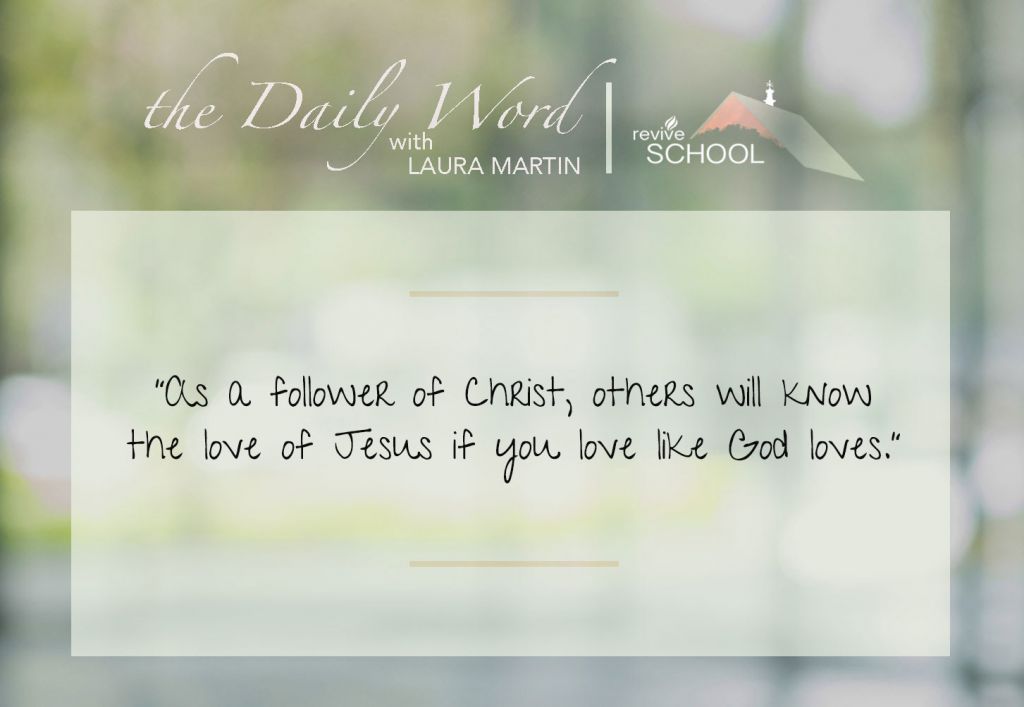
As a follower of Christ, if you love like God loves, others will know the love of Jesus. One way Jesus showed His loved was as a gatherer. A gatherer brings people together into one group. Gather people like Jesus gathered people—as one. Gather people into your home. Gather people at a park. Gather people at a coffee shop. Go out and find people in the outside spaces and love them. As you gather people together, ask the Holy Spirit to lead and guide you. Coffee, ice cream, tacos, or a Wiffle ball game help connect people as you gather together. But ask the Lord to help you go deeper. Go beyond food and activity and ask the Lord to connect hearts to the heart of Jesus and His great love. His love will impact lives for eternity—the ultimate gathering of them all!
“This is the declaration of the Lord God, who gathers the dispersed of Israel: ‘I will gather to them still others besides those already gathered.’”
— Isaiah 56:8
FURTHER SCRIPTURE
- Jeremiah 23:3 — “I will gather the remnant of My flock from all the lands where I have banished them, and I will return them to their grazing land. They will become fruitful and numerous.
- Zechariah 10:8 — “I will whistle and gather them because I have redeemed them; they will be as numerous as they once were.”
- Matthew 23:37 — “Jerusalem, Jerusalem! She who kills the prophets and stones those who are sent to her. How often I wanted to gather your children together, as a hen gathers her chicks under her wings, yet you were not willing!”
Lesson and Daily Word
Each day has two parts: the Lesson and the Daily Word. Use these buttons to go from one to the other.
Teaching Notes and Questions
Next to the video, these tabs show the Teaching Notes and the Questions. Your answer to a question saves when you leave the answer box.
The Bible passage
This link opens the passage on Bible Gateway, and that gives the passage its tick. If you read it in your own Bible, tick it by hand in Progress.
Your progress on this lesson
A part ticks itself when you play the video or audio to the end, read the notes or the Daily Word to the end, or answer every question. You can also tick a part by hand here.
Downloads
Here you can save the video, the audio and the lesson as PDF files. Downloads do not count toward your progress.
Need help?
Use this button to send us a question or tell us about a problem. You can also take this tour again from there.