

Comparing The Old And New Covenants
Discover Jesus as: High Priest Hebrews 9 Read on Bible Gateway (HCSB)
Lesson
Audio Only
Teaching Notes
INTRO
The book of Hebrews continues to show that the new covenant is better than the old one. The author of the book keeps building a case for the Hebrews that, while they were used to things being one way with God, what Jesus provides is greater than anything they had experienced in the past. The new through Christ is better than anything they had even thought about.
In chapter 9 the first ten verses cover the old covenant, and the rest of the chapter covers the new, and better covenant. The old will not last, but the new will last forever. To understand Hebrews, we have to understand that in some ways we are citizens of two places: the world and God’s kingdom.
TEACHING
Hebrews 9:1-10: Wiersbe provides five reasons the old covenant was inferior:
- “It was an earthly sanctuary (v. 1).”
- It was made by man (Hebrews 8:2).
- It was paid for by man.
- It required repairs and maintenance.
- It was limited by geography as to where it could be.
“It was a type of something greater (vv. 2-5).”
It alluded to what was to come.
It needed the gold lampstands to provide light, while Jesus IS the light of the world (John 8:12).
The twelve presentation loaves had to be put out each week and represented the presence of God. However, Jesus IS the eternal bread of life (John 6:35).
The golden altar is usually shown in the holy place in illustrations (Exodus 30:6; 40:5), and incense was burned on it every morning to intercede in prayer (Psalm 141:2).
Romans 8:33-34 states Jesus intercedes for us in the presence of the Lord.
“It was inaccessible to the people (vv. 6-7).”
The Holy of Holies housed the ark of the covenant and the mercy seat and could only be entered once a year on the day of atonement by the high priest.
The high priest had to atone for his own sins as well as for the sins of the people.
As the High Priest, Jesus didn’t have to atone for His sins, only ours.
“It was temporary (v. 8).”
Priests ministered while the people were held back and could not enter into the presence of God themselves. It was temporary at best.
The Holy Spirit was doing the work and had not opened the way for people to approach God in the most holy place.
“Its ministry was external, not internal (vv. 9-10).”1
The sacrifices could not change the worshipper’s conscience. It only impacted the outside.
Hebrews 9:11-28: Wiersbe also provides five reasons why the new covenant is superior:
“Its heavenly (v. 11).”
It was not made with human hands and cannot be repaired by humans.
“Its ministry is effective to deal with sin (vv. 12-15).”
Jesus’ death effectively took care of sin once and for all.
“Its ministry is based on a costly sacrifice (vv. 16-23).”
The author used a will [a document that gives instructions for distribution of the persons assets upon death] as an illustration, explaining the instructions of a will only take effect when the person who made the will dies. That’s why the old covenant required blood before it could take effect.
Without the shedding of blood there is no forgiveness.
Wiersbe explains the original sanctuary was purified through the blood of animals, but we can only be received by God in the heavenly sanctuary by applying the blood of God’s Son.
“Its ministry represents fulfillment (v. 24).”
Three times in verses 24-28 the word appear or appeared is used.
Jesus is in heaven at the right hand of the Father to take away sin for us.
“Its ministry is final and complete (vv. 25-28).”2
Jesus has appeared to put away sin (v. 25).
Jesus will appear a second time to bring salvation to those who are waiting for Him (v. 28).
CLOSING
All of this is why the new covenant is better, greater, and superior to the old covenant. Jesus took care of it all.
Warren W. Wiersbe, The Bible Exposition Commentary, Vol. II, (Colorado Springs, David C. Cook, 1989), p. 309-310.
Wiersbe, p. 311-312.
Questions
-
What did the high priest do only once a year under the old covenant, and how did he go about doing it? (Leviticus 16:32-34)
-
What was the Holy Spirit making clear about the most holy place? How is it a symbol for the present time (Hebrews 9:8-9)? Who is the only way to God? (John 14:6)
-
Explain how Jesus fulfilled the role of the high priest.
-
What was so important about the role of blood in both the old and the new covenants (Leviticus 16:5-10; Hebrews 9:22; 13:12)? What would you say to a nonbeliever who asks you to explain why Christians talk about the blood of Jesus so much?
-
Why do believers today not need a high priest to talk to God (1 Timothy 2:5)? Why did Jesus not need to make multiple sacrifices like the high priests in the Old Testament? (Hebrews 7:27; 9:24-26; 10:11-12)
-
What are the rare exceptions to Hebrews 9:27 in Scripture (Genesis 5:24; 2 Kings 2:11; John 11:43-44; 1 Thessalonians 4:17)? What will be the difference between the judgment of believers and the judgment of nonbelievers (2 Corinthians 5:10; Revelation 20:11-15)? Which judgment will you be in? Which judgment will your family, friends, and coworkers be in?
-
What did the Holy Spirit highlight to you in Hebrews 9 through the reading or the teaching?
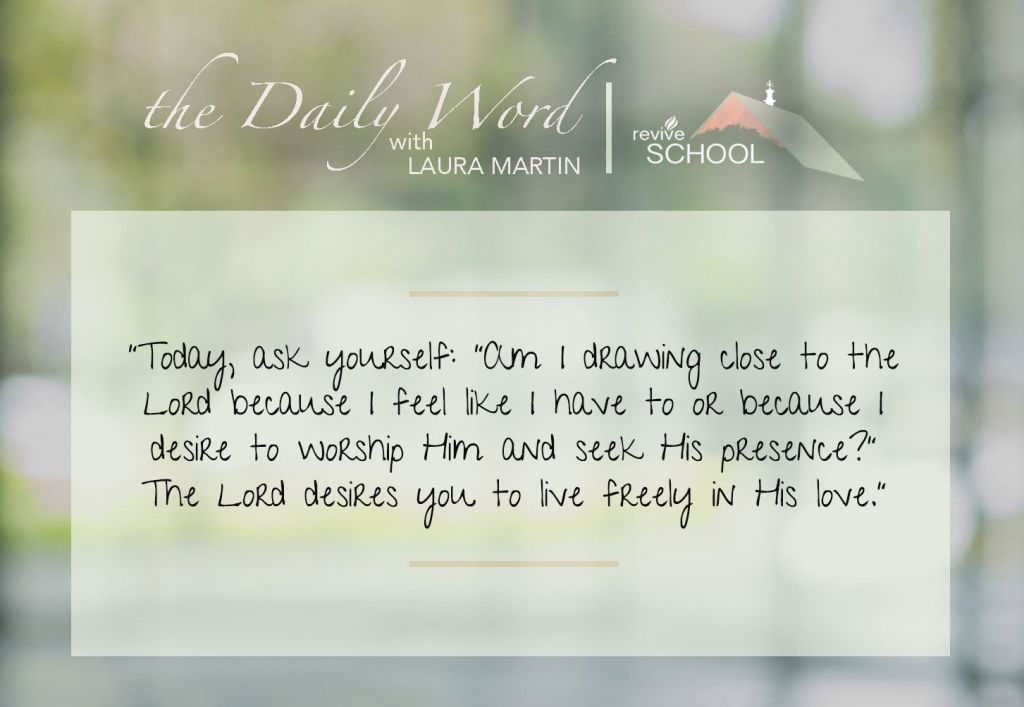
Daily Word
Laura Martin Hebrews 9:11–12
“But the Messiah has appeared, high priest of the good things that have come. In the greater and more perfect tabernacle not made with hands (that is, not of this creation), He entered the most holy place once for all, not by the blood of goats and calves,but by His own blood, having obtained eternal redemption.”
FURTHER SCRIPTURE
- Romans 6:8-11 — “Now if we died with Christ, we believe that we will also live with Him, because we know that Christ, having been raised from the dead, will not die again. Death no longer rules over Him. For in light of the fact that He died, He died to sin once for all; but in light of the fact that He lives, He lives to God. So, you too consider yourselves dead to sin but alive to God in Christ Jesus.”
- Galatians 5:1 — “Christ has liberated us to be free. Stand firm then and don’t submit again to a yoke of slavery.”
- Hebrews 9:13–14 — “For if the blood of goats and bulls and the ashes of a young cow, sprinkling those who are defiled, sanctify for the purification of the flesh, how much more will the blood of the Messiah, who through the eternal Spirit offered Himself without blemish to God, cleanse our consciences from dead works to serve the living God? Therefore, He is the mediator of a new covenant, so that those who are called might receive the promise of the
eternal inheritance, because a death has taken place for redemption from the transgressions committed under the first covenant.”
Lesson and Daily Word
Each day has two parts: the Lesson and the Daily Word. Use these buttons to go from one to the other.
Teaching Notes and Questions
Next to the video, these tabs show the Teaching Notes and the Questions. Your answer to a question saves when you leave the answer box.
The Bible passage
This link opens the passage on Bible Gateway, and that gives the passage its tick. If you read it in your own Bible, tick it by hand in Progress.
Your progress on this lesson
A part ticks itself when you play the video or audio to the end, read the notes or the Daily Word to the end, or answer every question. You can also tick a part by hand here.
Downloads
Here you can save the video, the audio and the lesson as PDF files. Downloads do not count toward your progress.
Need help?
Use this button to send us a question or tell us about a problem. You can also take this tour again from there.