
The Temple Of The Lord
Discover Jesus as: Greater Temple Haggai 1-2 Read on Bible Gateway (HCSB)
Lesson
Audio Only
Teaching Notes
INTRO
We are in the ninth segment of our study through the Bible! We finish up with the book of Revelation next. We have gone through nine Minor Prophets thus far. I am willing to bet that most of us have not really studied the book of Haggai that often. Hebrews 12:26 is the only place in the New Testament that Haggai is quoted. Little is known about the writer of Haggai. He is mentioned in Ezra 5:1 and 6:14, and both also mention Zechariah. There is no record of Haggai’s occupation, and he is the only person mentioned in the Old Testament with his name.1 MacArthur states, “Haggai 2:3 may suggest that he had seen the glory of Solomon’s Temple before it was destroyed, making him at least 70 years of age when writing this prophecy.”2 Our phrase for Jesus in Haggai is the Greater Temple.
Haggai’s prophecies happened in a four-month time frame in the second year of Darius, the king of Persia (521–486 BC). It is likely Haggai returned to Jerusalem from Babylon 18 years earlier with Zerubbabel. After captivity, Israel was allowed to return home under the civil leadership of Zerubbabel and the spiritual leadership of Joshua, the high priest, in 538 BC. MacArthur explains, “In 536 BC, they began to rebuild the temple, but opposition from neighbors and indifference by the Jews caused the work to be abandoned. Sixteen years later Haggai and Zechariah were commissioned by the Lord to stir up the people to (1) rebuild the temple, but also to (2) restore their spiritual priorities.”3
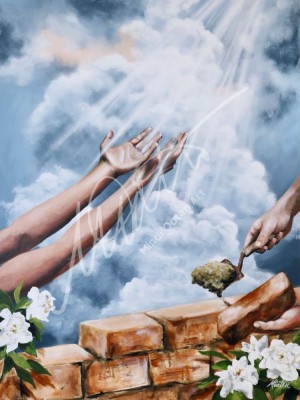
The theme in Haggai is, “Let’s rebuild the temple.” In fact, Haggai was like a spiritual contractor. God motivated them by bringing a drought causing crop failure because of their failed spiritual priorities. The temple has always represented the Lord’s presence. However, when the temple was destroyed, the people believed God’s glory had left. The rebuilding of the temple was essentially welcoming the presence of God back into their lives. The rebuilding of the temple pointed to the Greater Temple. I want to look at the progression of the temple to help us understand Haggai’s writings better.
MacArthur outlines the details of the temples of the Bible:
- The Tabernacle was the first temple in Scripture and dated around 1444 BC (Exodus 25:30, Leviticus 10:1–7).
- Solomon’s Temple was built by King Solomon, David’s son (966–586 BC). David wanted to build a temple to God, but God chose Solomon to do it (2 Samuel 7:1–29).
- Zerubbabel’s Temple was prophesized by both Haggai and Zechariah and was built between 516–169 BC (Ezra 3:1–8).
- Herod’s Templewas a restoration and renewal project of Zerubbabel’s Temple (19 BC–AD 70). It was destroyed by Rome (Mark 13:2; John 2:20).
- The Present Temple is now the body of believers who are, temporarily, the temple of God. That will change with the return of the Messiah (1 Corinthians 6:19–20).
- The Temple of Revelation 11 is where the antichrist will stand during the Great Tribulation (Daniel 9:27; Matthew 24:15).
- Ezekiel’s Millennial Temple will be built in the Millennium. It was described in the book of Ezekiel and will be built by the Messiah (Ezekiel 40:1—42:20).
- Eternal Temple of His Presence will be the greatest temple ever built and will be a spiritual temple (Revelation 21:22).4
Why unpack of all this? Because really, Haggai was pointing to Zerubbabel’s temple, and he was also beginning to unpack the Ezekiel and/or the Eternal temple.
TEACHING
Haggai 1:1-11J. Vernon McGee explains verses 1–11 were “a challenge to the people.”5 The people were content to live in their houses with their material wealth while the temple lay in ruin. Possibly the word of the Lord came to Haggai to deliver during a holy feast. The Lord said the people put off rebuilding His temple. Instead they chose to live comfortably in their paneled houses while His house was in ruins (vv. 1–4). Haggai explained the Israelites were never satisfied and always wanted more. God told them to go to the mountains, bring back wood, and rebuild His house so He would be glorified. God explained that because His house had not been rebuilt, He had brought destruction to their crops (v. 9). God withheld the dew from them, creating drought that killed the crops (vv. 10–11).
Haggai 1:12–15: Something in Haggai’s words convicted the people that they needed to obey God’s command. King Zerubbabel, the high priest Joshua, and the entire remnant of the people obeyed (v. 12). Haggai reminded the people that God was with them (v.13)! The Lord stirred up the spirits of Zerubbabel, Joshua, and all the people (v. 14). I think that means they became passionate about rebuilding the house of the Lord. They began the work on the new temple “on the twenty-fourth day of the sixth month, in the second year of King Darius” (v. 15).
Haggai 2:1–9: One month later, the people were getting discouraged with the task of rebuilding. God sent Haggai with another message—be strong and obedient (vv. 1–4). Once again God reminded the people that His Spirit was with them (v. 5). The Lord of Hosts promised He would again shake the heavens, the earth, and the sea, and every nation on earth, and they would bring glory to His house (vv. 6–7). This is a picture of the millennial kingdom. God described the new temple as “greater than the first,” meaning it would be greater than Zerubbabel’s Temple (vv. 8–9). This was a foreshadowing of the Greater Temple in Revelation 21:22.
Haggai 2:10–19: Seven months later (the ninth month), God gave Haggai His message to deliver again. First, God says to Haggai, question whether or not something that had been set apart for Him that had touched something unconsecrated would become holy. The answer was no. Second question, God had him ask whether or not something that had been touched by someone who was defiled by contact with corpse would also be defiled. The answer was yes. The holiness did not transfer, but the unholiness did. Haggai explained that the people’s work and all they offered was defiled because they were unholy. However, because they had obeyed God and laid the foundation of the temple on that very day, God promised to bless them. Although they had no seed in the granary and nothing growing on the trees, God would bless them with prosperity.
Haggai 2:20–23: God promised He would overturn royal thrones and destroy the power of the Gentile kingdoms. He would give divine leadership to the nation through Zerubbabel.
CLOSING
The most exciting thing about Haggai goes back to the list of temples. The people didn’t want to build the temple. They wanted to stay in the good old days of comfort they had gotten used to. But, God had something better and greater for them when they let go of themselves. What we will ultimately see in the end is all these things come to be when Jesus returns (Revelation 21:22).
John MacArthur, The MacArthur Bible Commentary (Nashville: Thomas Nelson Publishers, 2005), p. 1042.
MacArthur, p. 1042.
MacArthur, p. 1042.
MacArthur, p. 1047.
J. Vernon McGee, “Outline of Haggai”; available at https://www.blueletterbible.org/Comm/mcgee_j_vernon/notes-outlines/haggai/haggai-outline.cfm.
Questions
-
Haggai the prophet received a message from the Lord to Zerubbabel, the governor of Judah, and Joshua, the high priest, in Haggai 1:1–2. What did Haggai tell them the people were saying? What were the people busy doing instead (Haggai 1:4, 9)?
-
How were the people building their own houses while God’s house was neglected (Ezekiel 34:2; 1 Timothy 1:3–4)? (A situation that might be similar today is when some pastors build their own ministries but neglect the building of God’s kingdom.)
-
What was the outcome of the people neglecting the rebuilding of God’s house (Haggai 1:6, 10–11)? What outcome do you observe with churches today who are busy building their separate “kingdoms” rather than pursuing building the Church, which is the body of Christ? (Romans 12:5; 1 Corinthians 12:12–27; Ephesians 3:6; 5:23; Colossians 1:18)
-
How can we learn from the leadership and remnant of Judah in their response to the message from the Lord (Haggai 1:12)? Is this how you typically respond to the Lord’s chastisement and discipline?
-
How would you feel and respond if the Lord’s message in Haggai 2:4 were being spoken to you?
-
Do you believe the word from the Lord in Haggai 2:9 is a prophetic message about the coming of the Messiah and the New Covenant? Why?
-
What did the Holy Spirit highlight to you in Haggai 1—2 through the reading or the teaching?
Daily Word
Laura Martin Haggai 2:18
“Consider carefully from this day forward; from the twenty-fourth day of the ninth month, from the day the foundation of the LORD’s temple was laid; consider it carefully.”
FURTHER SCRIPTURE
- Haggai 2:9 — “‘The final glory of this house will be greater than the first,’ says the Lord of Hosts. ‘I will provide peace in this place’—this is the declaration of the Lord of Hosts.”
- Haggai 2:15–17 — “Now, reflect back from this day: Before one stone was placed on another in the Lord’s temple, what state were you in? When someone came to a grain heap of 20 measures, it only amounted to 10; when one came to the winepress to dip 50 measures from the vat, it only amounted to 20. I struck you—all the work of your hands—with blight, mildew, and hail, but you didn’t turn to Me’—this is the Lord’s declaration.”
- Ephesians 5:15–17 — “Pay careful attention, then, to how you walk—not as unwise people but as wise—making the most of the time, because the days are evil. So don’t be foolish, but understand what the Lord’s will is.”
Lesson and Daily Word
Each day has two parts: the Lesson and the Daily Word. Use these buttons to go from one to the other.
Teaching Notes and Questions
Next to the video, these tabs show the Teaching Notes and the Questions. Your answer to a question saves when you leave the answer box.
The Bible passage
This link opens the passage on Bible Gateway, and that gives the passage its tick. If you read it in your own Bible, tick it by hand in Progress.
Your progress on this lesson
A part ticks itself when you play the video or audio to the end, read the notes or the Daily Word to the end, or answer every question. You can also tick a part by hand here.
Downloads
Here you can save the video, the audio and the lesson as PDF files. Downloads do not count toward your progress.
Need help?
Use this button to send us a question or tell us about a problem. You can also take this tour again from there.