
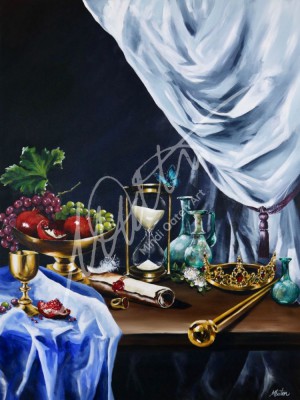
The Deliverance of the Jews
Discover Jesus as: The Despised One Esther 9-10 Read on Bible Gateway (HCSB)
Lesson
Audio Only
Teaching Notes
INTRO
This is the last lesson in Esther, and the last lesson in the twelve historical books: Joshua–Commander, Judges–Judge, Ruth–Kinsman Redeemer, 1 Samuel–Anointed One, 2 Samuel–Eternal Throne, 1 Kings–Something Greater, 2 Kings–Surviving Seed, 1 Chronicles–Son of David, 2 Chronicles–Royal Throne, Ezra–Promise Keeper, Nehemiah–Builder, and Esther–The Despised One. All of these phrases point to the coming Messiah (Matthew 5:17). In Esther, God used Mordecai, the despised one, and his cousin, Esther, to save the Jews from annihilation in Persia (1 Corinthians 1:28–31). The first edict to kill the Jews could not be rescinded, but the second decree changed the Jews’ situation. Constable explains, “The king gave the Jews permission to defend themselves by killing their enemies. Evidently this meant that they not only met attack with resistance, but in some cases, they initiated attack against those who they knew would destroy them.”1
TEACHING
Esther 9:1–4: Both edicts went into effect on the same day, but the Jews’ enemies were not able to overpower the Jews and instead were overpowered by the Jews (vv. 1–2). The Jewish people clearly had a better weapon—the people were afraid of the Jews (Esther 8:17; Jeremiah 30:16). Other examples of this in the Bible include:
- Jacob on the road from Shechem to Bethel, when all the people in the cities that were around them were terrified of the Lord and left them alone (Genesis 35:5).
When Israel entered the Promised Land, the nations in the land already feared them (Deuteronomy 2:25; Joshua 2:8–11; 5:1; 9:24).
Sadly, that same fear does not exist in most people today. Romans 3:18 says, “There is no fear of God before their eyes.” As Pharaoh asked, “Who is Yahweh that I should obey Him by letting Israel go? I do not know anything about Yahweh, and besides, I will not let Israel go” (Exodus 5:2).
Verses 3–4 state that all the officials in Persia’s provinces helped the Jews because they were afraid of Mordecai, who had great power in the palace and was becoming more powerful throughout Persia. Mordecai, the despised one, had become powerful. This is the picture of Christ, The Despised One, dying on the cross and then being raised from the dead in glory and power (1 Corinthians 15:54–57).
Esther 9:5–10: The Jews destroyed their enemies with the sword. They killed 500 men in the citadel of Susa, including the ten sons of Haman (vv. 5–10). However, the Jews took no plunder in their victory. Remember when God told Saul to strike down all of the Amalekites, including the animals, but Saul disobeyed and allowed King Agag and the best animals to survive (1 Samuel 15:17–23)? The Jews in Persia also faced the Amalekites, and they destroyed their enemies, but they refused to keep any of the animals or the things that had belonged to them. The Jews had learned something in their time in Persia. Commentator Baldwin explains, “The deliberate decision not to enrich themselves at the expense of their enemies would not go unnoticed in a culture where victors were expected to take the spoil. The very novelty of such self-denial would be remarked upon and remembered and taken as proof of the upright motives of the Jewish communities.”2
Esther 9:11–32: The king was told how many were killed, and he asked Esther what else she wanted (vv. 11–12). She asked that the Jews in Susa be given one more day to complete the decree against their enemies and that the bodies of Haman’s sons be hung on the gallows (v. 13). The king granted her requests (v. 14). The Jews assembled the next day and killed 300 more men but still took no plunder (v. 15). The Jews throughout the provinces killed 75,000 of their enemies but took no plunder as well (v. 16). The Jews in the provinces fought on the thirteenth day of the month of Adar and rested on the fourteenth day. The Jews in the city of Susa fought on the thirteenth and fourteenth days and then rested on the fifteenth (vv. 17–18). Each group celebrated the victory on the day they rested.
2 Joyce G. Baldwin, Tyndale Old Testament Commentary: Esther (Downers Grove, IL: InterVarsity Press, 1984), p. 105; quoted in Thomas Constable, Dr. Constable’s Expository Bible Study Notes: Esther, p. 65; available online at https://planobiblechapel.org/tcon/notes/pdf/esther.pdf.
Therefore, Mordecai sent letters to all the Jews throughout the province and ordered the celebration on the fourteenth and fifteenth days of the month of Adar each year, as the days that “their sorrow was turned into rejoicing and their mourning into a holiday” (vv. 20–22a). The celebration included fasting, giving of gifts, and rejoicing (v. 22b).
This was the creation of the Festival of Purim (v. 23). Evil Haman had selected the date for the annihilation of the Jews by casting lots (or “Pur”), so the festival was named after that (v. 24; Proverb 16:33). Verse 25 begins the summary of the book of Esther—what Haman plotted for the Jews happened to him and his sons instead. The feast of Purim commemorates all these things for the Jews of Persia and for all Jews to come (vv. 26–32). The Feast of Purim is still celebrated today.
CLOSING
The despised one brought about deliverance for the people of God. Mordecai, a humble man, was lifted up in rank to be second only to King Ahasuerus, and he continued to speak for his people and seek their welfare (Esther 10:3). What a perfect picture of Jesus, The Despised One, who brings deliverance to the people of God today and intercedes for us.
Thomas Constable, Dr. Constable’s Expository Bible Study Notes: Esther, p. 61; available online at v.
Questions
-
In Esther 9:1, what edict or order was given by the king (Esther 8:11–12)? Why did the king make this edict?
-
Who was Mordecai a descendant of and how was he related to Esther (Esther 2:5–7)? What position did Mordecai hold?
-
What was Queen Esther’s request of the king in chapter 9? Did the king grant Esther’s request? Why do you think he did this?
-
What feast was established to celebrate the Jews getting relief from their enemies? How did they celebrate this? Do the Jews still celebrate this today? How does this celebration reflect our own liberation from the enemy?
-
What did the Holy Spirit highlight to you in Esther 9—10 through the reading or the teaching?

Daily Word
Laura Martin Esther 9:21–22
“He ordered them to celebrate the fourteenth and fifteenth days of the month Adar every year because during those days the Jews got rid of their enemies. That was the month when their sorrow was turned into rejoicing and their mourning into a holiday. They were to be days of feasting, rejoicing, and of sending gifts to one another and the poor.”
FURTHER SCRIPTURE
- Psalm 30:11–12 — “You turned my lament into dancing; You removed my sackcloth and clothed me with gladness, so that I can sing to You and not be silent. Lord my God, I will praise You forever.”
- Isaiah 61:3 — “To provide for those who mourn in Zion; to give them a crown of beauty instead of ashes, festive oil instead of mourning, and splendid clothes instead of despair. And they will be called righteous trees, planted by the Lord to glorify Him.”
- Luke 15:22–24 — “But the father told his slaves, ‘Quick! Bring out the best robe and put it on him; put a ring on his finger and sandals on his feet. Then bring the fattened calf and slaughter it, and let’s celebrate with a feast, because this son of mine was dead and is alive again; he was lost and is found!’ So they began to celebrate.”
Lesson and Daily Word
Each day has two parts: the Lesson and the Daily Word. Use these buttons to go from one to the other.
Teaching Notes and Questions
Next to the video, these tabs show the Teaching Notes and the Questions. Your answer to a question saves when you leave the answer box.
The Bible passage
This link opens the passage on Bible Gateway, and that gives the passage its tick. If you read it in your own Bible, tick it by hand in Progress.
Your progress on this lesson
A part ticks itself when you play the video or audio to the end, read the notes or the Daily Word to the end, or answer every question. You can also tick a part by hand here.
Downloads
Here you can save the video, the audio and the lesson as PDF files. Downloads do not count toward your progress.
Need help?
Use this button to send us a question or tell us about a problem. You can also take this tour again from there.