
Firstfruits, Tithe & Covenant Summary
Discover Jesus as: Prophet Deuteronomy 25-26 Read on Bible Gateway (HCSB)
Lesson
Audio Only
Teaching Notes
INTRO
Here we are in the last book of the Pentateuch and are almost transitioning to the New Testament. We are going to move from the Pentateuch to the Gospels, and then back to the historical books of the Old Testament.
TEACHING
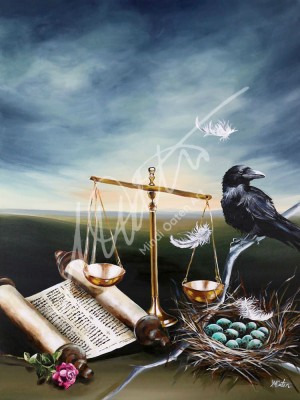
Deuteronomy 25: We have more lists of rules that include the following: when there is a dispute between men, they could be flogged up to 40 times; how to preserve the family lines when a family member died; legal weights and scales; and revenge upon the Amalekites.
Deuteronomy 26:1–4: When they took the land, they were required to collect the firstfruits of the land, put them in a container, and place them in the tabernacle where God dwelled. Nelson’s commentarypoints out that God wanted the Israelites to give the firstfruits, even though they could not be sure that the rest of the harvest would ripen or be harvested as a way to show they trusted God to provide for them.1They were to say to the priest who was serving, “Today I acknowledge to the Lord your God that I have entered the land the Lord swore to our fathers to give us.” The priest then received these offerings and placed them in the tabernacle for God. Wiersbe refers to this as a “confession of God’s goodness.”2
Deuteronomy 8:11–19: “Be careful that you don’t forget the LORD your God by failing to keep His command––the ordinances and statutes––I am giving you today. When you eat and are full, and build beautiful houses to live in, and your herds and flocks grow large, and your silver and gold multiply, and everything else you have increases, be careful that your heart doesn’t become proud and you forget the LORD your God who brought you out of the land of Egypt, out of the place of slavery. He led you through the great and terrible wilderness with its poisonous snakes and scorpions, a thirsty land where there was no water. He brought water out of the flint-like rock for you. He fed you in the wilderness with manna that your fathers had not known, in order to humble and test you, so that in the end He might cause you to prosper. You may say to yourself, ‘My power and my own ability have gained this wealth for me,’ but remember that the LORD your God gives you the power to gain wealth, in order to confirm His covenant, He swore to your fathers, as it is today. If you ever forget the LORD your God and go after other gods to worship and bow down to them, I testify against you today that you will perish. Like the nations the LORD is about to destroy before you, you will perish if you do not obey the LORD your God.”
Deuteronomy 26:5–10: Jacob was a wandering Aramean and father of the 12 tribes. He went to Egypt because of the famine. They took everything they had with them—all the family and all their possessions (Genesis 46:3–7). He went with a total of 70 people. Exodus 1:7 recorded: “But the Israelites were fruitful, increased rapidly, multiplied, and became extremely numerous so that the land was filled with them.” Estimates are that the 70 multiplied into 2 million people and they became a great nation. The suffering and persecution they went through in Egypt led to the people multiplying (Exodus 2:23–25). The same is true in the New Testament. Every time the church was persecuted and scattered, it multiplied in numbers. God heard the groaning and the cries of the Israelites. He brought them out of Egypt with a strong arm and signs and wonders to a land flowing with milk and honey. The firstfruits from the Promised Land were offered to God and caused the Israelites to remember all that God had done for them. They bowed down to worship God. Nelson’s commentaryexplains that “the most common Hebrew word for worshipliterally means ‘to cause oneself to lie prostrate.’”3Bowing down symbolizes worship and adoration.
Deuteronomy 26:12–15: Wiersbe identifies these verses as “a confession of honesty and generosity.”4When the Israelites finished paying the tenth in the third year, they were to give it to the Levite, foreigner, fatherless, and widow—those that needed it most (v. 12). Then, they were to say that they had done this in the presence of the Lord (v. 13). They had also not eaten any of it or offered it to the dead like the Canaanites. Constable points out that this means “God’s people should continue to trust Him for the fulfillment of promised blessings yet unrealized.”5
Deuteronomy 26:16–19: Wiersbe identifies these verses as a “confession of obedience.”6TheIsraelites were to follow these commandments with all their heart and soul (Deuteronomy 6:5—called the Shema). This was also Jesus’ language in Matthew 22:34–39 (Jeremiah 31:33; Ezekiel 11:19; 36:26). Wiersbe states that the first two confessions were looking forward to the land (v. 17).7The next one dealt with “today” as they affirmed that God is their life, as God affirmed they were His special people (v. 18) (Exodus 19:5; Malachi 3:17). God promised to elevate them to praise, fame, and glory above all nations as a holy people to the Lord (v. 19; Psalm 81:11–14, 16).
CLOSING
I want to be a blessing to the nation of Israel. It is dependent upon a heart condition of loving God and loving others.
Deuteronomy 25 is more rules and regulations. Deuteronomy 26 is mainly about giving of firstfruits and giving the tithe for the first three years, then giving it to the poor the third year. These are laws that change the heart to see people as God sees them. If these concerns are in our hearts, we won’t have a problem doing them.
Earl Radmacher, Ronald B. Allen, and H. Wayne House, eds., Nelson’s New Illustrated Bible Commentary (Nashville: Thomas Nelson Publishing, 1999), p. 259.
Warren Wiersbe, The Bible Exposition commentary: Genesis–Deuteronomy (Colorado Springs, CO: David C. Cook, 2001), p. 422.
Radmacher, Allen, and House, eds., p. 260.
Wiersbe, p. 423.
Thomas Constable, Dr. Constables Expository (Study) Notes: Deuteronomy, p. 152; available at https://planobiblechapel.org/tcon/notes/pdf/deuteronomy.pdf.
Wiersbe, p. 424..
Wiersbe, p. 424.
Questions
-
In Deuteronomy 25:4, the law forbade muzzling an ox while he was threshing. According to 1 Corinthians 9:9–11, what is the real purpose of this law? (1 Timothy 5:18)
-
The law forbade using differing (false) weights and measures, thus cheating people (Deuteronomy 25:13–16). Does it surprise you that the Lord concerns Himself with these kinds of details for His people? (Proverbs 11:1; 16:11; 20:10)
-
According to Deuteronomy 26:16, the Lord doesn’t just want obedience from His people, but He wants them to obey with all their heart and their soul. Has your obedience always been from your heart? If not, what can you do differently to change that?
-
What did the Holy Spirit highlight to you in Deuteronomy 25—26 through the reading or the teaching?

Daily Word
Laura Martin Deuteronomy 26:16
“The LORD your God is commanding you this day to follow these statutes and ordinances. You must be careful to follow them with all your heart and all your soul.”
Moses reiterated the commands, statues, and ordinances to this second generation of Israelites. They looked back and remembered God’s faithfulness and redemption. They reviewed all the details of the Law. And then Moses confirmed once again to the Israelite people that they must follow the Lord their God with all their hearts and with all their souls.
You may not be part of the Israelite community, but the same truth applies to your relationship with Jesus. Pause and check your heart. If your heart doesn’t love the Lord fully, then following Him will begin to feel hard and burdensome. So check your heart today. Get honest with yourself and ask, “Do I love the Lord with all my heart?” Pause and listen. The heart drives your actions. When you have your heart aligned with the Lord, everything else in life will flow freely.
“The Lord your God is commanding you this day to follow these statutes and ordinances. You must be careful to follow them with all your heart and all your soul.”
— Deuteronomy 26:16
FURTHER SCRIPTURE
- Jeremiah 31:33 — “‘Instead, this is the covenant I will make with the house of Israel after those days,’ the Lord’s declaration. ‘I will put My teaching within them and write it on their hearts. I will be their God, and they will be My people.’”
- Proverbs 4:23 — “Guard your heart above all else, for it is the source of life.”
- Matthew 22:37–38 — “[Jesus] said to him, ‘Love the Lord your God with all your heart, with all your soul, and with all your mind. This is the greatest and most important command.’”
Lesson and Daily Word
Each day has two parts: the Lesson and the Daily Word. Use these buttons to go from one to the other.
Teaching Notes and Questions
Next to the video, these tabs show the Teaching Notes and the Questions. Your answer to a question saves when you leave the answer box.
The Bible passage
This link opens the passage on Bible Gateway, and that gives the passage its tick. If you read it in your own Bible, tick it by hand in Progress.
Your progress on this lesson
A part ticks itself when you play the video or audio to the end, read the notes or the Daily Word to the end, or answer every question. You can also tick a part by hand here.
Downloads
Here you can save the video, the audio and the lesson as PDF files. Downloads do not count toward your progress.
Need help?
Use this button to send us a question or tell us about a problem. You can also take this tour again from there.