
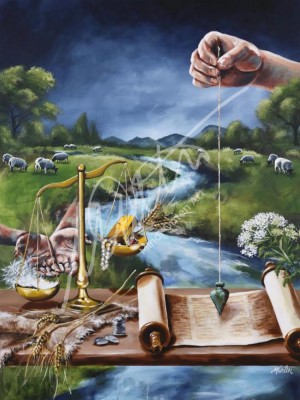
Reason For Punishing Israel
Discover Jesus as: Restorer Amos 1-3 Read on Bible Gateway (HCSB)
Lesson
Audio Only
Teaching Notes
INTRO
There are 12 minor prophets including Amos. He was in the northern province. His name meant burden. Amos was an everyday person from a small village ten miles south of Jerusalem named Tekoa.
Amos was the only prophet to announce his occupation before he was called to be a prophet. He was a sheep breeder and not of priestly or noble descent. God used everyday people to bring His Word. He stated he was not a prophet or the son of a prophet. So basically, he took care of trees and sheep. Acts 4:13 gave the account of the men that followed Jesus. The passage outlined the qualifications of Peter and John. They were uneducated and untrained regular people, but they had been in the presence of Jesus.
Amos’ writing took place while Jeroboam II was king, between 793 and 753 B.C. He wrote two years before a memorable earthquake. Zechariah mentioned the earthquake 200 years after it had happened as referenced in Zechariah 14:5.
MacArthur stated, “Amos was a Judean prophet called to deliver a message primarily to the northern tribes of Israel (Amos 7:15). Politically, it was a time of prosperity for Israel under the long and secure reign of Jeroboam II who, following the example of his father Joash (2 Kings 13:25), significantly ‘restored the territory of Israel’ (2 Kings 14:25). It was also a time of peace with both Judah (cf. 5:5) and her more distant neighbors; the ever-present menace of Assyria was subdued, possibly because of Nineveh’s repentance at the preaching of Jonah (Jonah 3:10). Spiritually, however, it was a time of rampant corruption and moral decay (Amos 4:1; 5:10-13; 2 Kings 14:24).”1
Amos 4:1 was an example of the decay of their spirituality where wealthy women oppressed the poor and crushed the needy. Amos had two messages to bring. There was a lack of true justice and lack of true worship. According to MacArthur, “In the midst of their ritualistic performance of worship, they were not pursuing the Lord with their hearts (Amos 4:4-5; 5:4-6), nor following His standard of justice with their neighbors (Amos 5:10-13; 6:12).”2 There were no standards.
As prophets were giving the Word from God, no one wanted to hear from them. In Amos 9, there was reference to what a Restorer would look like. In Amos 9:11-15 God said He would restore all that He had promised. It was a foreshadowing of what Christ would do in their lives. God showed what a Restorer looked like. The Lord declared that He would bring about the restoration.
TEACHING
Amos 1:1-5: Chapter 1 started with a description of Amos, who he was, and what he would do. The first of several judgements that were to come was addressed in verses 3-5. Judgement would come against Syria and specifically to Damascus, the capital city, for cruelty. The crimes of Syria were numerous and along the lines of ungodliness in the worst form.
Amos 1:6-8: the Lord would not relent from punishing the nations. In Gaza, a city in Philistia, their crimes were in regards to their role in oppression and opposition to God’s people. They were making slaves of the people.
Amos 1:9-10: The pattern of Scripture in the first verses of chapter 1 were repeated in verses 9-10. Judgement was coming against Tyre in the region of Phoenicia, along the Mediterranean.
Amos 1:11-12: By verses 11-12 God had told Hosea to tell the people that He would judge all these cities. McGee stated, “The judgement against Edom was because of their revengeful spirit. Back of revenge one ordinarily finds jealousy. The Edomites were jealous of their brothers.”3
Amos 1:13-15: In verses 13-15 judgement came against the Ammonites for their cruelty and violent crimes. Rabbah was the capital city of Ammon
Amos 2:1-3: Chapter 2 continues the list of cities that would be judged by God. Moab was the next city mentioned that would face judgement because of their disrespect of the dead royalty. Verse 1-3 in chapter 2 fit better with chapter 1.
Amos 2:4-5: There was a shift in verses 4-5. Hosea now addressed the judgement that would come to Judah and Israel. The judgement was no longer about the surrounding nations. The kings and prophets had rejected the instruction of the Lord. Israel was no different from the other cities that were facing judgement. Their leaders led the people astray. There was no respect for the instruction and the Law of God.
Amos 2:6-16: These verses specifically addressed the judgement that was to come against Israel. The sins of Israel were no different from the sins of the other cities, every statement of judgement against every city mentioned, three crimes, maybe four, that had been committed against God and God’s people.
Amos 3:1-2: Chapter 3 implies that God had an intimate and chosen relationship with the people of Israel. Yet, Israel was guilty of multiple sins against God including immorality, blasphemy, and various other sins. McGee said, “This is a great principle that God puts down here. He intends to judge in a harsher manner those who have received light than those who are in darkness.”4 Israel should know God’s way. The Israelites disobeyed to the extent that judgement was now coming. They had abandoned God’s standard.
Amos 3:3-8: Next, five questions are raised that should receive a negative answer, and two questions are raised that should get a positive answer. Constable said, “Amos asked seven rhetorical questions in verses 3-6 to help the Israelites appreciate the inevitability of their judgment. In each one, the prophet pointed out that a certain cause inevitably produces a certain effect. The five questions in verses 3-5 expect a negative answer, and the two in verse 6 expect a positive one. Verses 7-8 draw the conclusion. The comparisons start out peacefully (two people walking together), but increase in intensity (to a city under attack). This creates an ominous rhetorical tone.”5 God was going to reveal Himself to His people and He did that through the prophet Amos. He forewarned His people of His judgement.
The people were not capable of doing right. Pagan nations appeared to be more righteous than Israel. Judgement was going to come to Israel in the form of adversaries that would punish them.
CLOSING
Amos implied there would be a small remnant of Israel that would remain after the judgement. God seemed to be fed up with His people. God would destroy their false religions. And because of their misuse of wealth, Israel would face judgement. The message had not changed, God expected obedience. Eventually, God would still show up and restore the situation and His people.
John MacArthur, The MacArthur Bible Commentary (Nashville: Thomas Nelson Publishers, 2005), pp. 992.
MacArthur, p. 992.
J. Vernon McGee, Thru the Bible Volume 3: Proverbs-Malachi, (Nashville Thomas Nelson Publishers, 1983), p. 687.
McGee, 694.
Thomas Constable, Constable’s Expository (Bible Study Notes): Amos, p. 34; available at https://planobiblechapel.org/tcon/notes/pdf/amos.pdf.
Questions
-
In Amos 1 and the beginning of Amos 2, what were the six Gentile nations that Amos pronounced judgement on?
-
Where was Amos from and what was he doing when the word of the Lord came to him? (Amos 1:1)
-
What were some similarities, if any, of judgment against the nations, and what were some differences?
-
Why were the nations judged (Romans 2:14-15)? Why were Judah and Israel judged? (Deuteronomy 28:15-19; Amos 3:2)
-
What do you notice about the beginning of Amos 3:1, 4:1, and 5:1? What do you think Amos was trying to get across to them?
-
What did the Holy Spirit highlight to you in Amos 1—3 through the reading or the teaching?
Daily Word
Laura Martin Amos 2:4-5
“I will not relent from punishing Judah for three crimes, even four, because they have rejected the instruction of the LORD and have not kept His statutes. The lies that their ancestors followed have led them astray. Therefore, I will send fire against Judah, and it will consume the citadels of Jerusalem.”
The Lord called Amos, a sheep breeder from Tekoa, and gave him a prophetic message to proclaim to Israel. The message described punishment for Israel and its neighbors. Over and over, Amos said God would not relent in punishing, judging, and destroying these nations because they had turned against the Lord. Amos repeatedly declared God would “send fire . . . and it will consume.”
Even today the Lord is a consuming fire in your life. The Lord sees when you worship other gods or when you seek satisfaction from the world instead of seeking Him first. God loves you unconditionally, but He is a jealous God. He longs for you to worship and love Him above all else. He longs for you to revere and stand in awe of who He is. He may take you through a trial so His fire can bring refinement to create you into who He’s called you to be for His purpose in His kingdom. When you walk through fiery trials, know the Lord your God is with you. Seek Him in the fire. He is there. Praise His name even through the heat. Allow Him to burn off anything in your life not of Him. Praise the name of the Lord as your restorer and redeemer. You will not be shaken
.
“I will not relent from punishing Judah for three crimes, even four, because they have rejected the instruction of the Lord and have not kept His statutes. The lies that their ancestors followed have led them astray. Therefore, I will send fire against Judah, and it will consume the citadels of Jerusalem.”
— Amos 2:4-5
FURTHER SCRIPTURE
- Deuteronomy 4:23-24 — “Be careful not to forget the covenant of the Lord your God that He made with you, and make an idol for yourselves in the shape of anything He has forbidden you. For the Lord your God is a consuming fire, a jealous God.”
- Isaiah 33:14 — “The sinners in Zion are afraid; trembling seizes the ungodly: ‘Who among us can dwell with a consuming fire? Who among us can dwell with ever-burning flames?’”
- Hebrews 12:28-29 — “Therefore, since we are receiving a kingdom that cannot be shaken, let us hold on to grace. By it, we may serve God acceptably, with reverence and awe, for our God is a consuming fire.”
Lesson and Daily Word
Each day has two parts: the Lesson and the Daily Word. Use these buttons to go from one to the other.
Teaching Notes and Questions
Next to the video, these tabs show the Teaching Notes and the Questions. Your answer to a question saves when you leave the answer box.
The Bible passage
This link opens the passage on Bible Gateway, and that gives the passage its tick. If you read it in your own Bible, tick it by hand in Progress.
Your progress on this lesson
A part ticks itself when you play the video or audio to the end, read the notes or the Daily Word to the end, or answer every question. You can also tick a part by hand here.
Downloads
Here you can save the video, the audio and the lesson as PDF files. Downloads do not count toward your progress.
Need help?
Use this button to send us a question or tell us about a problem. You can also take this tour again from there.