
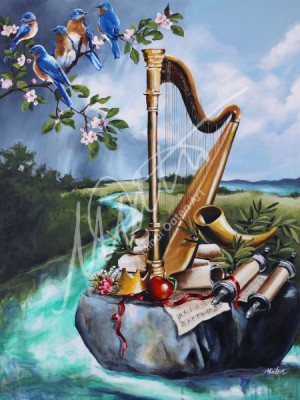
Worship And Warning
Discover Jesus as: King of Glory Psalms 94-95 Read on Bible Gateway (HCSB)
Lesson
Audio Only
Teaching Notes
INTRO
Our phrase for how the book of Psalms points to the Messiah is King of Glory. Remember also that every psalm was meant to be sung, either by the choir or the people in worship. MacArthur proposes that Psalm 95, “with its references to the wilderness wanderings, may have been composed by David (Hebrews 4:7) for the Feast of the Tabernacles (Psalm 81).”1 During the Feast of the Tabernacles, worshippers built temporary booths to stay in to remind them of how God provided for them while they journeyed in the wilderness. MacArthur explains, “After a call to worship (vv. 1–7a), a prophecy in the voice of the Holy Spirit breaks in and reminds the people of the dangers of rebellion and tempting God.”2 This presents both the worship of God and the warnings of God not to do as their ancestors had.
Nelson’s Commentarypoints out there are three emotional moods of the worshippers in this psalm: “(1) the worship of God in a mood of celebration (vv. 1–5); (2) the worship of God in a contemplative mood (vv. 6-7); (3) the worship of God in obedience (vv. 8–10).”3
TEACHING
Psalm 95:1-5: Wiersbe describes verses 1–5 as “come and praise the Lord.”4 Verse 1 tells the worshippers to shout aloud to God, the rock of their salvation (1 Corinthians 10:4). Verse 2 describes the excitement present in worship because God is “above all gods” (v. 3), and over all things (vv. 4–5). This description of how to worship points to the King of Glory.
As we look back on these verses, focus on these phrases:
- The rock of our salvation—God provided the spiritual substance to get through the journey; Jesus is also described as The Rock (Revive School word for Numbers).
- A great God, a great King above all gods—In Acts 2:33, Jesus is described as being above all others at the right hand of God (Philippians 9:2–11).
- Nothing can separate us from God—Romans 8:37–39; Paul stated that nothing can separate us from Jesus.
So, how are we to worship Christ? Through shouts of joy and praise; by coming into His presence to worship Him.
Psalm 95:6–7a: The posture of worship is described—bowing down to and kneeling before the Lord. Jesus is also Creator/Maker (Hebrews 1:2). The psalmist described the worshippers as the people of His pasture, the sheep under the care of the Great Shepherd. Here, Jesus was described as the Good Shepherd (John 10:11).
Psalm 95:7b–11: Verse 7 ends with a command: if they heard His voice, they were not to harden their hearts against God! Their ancestors had tested and tried God to the point that God became “disgusted” with them (vv. 8–10). Therefore, God would not give them rest and kept them in the wilderness. Jesus, as the Shepherd, called out and the sheep followed because they knew His voice (John 10:4, 16). The Israelites clearly heard His voice, but the question became how they would respond to it.
The event in Meribah was a rebellion in the first generation at Kadesh against God’s instructions (Numbers 20:1–13). They did not trust God to provide the water they needed because they had forgotten what He had done. God described them saying, “They are a people whose hearts go astray; they do not know My ways” (v. 10).
CLOSING
Hearing God’s voice is not difficult. As sheep of the Good Shepherd, the first thing we hear is the voice of Jesus (Romans 8:14). Then, we hear our own voice and question if we really heard God’s voice. Finally, we hear the enemy’s voice, which attempts to discount God’s voice. All of this leads to hard hearts. Many of us are wandering in wilderness because we cannot hear the Shepherd’s voice. Hebrews 3:7–11 references Psalm 95.
Kyle prays: "God would you start taking care of my heart and refining it? I really want you to lead it and I don't want to do this myself (Psalm 139:23-24). I recognize the effect that a hard heart can impact my decisions, my thoughts, my words. I ask for forgiveness for having such a hard heart. Lord, anyone that has a hard heart and doesn't know how they got to this point, if they can't trust Your voice but only their own, would you test, examine and break the hard heart, creating a soft heart like clay. Make our hearts soft so that we are moldable to look like You. God we just want to be led by you, listening to Your voice as the sheep being led by the Shepherd. We praise You and we worship You that we can come to you and ask for help. Break us of these things that harden our hearts Lord, in your name we pray. Amen."
John MacArthur, John MacArthur Bible Commentary (Nashville: Thomas Nelson Publishers, 2005), p. 661.
MacArthur, p. 661.
Earl Radmacher, Ronald B. Allen, and H. Wayne House, eds., Nelson’s New Illustrated Bible Commentary (Nashville: Thomas Nelson Publishers, 1999), p. 712.
Warren W. Wiersbe, The Bible Exposition Commentary: Old Testament (Colorado Springs: David C. Cook, 2004), p. 259.
Questions
-
Psalm 94:1 says vengeance belongs to God. Has there ever been a time when you tried to take vengeance into your own hands? What happened?
-
Have you ever gotten away with wrongdoing without anyone knowing about it? What does Psalm 94:8–11 say about this? Why does God discipline those He loves? (Psalm 94:13–14; Proverbs 3:11; 19:20; Hebrews 12:7; Revelation 3:19)
-
Psalm 95:8 says, “Do not harden your heart.” What can happen when you harden your heart to God too often? (Psalm 81:11–12; 95:9–11; Romans 1:22–32; Mark 8:17; John 12:40; Hebrews 3:8–11)
-
What did the Holy Spirit highlight to you in Psalms 94—95 through the reading or the teaching?
Daily Word
Laura Martin Psalm 95:7b–8
“Today, if you hear His voice: Do not harden your hearts as at Meribahas on that day at Massah in the wilderness.”
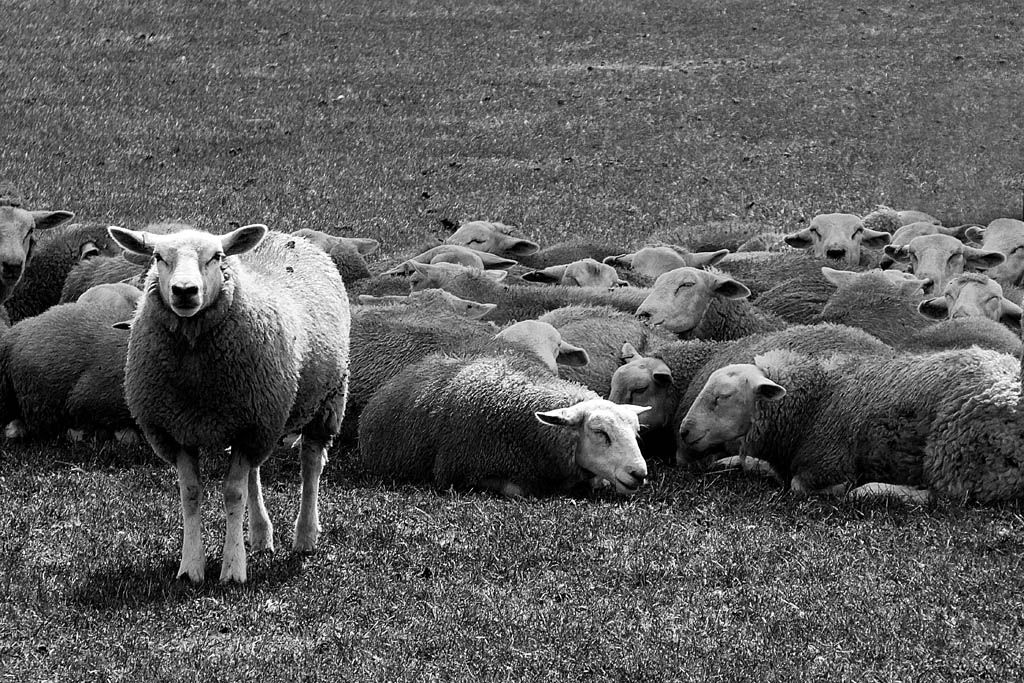
Jesus described Himself as the Good Shepherd. As a believer in Christ, you are His sheep. Like any good shepherd who learns the bleats of his flock, the sheep learn to hear and follow the shepherd’s voice. And because they follow the voice, the sheep avoid trouble and live a fuller life. In the same way, you are to listen and follow the voice of God. As a believer, you have the Holy Spirit guiding you and counseling you in the way you should go. But sometimes, even though you know the truth and the Scripture, you still don’t follow the Lord’s voice.
What if you just followed God’s voice in faith without any hesitation— without a hardened heart, rebellious spirit, or hanging on to hurts of the past, without being distracted with the busyness of life? What if you truly listened and followed God’s voice with a pure, uninhibited heart? Ask the Lord to create in you a heart willing to listen, willing to follow, and willing to walk in truth. Walk as you hear His voice. Take that step you don’t want to but feel nudged to take. Do that thing you are questioning. You don’t know what is on the other side of obedience. Chose to listen, be obedient, and walk out God’s caring faithfulness in your life. There’s an indescribable grace on the other side of obedience.
“Today, if you hear His voice: Do not harden your hearts as at Meribah,as on that day at Massah in the wilderness.”
— Psalm 95:7b–8
FURTHER SCRIPTURE
- Psalm 95:6–7a — “Come, let us worship and bow down; let us kneel before the Lord our Maker. For He is our God, and we are the people of His pasture, the sheep under His care.”
- Psalm 139:23–24 — “Search me, God, and know my heart; test me and know my concerns. See if there is any offensive way in me; lead me in the everlasting way.”
- John 10:4 — “When he has brought all his own outside, he goes ahead of them. The sheep follow him because they recognize his voice.”
Lesson and Daily Word
Each day has two parts: the Lesson and the Daily Word. Use these buttons to go from one to the other.
Teaching Notes and Questions
Next to the video, these tabs show the Teaching Notes and the Questions. Your answer to a question saves when you leave the answer box.
The Bible passage
This link opens the passage on Bible Gateway, and that gives the passage its tick. If you read it in your own Bible, tick it by hand in Progress.
Your progress on this lesson
A part ticks itself when you play the video or audio to the end, read the notes or the Daily Word to the end, or answer every question. You can also tick a part by hand here.
Downloads
Here you can save the video, the audio and the lesson as PDF files. Downloads do not count toward your progress.
Need help?
Use this button to send us a question or tell us about a problem. You can also take this tour again from there.