

Iron Sharpens Iron
Discover Jesus as: Wisdom Proverbs 27-29 Read on Bible Gateway (HCSB)
Lesson
Audio Only
Teaching Notes
INTRO
This week we’ll finish up the book of Proverbs. Proverbs has been the hardest book to teach, except for maybe Job. Proverbs 27 has 27 verses, and each verse could literally be a sermon. Also this week, we will begin and finish the book of Ecclesiastes. I pray the Lord guides our discussion today and helps us see the Lord’s Word for us in this chapter.
TEACHING
Proverbs 27:1-6: The chapter begins with the admonition not to brag about what will be happening tomorrow, because we have no idea what the rest of today could bring (v. 1). There’s an ancient Israeli warning about not having concern for tomorrow or that will overshadow the needs of today. All we have is today. Jesus taught on this as well, reminding His listeners that they could not change anything with worry (Matthew 6:23–34).
We are not to praise ourselves (v. 2). Nelson’s Commentary explains, “Self-praise is also out of place for the person of wisdom and reveals an insensitivity to the fitness of things. Praise is a comely garment; and though we may desire to wear it, it is always better if others place the garment upon us.”1 We should be intentional in praising others. Verses 3–4 address aggravation, fury, anger, and jealousy. But open reprimand is better than concealed love (v. 5). And while a trusted friend can wound us, the kisses from an enemy are excessive (v. 6). Nelson’s Commentary explains verse 6 as “correction given in love by a friend is better than insincere acts of affection.”2
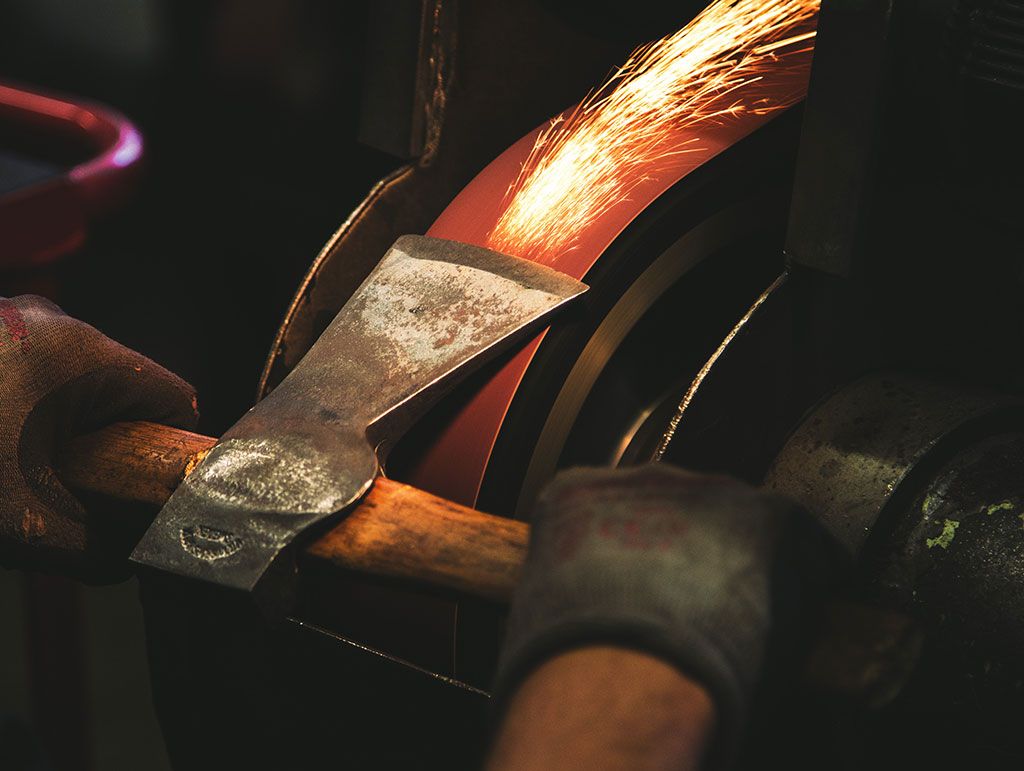
Proverbs 27:17: Verse 17 has been used by many men’s groups in churches: “Iron sharpens iron, and one man sharpens another.” Of course, this applies to everyone. This ties to verse 6 and about a friend speaking into another friend. I want to walk through this concept of iron sharpening iron. Doug Hamilton wrote an article entitled, “The Sharpening of the Christian,” in which he outlined the history and importance of iron:
- Bronze was the main metal used in weapons before 1300 B.C., but the natural supply of bronze was running out. Therefore, iron, a stronger metal, was created, probably by the Philistines.
No other armies had iron weapons because the Philistines kept the processes they used in making the weapons a secret. This is obviously one of the reasons the Philistines were such a formidable enemy (1 Samuel 13:19–22). The Israelites had to pay the Philistines to have their own weapons and farming instruments sharpened. In the process, the Israelites learned all about sharpening their tools.
During the next decades, around the time of King David, the secret of working with iron leaked out and Israel began to make their own weapons out of iron. When Solomon wrote Proverbs 27:17, everyone in Israel knew the importance of keeping their weapons sharp because they had earned their own independence in battle.
The process of sharpening iron was:
First, the iron for the sword was pounded with an iron hammer to flatten the edges.
Second, an iron file or iron-ore stone was used along that edge to make it razor sharp.
Third, another piece of iron was used to rub the edge to keep it sharp.3
Consider these verses in understanding the concept of iron sharpening iron:
Proverbs 13:20: “The one who walks with the wise will become wise, but a companion of fools will suffer harm.”
1 Corinthians 15:33: “Do not be deceived: ‘Bad company corrupts good morals.’”
Wherever we are, we will rub off on someone, or someone will rub off on us. We will influence them, or they will influence us. That’s why we must surround ourselves with godly men and women.
Hamilton writes, “When Christians are spending time with each other, there is incredible sharpeningthatoccurs. . . . It is when we are around one another as the ‘Holy Nation, a Royal Priesthood, a People of God’s Own Possession’ (1 Peter 2:9), that we gain the Spiritual Advantage, the Razor Edge that is needed to be victorious in this world and leading to the heavenly realm.”4 We are designed to be in assembly with God’s people so we will be effective in battle.
CLOSING
Hamilton concludes his article with a list of techniques that we can use to sharpen iron with other believers:
Show love to one another (John 13:34–35).
Confess your sins to one another and pray with him/her (James 5:16).
Sing praises and study God’s Word with someone (Colossians 3:16).
Show humility to someone (Philippians 2:3–4).
Share encouragement to someone with words and actions (1 Thessalonians 4:18; 5:11; Hebrews 3:13).
Spend quality time with others (Colossians 3:12–13).5
Earl Radmacher, Ronald B. Allen, and H. Wayne House, eds., Nelson’s New Illustrated Bible Commentary (Nashville: Thomas Nelson Publishers, 1999), p. 774.
Nelson’s Commentary, p. 774.
Doug Hamilton, “The Sharpening of the Christian,” p. 1; available at http://camphillchurch.org/publication_files/the-sharpening-of-the-christian.pdf.
Hamilton, p. 2.
Hamilton, p. 3.
Questions
-
What do you think Proverbs 27:14 means? Do you have any friends like this? Are you one of these friends?
-
Proverbs 27:17 says, “Iron sharpens iron, so one man sharpens another.” What are some ways we can “sharpen” each other?
-
Proverbs 28:6 says, “Better is the poor who walks in his integrity than he who is crooked though he be rich.” Why is integrity more important than riches? (Job 8:20; Proverbs 22:1; Matthew 5:33–37)
-
Proverbs 28:7 uses the word glutton. What is the definition of glutton, and why would this be humiliating to a father? (Genesis 25:29–34)
-
Why do you think it is foolish to lose your temper as it is stated in Proverbs 29:11? Is there ever a case when you think it wouldn’t be considered foolish? (Mark 11:15–17)
-
What did the Holy Spirit highlight to you in Proverbs 27—29 through the reading or the teaching?
Daily Word
Laura Martin Proverbs 27:17
“Iron sharpens iron, and one man sharpens another.”
If you leave a piece of iron alone, it will grow dull, never fulfilling its ultimate purpose to cut things. It needs to hit against another piece of iron to remain sharp. In a similar way, people need people. When peo- ple are left alone, they tend to grow dull, unmotivated, and may even make unwise decisions. But when two people are together, they bring out the best in each other, sharing thoughts, laughter, encouragement, and wisdom. God intended for people to be with people. Jesus said the greatest command is to love God and love others. He has a purpose for you to be with others.
Everyone has an excuse about why they don’t pursue friendships: “I’m sure he’s busy,” or “She won’t want to.” These excuses leave both people alone. You are meant for each other! Pray and ask the Lord for guidance. Then initiate something with someone. Be a friend. Just show up. And then show up again. Before long, it will feel natural, and you’ll begin to sharpen one another through the love you have for the Lord and each other. What are you waiting for? Say a prayer and contact someone today!
“Iron sharpens iron, and one man sharpens another.”
— Proverbs 27:17
FURTHER SCRIPTURE
- Proverbs 27:9 — “Oil and incense bring joy to the heart, and the sweetness of a friend is better than self-counsel.”
- Ecclesiastes 4:9–10 — “Two are better than one because they have a good reward for their efforts. For if either falls, his companion can lift him up; but pity the one who falls without another to lift him up.”
- John 15:12 — “This is My command: Love one another as I have loved you.”
Lesson and Daily Word
Each day has two parts: the Lesson and the Daily Word. Use these buttons to go from one to the other.
Teaching Notes and Questions
Next to the video, these tabs show the Teaching Notes and the Questions. Your answer to a question saves when you leave the answer box.
The Bible passage
This link opens the passage on Bible Gateway, and that gives the passage its tick. If you read it in your own Bible, tick it by hand in Progress.
Your progress on this lesson
A part ticks itself when you play the video or audio to the end, read the notes or the Daily Word to the end, or answer every question. You can also tick a part by hand here.
Downloads
Here you can save the video, the audio and the lesson as PDF files. Downloads do not count toward your progress.
Need help?
Use this button to send us a question or tell us about a problem. You can also take this tour again from there.