

Duties of the Kohathites, Gershonites and Merarites
Discover Jesus as: Rock Numbers 4 Read on Bible Gateway (HCSB)
Lesson
Audio Only
Teaching Notes
INTRO
Let’s look back at Numbers 1. Why did the Israelites have to count the 12 tribes? They had to identify the males over the age of 20 who were eligible to serve in the army. Today, both male and female serve in the Israeli army, but at this time of the Israelites, just the men served. The census totaled 603,550. The Levites were exempt from the military. Their position was to work around the tabernacle and alongside Aaron and his sons. Numbers 2 told each tribe where to camp around the tabernacle. Numbers 3 described how Aaron and the priest were different from the Levites. The Levites did everyday work because they were God’s firstborn people. They got everything ready for Aaron, Eleazar, and Ithamar. They did so for 40 years!
I love Mindi’s painting: the rock, the cloud, the feet, the native flower of Israel. This represents the Rock, Christ. First Corinthians 10:4 describes Jesus’ role in the wilderness: “And all drank the same spiritual drink. For they drank from a spiritual rock that followed them, and that rock was Christ.” I want you to have this picture of the Rock. Every time the Israelites put their feet down, that Rock, Christ, supported them in the wilderness. Today, we are going to talk more about the role of the Levites in Numbers 4.
TEACHING
Numbers 4:1–3: This time, Moses was named first even though Aaron was older by three years. God told Moses to count the Kohathite men aged 30 to 50 years old who could work at the tent of meeting. This differed from the census in Numbers 3:15, which counted every male one month old and older. Numbers 8:24 said, “In regard to the Levites: From 25 years old or more, a man enters the service in the work at the tent.” The writer of 1 Chronicles 6:2–3 also documented the Levite generations: “Kohath’s sons: Amram, Izhar, Hebron, and Uzziel. Amram’s children: Aaron, Moses, and Miriam.” Aaron and Moses were from the Levite tribe.
Numbers 4:4–6: Whenever the Israelite camp moved, the Kohathites were responsible for the most holy objects. Eleazar was the overseer for the Kohathites. First, Aaron and his sons covered the ark of the testimony with the screening veil, then covered it with a covering made from manatee skin, and then spread a cloth of solid blue over it and put the poles in place.
Numbers 4:7–10: Over the table of the Presence, they spread a blue cloth and put the plates, cups, bowls, and pitchers for the drink offering and the bread offering. Over these, they spread a scarlet cloth, covered that with coverings made from manatee skin, and put its poles in place. This reminds us of the instructions in Exodus when they built the tabernacle with the blue and scarlet. Later we will get into the purple. The priests wore the same colors as the tabernacle. They covered the lampstand with its lamps, snuffers, firepans, and jars of oil with a blue cloth, and then placed everything in a covering made from manatee skin and put the poles in place.
Numbers 4:11–14: After covering the altar and its furnishings with a blue cloth, wrapped with manatee skin, they put them on a carrying frame. They removed the ashes from the bronze altar, spread a purple cloth over it, placed all equipment on it, and then covered it with manatee skin and set the poles in place. All of these instructions were super important. Everyone had an important role to play in transporting the tent of meeting.
Numbers 4:15–20: After Aaron and his sons covered all the holy objects, the Kohathites carried them. But if the Kohathites touched any holy thing they would die! This actually happened in 2 Samuel 6:6–7: “When they came to Nacon’s threshing floor, Uzzah reached out to the ark of God and took hold of it because the oxen had stumbled. Then the LORD’s anger burned against Uzzah, and God struck him dead on the spot for his irreverence, and he died there next to the ark of God.” Eleazar, the son of Aaron the priest, had oversight over the oil of the light, the fragrant incense, the daily grain offering, and the anointing oil. Because Eleazar was the overseer of the entire tabernacle and everything in it, he was the overseer of the Kohathites. The Lord said to Moses and Aaron, “Do not allow the Kohathite tribal clans to be wiped out from the Levites.” Aaron and his sons had to make these preparations and then assign each man his work and transportation duty. The Kohathites could not look at the holy things or they would die.
Numbers 4:21–28: God then told Moses to take a census of the Gershonites by family and clan, registering each man 30 to 50 years of age who could work in the tent of meeting. This Gershonite clan was assigned the service of transporting the tabernacle curtains, the tent of meeting with its covering and the outer coverings made from manatee skins, the screen for the entrance to the tent of meeting, the hangings of the courtyard, the screen for the entrance at the gate of the courtyard that surrounded the tabernacle and alter, along with the ropes and all the equipment used in its service. They were responsible for these things and did everything at the command of Aaron and his sons. They were under the direction of Ithamar, son of Aaron, the priest. The Gershonites were assigned the coverings. They had responsibility for everything on the outside.
Numbers 4:29–33: God then told Moses to count the Merarites by family and clan, registering each male 30 to 50 years of age who could work in the tent of meeting. The Merarites were assigned the work of carrying the frame for the tent of meeting, the supports of the Tabernacle, its crossbars, posts, and bases as well as the posts of the surrounding courtyard with their bases, tent pegs, ropes, all their equipment and everything related to their use. They were responsible for the framework. The Merarites were also under the direction of Ithamar, son of Aaron, the priest.
These were the home bases of the three clans: The Kohathites were on the south side of the tabernacle. The Gershonites were on the west side of the tabernacle. The Merarites were on the north side of the tabernacle.
Numbers 4:34–37: Moses and Aaron registered 2,750 Kohathite men 30 to 50 years old to serve in the work of the tent of meeting by taking care of the holy objects. From ages 25 to 30 they were taught how to interact with the holy objects. Numbers 3:28 registered every Kohathite man: “Counting every male one month old or more, there were 8,600 responsible for the duties of the sanctuary.”
Numbers 4:38–41: Moses and Aaron registered 2,630 Gershonite men 30 to 50 years of age to serve at the tent of meeting. Numbers 3:22 registered every Gershonite man: “Those registered, counting every male one month old or more, numbered 7,500.”
Numbers 4:42–49: Moses and Aaron registered 3,200 Merarite men 30 to 50 years of age to serve at the tent of meeting. Numbers 3:34 registered every Merarite man: “Those registered, counting every male one month old or more, numbered 6,200.” Altogether, 8,580 men from 30 to 50 years of age were assigned transportation duty.
CLOSING
In 2 Timothy 2:2, Paul told Timothy: “And what you have heard from me in the presence of many witnesses, commit to faithful men who will be able to teach others also.” We are to teach others about our faith.
When I see the Merarites, I see 3,200 men who could train 3,200 more. I see a discipleship process. I see multiple people in order to get the work done. If we’re not careful in the American church, we may think we’re the only ones qualified and we’re not training up more people. Our job is to be fruitful and multiply, and I actually think that means in the area of ministry. This is an incredible example of training someone for five years. Jesus did this for three years with 12 guys, and one of those guys didn’t even get it.
Look at the Apostle Paul in Acts 19. He poured into 12 men daily for two years. All of Asia heard the Word of the Lord. You should never run out of Gershonites, Kohathites, or Merarites because a disciple is always making a disciple. A practical question wherever you serve: “Are you always looking to replace yourself?” Jesus did it with 12. Paul did it with 12. As more are trained, more can experience the presence of God. Very simply, go find a disciple that you can teach so they can begin to teach somebody else.
Questions
-
Name the three Levite clans. How many were in each clan? (Numbers 4:34–45)
-
When Aaron and his sons took down the items of the tabernacle, why did they cover everything with manatee skin?
-
In verses 18–20, what did the Lord command them to do so that the Kohathites would live and not die when they entered and approached the most sacred items?
-
Numbers 4:20 said the Kohathites must never look at or touch the sacred objects or they would die. Why do you think that was? (Numbers 4:15; 2 Samuel 6:6–7)
-
What did the Holy Spirit highlight to you in Numbers 4 through the reading or the teaching?
Daily Word
Laura Martin Numbers 4:48-49
“Their registered men numbered 8,580. At the LORD’S command they were registered under the direction of Moses, each one according to his work and transportation duty, and his assignment was as the Lord commanded Moses.”
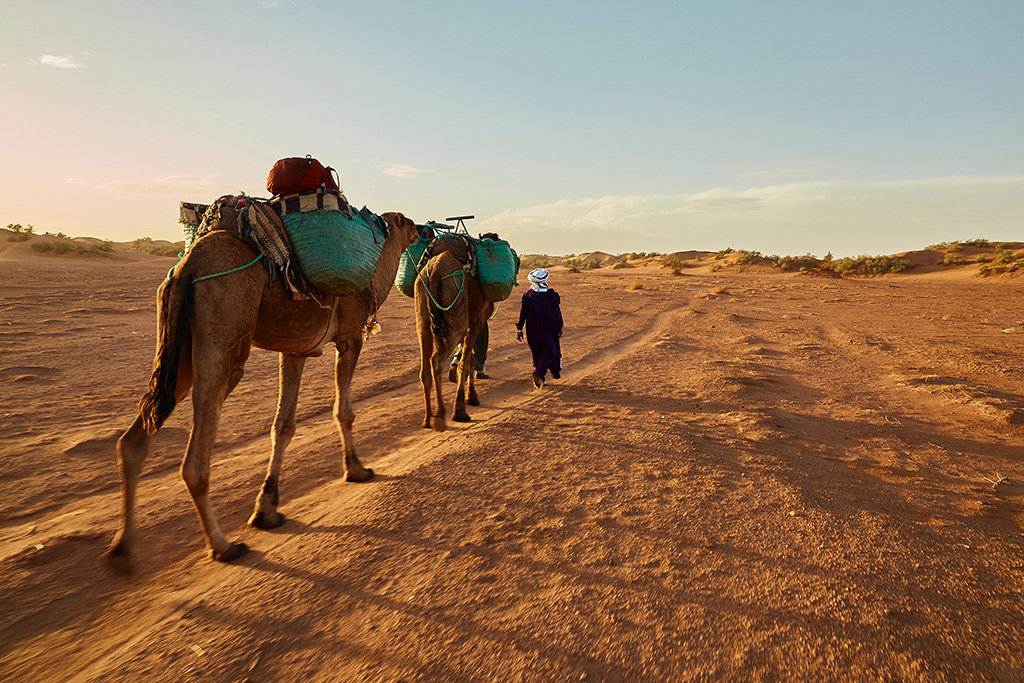
The Lord assigned the Kohathites, the Gershonites, and the Merarites to transportation duties. They were given specific tasks to complete in the process of transporting the Tent of Meeting. As the Lord outlined specific transportation assignments, it was a reminder that He was in the details of life. Previously God said He would go ahead of Moses and the Israelites in a pillar of cloud and a pillar of fire, so the Israelites knew they would be moving. Then He gave them detailed instructions on how to build the Tent of Meeting. If God commanded the Israelites to build it and said they would be moving, then it only made sense that God had transportation details taken care of!
Remember, if the Lord has called you to something, He is going to have a plan for all the delicate details. The Lord promises He will counsel you and show you the way to go. Doesn’t that give you great relief? God has a plan!
“Their registered men numbered 8,580. At the Lord’s command they were registered under the direction of Moses, each one according to his work and transportation duty, and his assignment was as the Lord commanded Moses.”
— Numbers 4:48–49
FURTHER SCRIPTURE
- Exodus 13:21 — “The Lord went ahead of them in a pillar of cloud to lead them on their way during the day and in a pillar of fire to give them light at night, so that they could travel day or night.”
- Exodus 35:10-11 — “Let all the skilled craftsmenamong you come and make everything that the Lord has commanded: the tabernacle—its tent and covering, its clasps and planks, its crossbars, its posts and bases.”
- Psalm 32:8 — “I will instruct you and show you the way to go; with My eye on you, I will give counsel.”
Lesson and Daily Word
Each day has two parts: the Lesson and the Daily Word. Use these buttons to go from one to the other.
Teaching Notes and Questions
Next to the video, these tabs show the Teaching Notes and the Questions. Your answer to a question saves when you leave the answer box.
The Bible passage
This link opens the passage on Bible Gateway, and that gives the passage its tick. If you read it in your own Bible, tick it by hand in Progress.
Your progress on this lesson
A part ticks itself when you play the video or audio to the end, read the notes or the Daily Word to the end, or answer every question. You can also tick a part by hand here.
Downloads
Here you can save the video, the audio and the lesson as PDF files. Downloads do not count toward your progress.
Need help?
Use this button to send us a question or tell us about a problem. You can also take this tour again from there.