
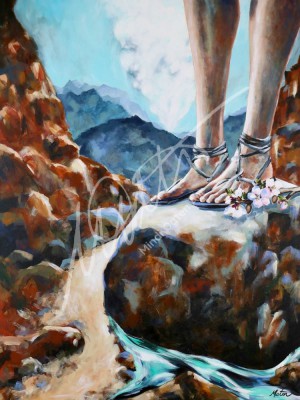
Years of Wandering: Purification Rituals
Discover Jesus as: Rock Numbers 19-20 Read on Bible Gateway (HCSB)
Lesson
Audio Only
Teaching Notes
INTRO
We have talked about the scouts giving bad reports as well as the Israelites complaining, and complaining some more. Had we not been doing Revive School, I don’t think I would have seen the value of Aaron’s rod in the tent of meeting. The whole goal of Revive School is to experience God in a new and refreshing way that will impact the entire community. You have to walk this thing out, live this thing out. In Numbers 19, we are going to talk about the purification rituals of the red heifer.
TEACHING
Numbers 19: If the Israelites killed a red heifer, they could use the ashes and purify the water. There was clean and unclean. If they touched a corpse, they could use these ashes in the water to bring about cleanliness. The Israelites needed instruction on how to walk. The whole book of Numbers is teaching people constantly how to exercise what God was telling them to do and how to walk this thing out. The tassels, the manna, the rod—all were reminders that God was with them.
Numbers 20:1: This chapter takes place at the end of the Israelites’ wilderness journey. This was year 40. The whole Israelite community arrived at the Desert of Zin in the first month and settled in Kadesh. Miriam died and was buried there. Miriam was the famous sister. She interacted with Pharaoh’s daughter, got Moses to be fed, and saved his life. In Exodus 15:21, she led the praises of women at the Red Sea. In Exodus 12, we see the only issue Moses had with Miriam was a brother-sister fight. The Lord’s hand was clearly on Miriam.
Numbers 20:2–5: There was no water in the Desert of Zin. The Israelites assembled against Moses and Aaron. They quarreled with Moses saying, “If only we had perished when our brothers died.” Again, this was a lack of trust. Then they called the place evil. The Israelites started to bring up all the things they had had in Egypt: grain, figs, grapevines, and pomegranates. They lamented, “And there is no water to drink!” Their hearts were still in Egypt. Their hearts were in the world (1 John 2:15–16).
Numbers 20:6–10: Moses and Aaron went to the entrance to the tent of meeting and fell facedown. The glory of the Lord appeared to them. Weirsbe explained that basically God said He was going to reveal the game plan.1The Lord instructed Moses to take the staff, and he and Aaron were to gather the assembly. Moses was to speak to the rock, and before their eyes, it would pour out water. The water would be for the community and livestock. Moses took the staff just as the Lord commanded. Moses and Aaron gathered the assembly together in front of the rock. Moses got angry at the Israelites and said, “Must we bring water from this rock?”
Numbers 20:11: Moses raised his hand and struck the rock twice with his staff. Water gushed out and the community and livestock drank. The Lord told him to speak to the rock, not strike it. It wasn’t for Moses to do the work but the Lord. This was an impulsive sin that kept him from getting into the Promised Land (Exodus 17:6). Maybe through instinct, Moses fell back to the Exodus 17 model. I think the rock is essential to this story in Numbers 20 (Deuteronomy 32:4, 15, 18; Psalms 18:2; 31:3; 42:9; 106:32–33; Hebrews 9:26–28; 1 Corinthians 10:4).
Numbers 20:12–13: Now as Weirsbe wrote, there was a painful discipline coming.2The Lord said that because they did not trust Him to show His holiness then, this community would not enter into the land. These were the waters of Meribah where the Israelites quarreled with the Lord, and God showed His holiness to them.
Numbers 20:14–17: Now the Israelites were moving toward Kadesh. Moses sent a message to the king of Edom referring to them as family and addressing him as brother. Moses told the king all they had been through with the Egyptians and requested permission to travel through their land. Moses promised the Israelites would not go through any field or vineyard or drink water from their wells.
Numbers 20:18–20: Edom replied that they must not travel through their land or they would confront them with a sword. The Israelites replied that they would stay on the main road, with their livestock, and if they drank any of their water, they would pay for it. They only wanted to travel through on foot. Edom insisted they must not travel through, so they came out to meet them with a large military force.
Numbers 20:21–24: Edom refused to allow the Israelites through, so the Israelites turned away from them. The Israelites came to Mount Hor. The Lord spoke to Moses and Aaron at Mount Hor, on the border of Edom. Aaron was to be gathered to his people. He would not be allowed to enter the land because both he and Moses rebelled against the commands of the Lord at the waters of Meribah.
Numbers 20:25–26: Aaron was to go up to Mount Hor with his son, Eleazar. Aaron was to remove his garments and put them on Eleazar. Aaron would be gathered to his people and he would die there. Moses climbed Mount Hor in the sight of the whole community. This reminds you of Abraham and Isaac. The Israelites were moving from the old generation to the new generation.
Numbers 20:28–29: As soon as they put Aaron’s garments on Eleazar, Aaron died. Then Moses and Eleazar came down the mountain. Scripture doesn’t say they brought Aaron’s body down. Moses and Eleazar couldn’t touch Aaron’s dead body because they were high priests. The whole community mourned for 30 days over Aaron’s passing. John Wesley wrote, “God buried His workers, but His work always goes right on.”3
CLOSING
Do you know how many times Moses told the people to trust in the Lord? This one time he messed up, and look what happened. Moses was a man of faith.
Hebrews 11:23: “By faith, after Moses was born, he was hidden by his parents…”
Hebrews 11:24: “By faith Moses, when he had grown up…”
Hebrews 11:27: “By faith he left Egypt behind…”
Hebrews 11:29: “By faith they crossed the Red Sea…”
Moses couldn’t give the Israelites their inheritance, they had to proceed with faith (Galatians 3:18). I know this is a stretch. What if it comes from Joshua? Moses couldn’t cross over to the land, but Joshua could. Joshua served as the transition piece. Jesus is the only one who can get us into the Promised Land. He is our Rock. In Numbers 20, Miriam died, Aaron died, and Moses died spiritually because he lost his promise. We will get into how Joshua points to the Messiah over the course of time.
Warren Wiersbe, The Bible Exposition Commentary: Genesis–Deuteronomy (Colorado Springs, CO: David C. Cook, 2007), p. 344.
Wiersbe, p. 344.
John Wesley; quoted in Wiersbe, p. 345.
Questions
-
When Eleazar took the red heifer outside of town to slaughter it, what needed to be thrown into the fire with the remains? (Numbers 19:6)
-
Do you think the red heifer is a type of Christ? Why or why not? How does the blood atone for sins? (Hebrews 9:13–14)
-
What did the Lord command Moses and Aaron to do in Numbers 20:8? Did they do it? What punishment did they receive? Can you think of a time when you didn’t listen to the exact words God said, but rather did it your own way?
-
Who did Moses and Aaron take with them when they went up Mount Hor? Why?
-
What did the Holy Spirit highlight to you in Numbers 19-20 through the reading or the teaching?
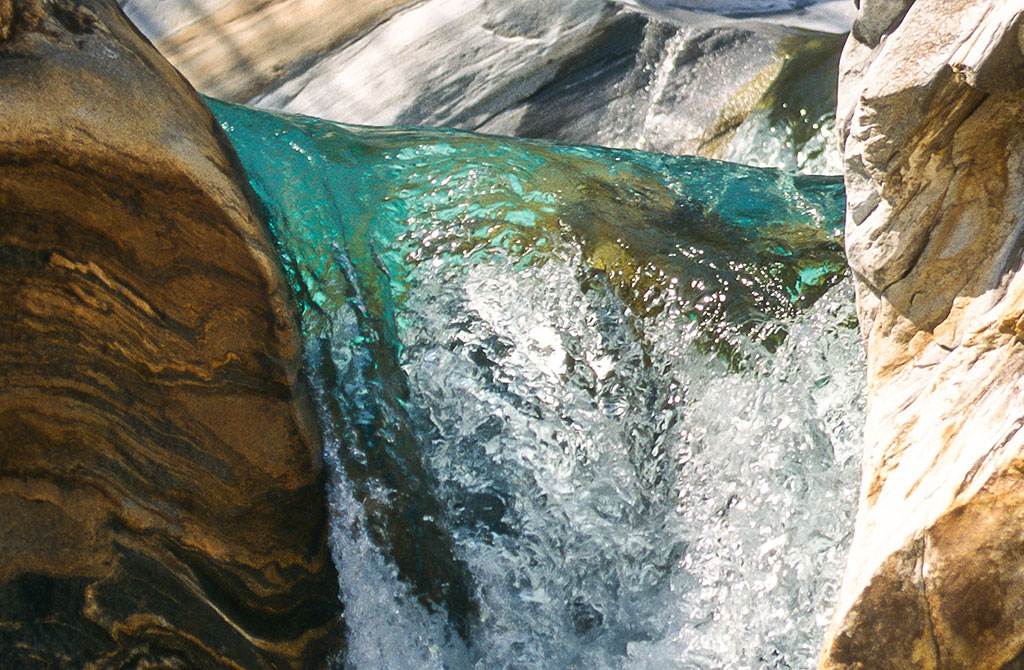
Daily Word
Laura Martin Numbers 20:11-12
“Then Moses raised his hand and struck the rock twice with his staff, so that a great amount of water gushed out, and the community and their livestock drank. But the Lord said to Moses and Aaron, ‘Because you did not trust Me to show My holiness in the sight of the Israelites, you will not bring this assembly into the land I have given them.”
Once again, the Israelites complained and grumbled to Moses and Aaron about a lack of water. Once again, Moses and Aaron fell on their faces and sought help from the Lord. And once again, the Lord responded with a plan to display His miraculous provision. The Lord instructed Moses to speak to a rock while the Israelites watched, and the rock would yield water. However, Moses raised his hand and struck the rock twice with his staff. Moses clearly did not follow the exact commands of the Lord. Yet God displayed mercy, and the rock still produced water for the people. Moses acted in anger and impatience. This act of disobedience caused God to prevent Moses from entering the Promised Land.
Although God is a forgiving God, there are consequences for behavior. Your actions demonstrate your trust in God’s faithfulness. As you walk in the Spirit, you are filled with the fruit of the Spirit: love, joy, peace, patience, kindness, goodness, faithfulness, gentleness, and self-control. If your life lacks one or more of these, take a minute today to come before the Lord. Spend time in His presence, read through His Word, worship Him with thanksgiving, confess anything that comes to mind, and allow Him to fill you up. When you are refreshed with the Spirit, you will be strengthened for the journey ahead.
“Then Moses raised his hand and struck the rock twice with his staff, so that a great amount of water gushed out, and the community and their livestock drank. But the Lord said to Moses and Aaron, “Because you did not trust Me to show My holiness in the sight of the Israelites, you will not bring this assembly into the land I have given them.”
— Numbers 20:11–12
FURTHER SCRIPTURE
- 2 Corinthians 12:9–10 — “But He said to me, “My grace is sufficient for you, for power is perfected in weakness.” Therefore, I will most gladly boast all the more about my weaknesses, so that Christ’s power may reside in me. So I take pleasure in weaknesses, insults, catastrophes, persecutions, and in pressures, because of Christ. For when I am weak, then I am strong.”
- Galatians 5:22–23a — “But the fruit of the Spirit is love, joy, peace, patience, kindness, goodness, faith, gentleness, self-control.”
- Ephesians 5:18 — “And don’t get drunk with wine, which leads to reckless actions, but be filled by the Spirit:”
Lesson and Daily Word
Each day has two parts: the Lesson and the Daily Word. Use these buttons to go from one to the other.
Teaching Notes and Questions
Next to the video, these tabs show the Teaching Notes and the Questions. Your answer to a question saves when you leave the answer box.
The Bible passage
This link opens the passage on Bible Gateway, and that gives the passage its tick. If you read it in your own Bible, tick it by hand in Progress.
Your progress on this lesson
A part ticks itself when you play the video or audio to the end, read the notes or the Daily Word to the end, or answer every question. You can also tick a part by hand here.
Downloads
Here you can save the video, the audio and the lesson as PDF files. Downloads do not count toward your progress.
Need help?
Use this button to send us a question or tell us about a problem. You can also take this tour again from there.