
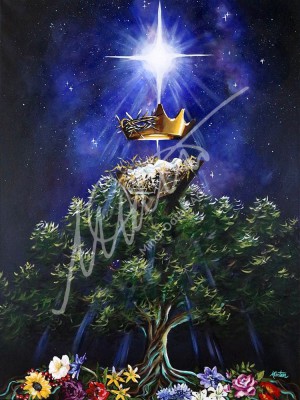
Fulfillment of the Crucifixion Prophecies
Discover Jesus as: King Matthew 27 Read on Bible Gateway (HCSB)
Lesson
Audio Only
Teaching Notes
INTRO
All of Matthew is about the King. Yesterday, we looked at how Mary and Judas both had roles in preparing the way for the King. Today, we look at the crucifixion. Matthew 27 has 66 verses.
TEACHING
Matthew 27:1-10: Jesus was handed over to Pilate and Judas returned the 30 pieces of silver to the chief priests and elders and took his own life. Verse 4 shows that in Judas’ heart, he knew he had messed up. Even the chief priests recognized the 30 pieces of silver were blood money, so they bought a potter’s field with it (vv. 6-7).
Matthew 27:11-14: Jesus was asked by the governor, “Are You the King of the Jews?” Jesus answered, “You have said it.” From His birth in Matthew 1 through the end of Matthew, Jesus is presented as the King of the Jews.
Matthew 27:15-26: Pilate asked the crowd if they wanted Jesus or Barabbas to be released. The crowd called, “Crucify Him!” They kept shouting those words when Pilate asked more questions. Pilate washed his hands and said he was innocent of Jesus’ blood (the same conversation Judas had with the religious leaders in verse 4). The people answered, “His blood be on us and on our children!”
Matthew 27:27-31: Pilate handed Jesus over to be crucified. What did that look like? MacArthur says it was a form of execution that had originated with the Persians, Phoenicians, and Carthaginians to the Romans. The goal was to keep the victim alive as long as possible (most lasted for days) while inflicting pain. Plus, the legs gave out, so the victim couldn’t breathe, so breaking the legs brought a quicker death. The nails were driven through the instep and wrists, which was not fatal but extremely painful.1 (John 19:31).
Galatians 3:13: “Christ has redeemed us from the curse of the law by becoming a curse for us, because it is written: Everyone who is hung on a tree is cursed.”
Matthew 27:32-34: This shows Jesus’ humanity in the pain He experienced and being too weak to carry His 200-pound cross (Hebrews 4:15). Simon from Cyrene was forced to carry the cross for Jesus (v. 32), and he later became a believer. Golgotha (Skull Place) was located outside the city gates. Jesus was on the cross when they gave Him wine mixed with gall (v. 34), which would have eased His pain. This was prophesied in Psalm 69:21. Jesus refused it. Why? Two possible reasons:
- Luke 23:43 records that Jesus ministered to one of the others on the cross, so maybe He wanted to be able to do that clearly without any physical hindrance.
- Proverbs 31:6 suggests that maybe Jesus wanted to embrace the pain.
Matthew 27:35-37: The The soldiers cast lots for His clothes and put a sign over His head that charged Him: This is Jesus, the King of the Jews. When combined with evidence in the other synoptic Gospels (Mark 15:26; Luke 22:38; John 22:38), the sign read: This is Jesus of Nazareth, the King of the Jews. This shows both the humanity and the divinity of Christ.
Matthew 27:38-44: Isaiah 53:12 has the prophecy of being between the thieves on the crosses. The people walking by––the crowd, the chief priests, the scribes, and elders––mocked Him as the King of Israel. Even the criminals taunted Jesus as well.
7 Crucifixion Prophecies Jesus came to fulfill these prophecies:
God will forsake His own Son in His time of agony (Psalm 22:1; Matthew 27:46; Mark 15:34).
Christ will be scorned and ridiculed (Psalm 22:7,8; Matthew 27:39-4; Luke 23:35).
Christ’s hands and feet will be pierced (Psalm 22:16; John 20:25,27; Acts 2:23).
Others will gamble for Christ’s clothes (Psalm 22:18; Matthew 27:35, 36).
Not one of Christ’s bones will be broken (Psalm 34:20; John 19:32, 33, 36).
Christ will be betrayed by a friend (Psalm 41:9; John 13:18).
Christ will be given vinegar and gall (Psalm 69:21; Matthew 27:34; John 19:28-30)2
CLOSING
All of this is to show how it points to the Messiah. The Old Testament points to the Messiah. The New Testament points to the Messiah. Matthew 27 shows Christ’s on-going fulfillment of prophecy. The King will suffer in order for us to be set free. My prayer is that we don’t forget the pain Jesus went through for us to have life. And Jesus’ fulfillment doesn’t end at the cross. That’s tomorrow!
Questions
-
Can you see the prophecy of Isaiah 53:3 being fulfilled in Matthew 27:1-2? Why or why not?
-
In Matthew 27:5-10, Judas returned the 30 pieces of silver to the chief priests. Why couldn’t they put this money into the temple treasury? In Zechariah 11:12-13, what Messianic prophecy is fulfilled in this New Testament passage?
-
Read Matthew 27:12-14. What prophecy spoken by Isaiah 53:7 is fulfilled? Could you keep silent if you were being unjustly accused?
-
There are at least 12 Messianic prophecies from three different Old Testament books fulfilled in Matthew 27. If you were reading this for the first time, do you think that fact would convince you Jesus is the Son of God? (Psalm 22:1, 7-8, 16, 18; 31:5; 38:11; 69:21; Isaiah 50:6; 53:1-3, 7, 9, 12; Zechariah 11:12-13)
-
A crown of thorns was put on Jesus (Matthew 27:29). In Genesis 3:18, thorns were part of the curse as a result of sin. Do you think this crown was symbolic of Jesus becoming a curse for us? (Galatians 3:13)
-
Matthew 27:51 reports that the veil of the temple was torn in two from top to bottom. What does this veil represent (Hebrews 10:20)? What does Jesus’ death open up the way to (Hebrews 10:19-20)? Do you walk in this confidence?
-
Jesus quoted from Psalm 22:1 when He cried out to God asking why He had forsaken Him. Do you think He really was forsaken by God at that moment? (Matthew 28:7; Luke 1:33; Ephesians 1:19-21)
-
What did the Holy Spirit highlight to you in Matthew 27 through the reading or the teaching?
Daily Word
Laura Martin Matthew 27:54
“When the centurion and those with him, who were guarding Jesus, saw the earthquake and the things that had happened, they were terrified and said, ‘This man really was God’s son!’”
FURTHER SCRIPTURE
- Isaiah 53:5 — “But He was pierced because of our transgressions, crushed because of our iniquities; punishment for our peace was on Him, and we are healed by His wounds.”
- John 3:16 — “For God loved the world in this way: He gave His One and Only Son, so that everyone who believes in Him will not perish but have eternal life.”
- Hebrews 4:15-16 — “For we do not have a high priest who is unable to sympathize with our weaknesses, but One who has been tested in every way as we are, yet without sin. Therefore, let us approach the throne of grace with boldness, so that we may receive mercy and find grace to help us at the proper time.”
Lesson and Daily Word
Each day has two parts: the Lesson and the Daily Word. Use these buttons to go from one to the other.
Teaching Notes and Questions
Next to the video, these tabs show the Teaching Notes and the Questions. Your answer to a question saves when you leave the answer box.
The Bible passage
This link opens the passage on Bible Gateway, and that gives the passage its tick. If you read it in your own Bible, tick it by hand in Progress.
Your progress on this lesson
A part ticks itself when you play the video or audio to the end, read the notes or the Daily Word to the end, or answer every question. You can also tick a part by hand here.
Downloads
Here you can save the video, the audio and the lesson as PDF files. Downloads do not count toward your progress.
Need help?
Use this button to send us a question or tell us about a problem. You can also take this tour again from there.