
All Are Invited; Few Will Accept
Discover Jesus as: King Matthew 22 Read on Bible Gateway (HCSB)
Lesson
Audio Only
Teaching Notes
INTRO
The Word of God is a revelation of God’s kingdom that is to come, that has been unseen, but is becoming visible to us, even as we walk out in that kingdom. When John the Baptist preached that the kingdom was coming, he was preaching not just the gospel of Jesus Christ, but His kingdom as well.
Every kingdom has to have a defined territory, a government (king), laws, and law enforcement (Ephesians 6:12). Every kingdom has its own language and culture and even attitude. So, we can begin to look at the kingdom of God using these principles––what it looks like, where its boundaries are, and where is the place of authority. We are to learn as citizens of the kingdom what this authority looks like. All these things are revealed in God’s Word. I believe the currency of God’s kingdom is time, and what He calls us to do with His time.
TEACHING
Matthew 22:1-4: Jesus told another parable about the kingdom of heaven using a wedding. The king issued invitations to those under his authority and he expected them to obey his summons. But they did not come (vv. 1-3). The king had done all the work and preparation for the wedding. He sent out more servants but the invitees “made light of it.” Their response reflected their heart toward the king.
Matthew 22:5-7: The invitees went their own ways (v. 5). The rest of the invitees seized the servants, “treated them outrageously and killed them” (v. 6b). The king responded with troops and punishment (v. 7).
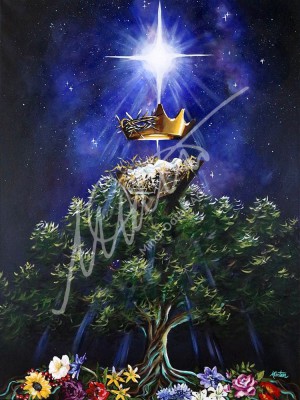
The king sent his servants with invitations, the invitations were refused, so he sent his servants again. The servants were treated badly and murdered. What does this represent? It’s easy to see what happened here. On the Mount of Transfiguration, God sent Moses, who brought the ways of God–the Law, and Elijah, who represented the Prophets. The Jews, the invited, refused the invitation. We’d like to picture the crown as solid gold and beautiful, but instead the crown was one of thorns and of suffering. The mother of the Sons of Zebedee asked for her sons to have the honor of being seated on thrones by Jesus. But Jesus was crucified between two thieves, on a cross with the title “King of the Jews.” The ones who didn’t recognize Jesus as such were the Jews.
Matthew 22:8: Those the king found unworthy measured their worth for the wedding based on their value to the king. The king measured their worth on the fact that they didn’t see the value of their invitation or what their presence was worth to the kingdom.
Matthew 22:9-14: The king sent his servants out to invite everyone they could find, “both bad and good.” All the guests had to do was come because the preparations had been completed. When the king entered, he saw a guest who had not put on a wedding garment. When the king asked the guest why, the guest was speechless.
In verse 14, Jesus explained that many are “called,” but few are “chosen.” That statement only makes sense if we look at the Greek words. The word “called” is from the Greek word for “invited,” and the word “chosen” is from the Greek word for “belong.” Therefore, verse 14 is best understood as, “For many are invited, but few belong.” This makes sense, when we put it in the perspective of the kingdom with boundaries, laws, and law enforcement. If you want the benefits of the kingdom, you would follow the dictates of the king. You would be interested in the very things the king was offering. Those in the kingdom know the benefits . . . an army to protect us, a common language, laws for our good, an economy together. The people in this passage wanted to do their own thing, in their own way, and in their own time. Jesus was marching to the cross, and He wanted His followers to understand what His kingdom is about. In the old days, a flag would fly over the castle when the king was there and be taken down when he left. Jesus’ message was that the King was present in His house and had invited everyone to come, but not everyone would accept His invitation.
Matthew 22:23-32: The Sadducees came to Jesus to try to entangle Him in a difficult question. Jesus responded to their question with, “You are deceived, because you don’t know the Scriptures or the power of God” (v. 29). The Greek word dunamis is the power of the Holy Spirit. Jesus used the word dunamis here to explain how much the Sadducees didn’t understand the power of God because they did not believe in resurrection. In verse 32, Jesus quoted God, saying, “I am the God of Abraham and the God of Isaac and the God of Jacob? He is not the God of the dead, but of the living.” This went straight to the heart of who the Sadducees were . . . the children of Abraham, Isaac, and Jacob. So, were these patriarchs just dead and gone? If so, what was the beauty of having their heritage? Jesus was saying that these men are still alive, because God is the God of the living and these patriarchs are part of God’s plan to come.
Matthew 22:33-40: The crowds were amazed by how Jesus silenced the Sadducees. When the Pharisees heard what happened, they joined together. One of them, a lawyer, then questioned Jesus, asking which commandment was the greatest. Jesus responded, “Love the Lord your God with all your heart, with all your soul, and with all your mind. This is the greatest and most important command. The second is like it: Love your neighbor as yourself. All the Law and the Prophets depend on these two commands.”
Matthew 22:41-45: Then Jesus asked the Pharisees whose Son the Messiah would be. They answered, “David’s.” Jesus asked, “How is it then that David, inspired by the Spirit, calls Him ‘Lord,” and then quoted Psalm 110:1. David’s prophecy was way beyond the understanding of the Pharisees (who were supposed to know the Scriptures). The Pharisees were unable to answer Him because they realized that everything Jesus had been teaching was aimed at the religious people who wouldn’t accept the King because they had their own ways.
CLOSING
When we come to that place, where our position causes us not to follow the edicts of the King, then we are the ones who will sit in jeopardy and be judged for it, and it will be a terrible judgment to come.
Questions
-
Why did Jesus say at the end of the Parable of the Great Feast that many are called but few are chosen (Matthew 20:16; 22:14 (NKJV); Revelation 17:14)? Was this a choice of the guest not to come to the wedding party? Why or why not? What was the King’s solution? (Matthew 22:9)
-
Jesus had been accusing and exposing the religious leaders (Matthew 9:4; 12:3-8). What was the plot against Jesus in Matthew 22:15-22? How did Jesus respond?
-
Name one difference between the Pharisees and the Sadducees. (Matthew 22:23; Galatians 1:14)
-
The Sadducees tried to trap Jesus with a theological question. What two things did Jesus point out about them? (Matthew 22:24-29)
-
What does it mean to love the Lord your God with all your heart, all your soul, and all your mind? (Deuteronomy 6:5; 8:6; 10:12; Micah 6:8; Matthew 22:37; Romans 12:1)
-
What did the Holy Spirit highlight to you in Matthew 22 through the reading or the teaching?

Daily Word
Laura Martin Matthew 22:14
“For many are invited, but few are chosen.”
FURTHER SCRIPTURE
- Matthew 22:29 – “Jesus answered them, ‘You are deceived, because you don’t know the Scriptures or the power of God.’”
- Romans 1:5-6 – “We have received grace and apostleship through Him to bring about the obedience of faith among all the nations, on behalf of His name, including yourselves who also belong to Jesus Christ by calling.”
- Revelation 17:14 – “These will make war against the Lamb, but the Lamb will conquer them because He is Lord of lords and King of kings. Those with Him are called, chosen, and faithful.”
Lesson and Daily Word
Each day has two parts: the Lesson and the Daily Word. Use these buttons to go from one to the other.
Teaching Notes and Questions
Next to the video, these tabs show the Teaching Notes and the Questions. Your answer to a question saves when you leave the answer box.
The Bible passage
This link opens the passage on Bible Gateway, and that gives the passage its tick. If you read it in your own Bible, tick it by hand in Progress.
Your progress on this lesson
A part ticks itself when you play the video or audio to the end, read the notes or the Daily Word to the end, or answer every question. You can also tick a part by hand here.
Downloads
Here you can save the video, the audio and the lesson as PDF files. Downloads do not count toward your progress.
Need help?
Use this button to send us a question or tell us about a problem. You can also take this tour again from there.