

Interacting With Hypocrites
Discover Jesus as: King Matthew 15 Read on Bible Gateway (HCSB)
Lesson
Audio Only
Teaching Notes
INTRO
For the past 14 chapters, we’ve been talking about the Jews rejection of Jesus as the King. Jesus sent His 12 disciples on a short mission trip around Israel, to go after the lost sheep of Israel (the Jews). In Matthew 14, there was a little break from the issues with the Jews. Jesus walked on the water to rescue His disciples from a storm, showing that He is always with us and knows our needs. In Matthew 15, we’re back to arguing with the Jews.
TEACHING
Matthew 15:7-9: In verses 1-6, Jesus was again interacting with the religious leaders. Jesus called them out on their teachings, and then called them hypocrites (v. 7). The leaders asked questions they knew Jesus wouldn’t answer like they wanted. It was an ongoing set-up. Jesus got to the heart of their actions, saying: “These people honor Me with their lips, but their heart is far from Me . . . teaching as doctrines the commands of men” (vv. 8, 9b).
Matthew 15:10-11: We started this study in verse 7 to show how intense Jesus’ rebuke of the religious leaders was. Then, He called the crowd together and told them to “Listen and understand: It’s not what goes into the mouth that defiles a man, but what comes out of the mouth, this defiles a man” (vv. 10-11). The Pentateuch was all about clean and unclean food. But, with these words, Jesus confronted their religious belief, saying that it doesn’t matter anymore what is eaten, because all food is clean (Mark 7:19; Acts 10:15).
MacArthur explains that “people might defile themselves ceremonially (under the old covenant) by eating something unclean, but they would defile themselves morally by saying something sinful.”1This means we’re more concerned about what we put in our mouths for food than we are about what comes out of our mouths (James 3:6).
If anyone says that hell does not exist, then why would they need Jesus? Jesus came to save us from our sin and our death. You cannot say that hell no longer exists, then thank Jesus for dying on the cross for our sins. Hell sets the standard for so much, and if you’re not careful, it will come straight out of your mouth.
Matthew 15:12-13: The disciples told Jesus that the Pharisees had taken offense at His words (v. 12). Jesus responded, “Every plant that My heavenly Father didn’t plant will be uprooted” (v. 13).
Matthew 13:24-30 actually talks about this teaching through the Parable of the Wheat and the Weeds. It states that God clearly does plant things (Psalm 1:3; Isaiah 60:21). It also states that there are other things God does not plant.
Remember Matthew 13:34-36 when Jesus only spoke to the crowds in parables? In verse 36, the disciples asked Jesus to explain the Parable of the Wheat and the Weeds to them. Jesus explained these things:
- sower of the good seed is the Son of Man (v. 37).
- The field is the world (v. 38).
- The good seed is the sons of the kingdom (v. 38).
- The weeds are the sons of the evil one (v. 38).
- The enemy who sowed the weeds is the Devil (v. 39).
- The harvest is the end of the age (v. 39).
- The harvesters are the angels (v. 39).
The weeds are gathered and burned at the end of the age. The angels will gather everything that causes sin and throw them into the blazing furnace. With this background, go back to Matthew 15:
Matthew 15:14: In the parable about the wheat and the weeds, Jesus said to leave the weeds alone because they will be destroyed in the end. Jesus said the same thing in verse 14. Leaving them alone was the worst thing that could happen to them because it signaled abandonment by God2
Matthew 15:15-16: Once again, Peter asked Jesus for an explanation of the parable. And, once again, Jesus questioned that they still lacked understanding.
Matthew 15:17-18: Here’s the quote of all quotes from J. A. Bengel, an 18th-century scholar: “The filth of the draught [toilet] is not so great as is that of a human heart not yet cleansed.”3It relates to this verse. The filth in the toilet is disgusting, and yet it is nothing compared to things that can come out of the mouth (Psalm 119:11). What you put in your heart will come out (Psalm 101:3).
Matthew 15:19-20: From the heart can come all kinds of evil thoughts and actions. Jesus said these evils things are what defile a man, not eating with unwashed hands.
The question that comes from this is how do we work on our hearts? If we’re taking care of our hearts, none of these things will be a problem. Douglas Shawn O’Donnell has what he calls the Parable of the Mouth, with nine things we can work on to take care of our hearts:
A broken and contrite heart (Psalm 51:17).
A circumcised heart (Romans 2:29).
A clean heart (Hebrews 10:22).
A pure heart (1 Peter 2:2).
A new heart (Ezekiel 36:26).
A sincere heart (Ephesian 6:5).
An obedient heart (Deuteronomy 11:13).
Believe from the heart (Ephesians 3:17).
That Christ dwells in the heart (Ephesians 3:17)
CLOSING
Our prayer is that the Messiah will dwell in your hearts. When that happens, all the things we’ve listed will flow from your heart.
John MacArthur, The John MacArthur Bible Commentary(Nashville: Thomas Nelson Publishing, 2005), p. 1153.
MacArthur, p. 1153.
J. A. Bengel, Gomon of the New Testament, v. 1(Eugene, OR: Wipf and Stock Publishers, 2016), 308; available at www.biblehub.com/commentaries/matthew/15-19.htm.
Questions
-
What do you believe Jesus meant in Matthew 15:8-9? How does this correlate to Isaiah 29:13-14? Will God continue to move despite them? Why or why not?
-
What do you believe Matthew 15:11 means? Why were the Pharisees offended at this? Do you struggle with what comes out of your mouth?
-
In Matthew 15:19, what did Jesus list that comes from the heart? How does this describe verse 18?
-
Jesus refused to speak to the woman from Canaan when she wanted healing for her daughter. Why? In the end, why did He change His mind? Do you think you would chase after Jesus for something you wanted? Why or why not?
-
What did the Holy Spirit highlight to you in Matthew 15 through the reading or the teaching?
Daily Word
Laura Martin Matthew 15:25
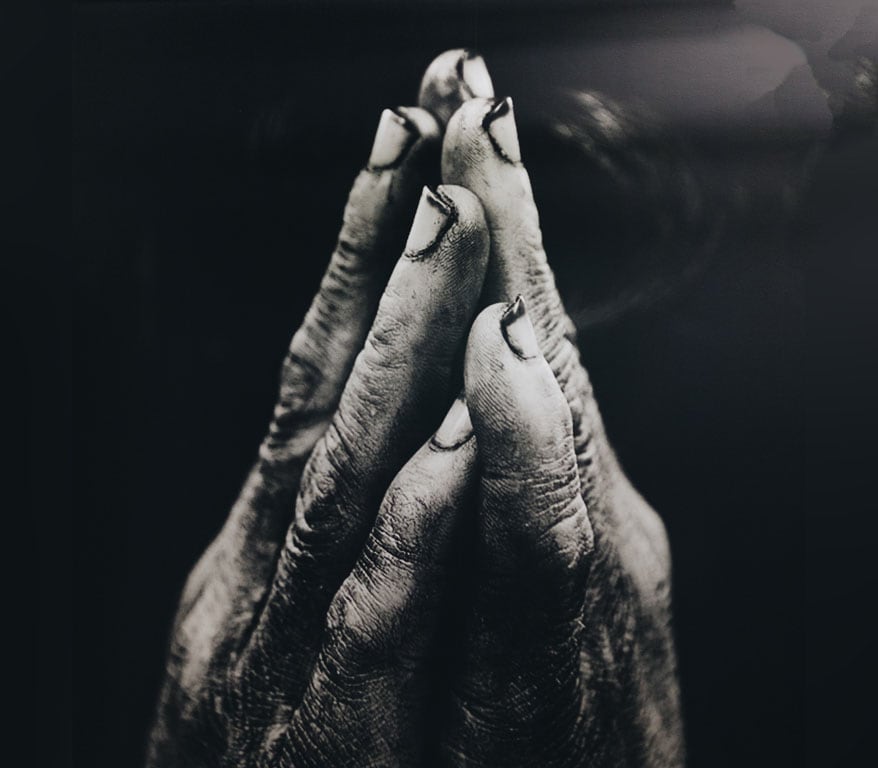
“But she came, knelt before Him, and said, ‘Lord, Help me!’”
As Jesus withdrew to the area of Tyre and Sidon, a Canaanite woman cried out, asking Jesus to heal her demon-possessed daughter. This mother was in great distress and had been walking through a terrible trial, and yet she found hope in Jesus. Jesus responded slowly in His answer to this unlikely candidate for healing. She was a Gentile and a pagan enemy of Israel. Even so, she humbly knelt before Jesus with strong faith that He could heal her daughter and pleaded with Him to help. Jesus saw her faith, saw her belief in Him, and restored her daughter.
As you face trials in life and find yourself in distress, humbly come before Jesus. Don’t assume you aren’t a likely candidate or good enough for Jesus to help. He loves all people. Jesus may have a different timeframe from the one you want, but sit before Him, talk with Him, and share your heart with Jesus the Messiah. The process of waiting and humbling yourself brings glory to the Lord. The Lord sees you and knows you. No matter what you face today, keep your faith in Jesus. He is your helper.
“But she came, knelt before Him, and said, ‘Lord, Help me!’”
— Matthew 15:25
FURTHER SCRIPTURE
- Matthew 25:23 – “His master said to him, ‘Well done, good and faithful slave! You were faithful over a few things; I will put you in charge of many things. Share your master’s joy!’”
- Hebrews 11:6 — “Now without faith it is impossible to please God, for the one who draws near to Him must believe that He exists and rewards those who seek Him.”
- I Peter 1:7 – “So that the genuineness of your faith—more valuable than gold, which perishes though refined by fire— may result in praise, glory, and honor at the revelation of Jesus Christ.”
Lesson and Daily Word
Each day has two parts: the Lesson and the Daily Word. Use these buttons to go from one to the other.
Teaching Notes and Questions
Next to the video, these tabs show the Teaching Notes and the Questions. Your answer to a question saves when you leave the answer box.
The Bible passage
This link opens the passage on Bible Gateway, and that gives the passage its tick. If you read it in your own Bible, tick it by hand in Progress.
Your progress on this lesson
A part ticks itself when you play the video or audio to the end, read the notes or the Daily Word to the end, or answer every question. You can also tick a part by hand here.
Downloads
Here you can save the video, the audio and the lesson as PDF files. Downloads do not count toward your progress.
Need help?
Use this button to send us a question or tell us about a problem. You can also take this tour again from there.