

Giving God What We Have
Discover Jesus as: Servant Mark 6 Read on Bible Gateway (HCSB)
Lesson
Audio Only
Teaching Notes
INTRO
Yesterday, we talked about how Jesus with His Servant attitude engaged and ministered to the community and healed people who were desperate for true healing and life. In Mark 6, Jesus returns to His hometown of Nazareth and faces questions from the people there (vv. 1-6). Then, Jesus sends His 12 disciples out in pairs with authority over unclean spirits. He commissioned them to go out and gave them instructions for what to do as they went (vv. 6b-13). Jesus was ramping up His ministry. As this was happening, John the Baptist was beheaded by King Herod. When his disciples heard about what happened, they came to get his body and place it in a tomb, burying the one who had physically come to prepare Jesus’ way (vv. 14-29).
TEACHING
Mark 6:30-44: The apostles returned to report to Jesus all they had done on “their tours of ministry.”1Jesus took them away to a remote place to rest. This seems to be the pattern: pour in . . . pour in . . . rest. Unfortunately, I’m afraid in ministry today, we try to keep a steady pace and balance. But Jesus went hard, full throttle, and then He rested, and started it again. Because they had not even had time to eat, He took them to an area near Bethsaida to let them get filled up again (Luke 9:10). Jesus may have taken them away because of the death of John the Baptist, possibly to mourn, or because of the potential of political unrest.
Rest is essential in ministry. Many burn out. Some are in the boat with Jesus but spend their time bailing out water. They were being dependent upon themselves rather than Jesus. Vince Havner said, “If you don’t come apart and rest, you will come apart.”2
They went by boat (a four-mile trip), but the people saw them leave and ran to meet them there (as much as eight miles) (v. 33). The people were so hungry to hear Jesus they ran after Him. As Jesus stepped ashore, a “huge crowd” awaited them, and “He had compassion on them.” Compassion will always lead to action (v. 34). Mark 1:41 shows the depth of Jesus’ compassion: “Moved with compassion, Jesus reached out His hand and touched him. ‘I am willing,’ He told him. ‘Be made clean.’” A true servant has compassion; compassion leads to action (Exodus 34:6; Num 27:17).
Jesus began to teach the huge crowd. But “when it was already late,” the disciples showed fake compassion saying, “This place is a wilderness, and it is already late” (v. 35)! Their idea was to send the people away so they could purchase food for themselves.
Why fake compassion? First, they were ready to send them away to have time to find food for themselves (v. 36). Second, they asked if they should collect money to buy the food for the crowd (v. 37). Two hundred denarii were about eight months of wages and would have been a seemingly impossible amount to spend on the people.
This was a heart condition for the disciples. Wiersbe compared the disciples to a church committee trying to figure out how to feed the homeless: “With that approach, they would have made ideal committee members!”3This is a church issue: we throw money at people or we send them away, instead of thinking what can happen when God shows up.
Jesus presented another option, asking, “How many loaves do you have” (v. 38) (John 6:9)? The five loaves and two fish were either a problem or a solution. Jesus had the disciples divide the people into groups of hundreds and fifties on the green grass. Looking down on this scene, one could have seen multitudes of people waiting to be fed or seen how God had put this together by using one lad who gave everything up to be used by Jesus.
In verse 41, Jesus took the food, looked up to heaven (showing His dependence on God in a posture of prayer), broke the bread, and gave it to His disciples. He kept giving food to the disciples to dispense to the crowds until everyone had his or her fill (v. 42).
Wiersbe points out that “we are not manufacturers; we are only distributers.”4Not only was everyone satisfied, but there were 12 baskets full of leftovers. And the 5,000 men were only part of the crowd because women and children were not counted. Some speculate the crowd at 7,000-8,000 people, while others suggest as many as 20,000. God blessed in abundance.
CLOSING
Sometimes you just need to trust the Lord with what you have and let Him multiply it. My hope and my prayer is that wherever we are, we will always depend upon the Lord. And all of this started because Jesus had compassion on those who had a need. Compassion will always lead to action.
Earl Radmacher, Ronald B. Allen, and H. Wayne House, eds., Nelson’s New Illustrated Bible Commentary(Nashville: Thomas Nelson Publishing, 1999), p. 1218.
Vince Havner; quoted in Warren Wiersbe, The Bible Exposition Commentary: Matthew––Galatians(Colorado Springs, CO: David C. Cook, 1989), p. 131.
Wiersbe, p. 132.
Wiersbe, p. 132.
Questions
-
Why do you think that Jesus’ own hometown of Nazareth scoffed at Him and refused to believe in Him? Why would Jesus not do many miracles there (Hebrews 11:6)? Have you ever been guilty of not honoring the gifts and callings of someone because he or she was just a “commoner” to you?
-
As Jesus was sending out the 12 disciples, what did He give them the authority to do? What was their message?
-
The disciples in Mark 6:13 were casting out demons, healing many sick people, and anointing them with oil. Who was this practice of anointing people generally reserved for? (Exodus 29:7; 1 Kings 19:16; 2 Kings 9:6; James 5:14)
-
Why would King Herod believe Jesus was John the Baptist who had been raised from the dead? Why would others believe He was Elijah (Malachi 3:1; 4:5-6; Mark 6:17-27)? Herod was clearly sinful for what he had done. Do you think it’s hard to see who Jesus really is when we are stuck in sin? Why or why not?
-
What do you think was going through the minds of the disciples when Jesus said for them to give the people something to eat (Mark 6:37)? What does God’s provision always start with (Matthew 6:31-33; Mark 6:38; Philippians 4:19)? How have you seen God provide for you or others that couldn’t have happened any other way except for God?
-
What did the Holy Spirit highlight to you in Mark 6 through the reading or the teaching?
Daily Word
Laura Martin Mark 6:42-43
“Everyone ate and was filled. Then they picked up 12 baskets full of pieces of bread and fish.”
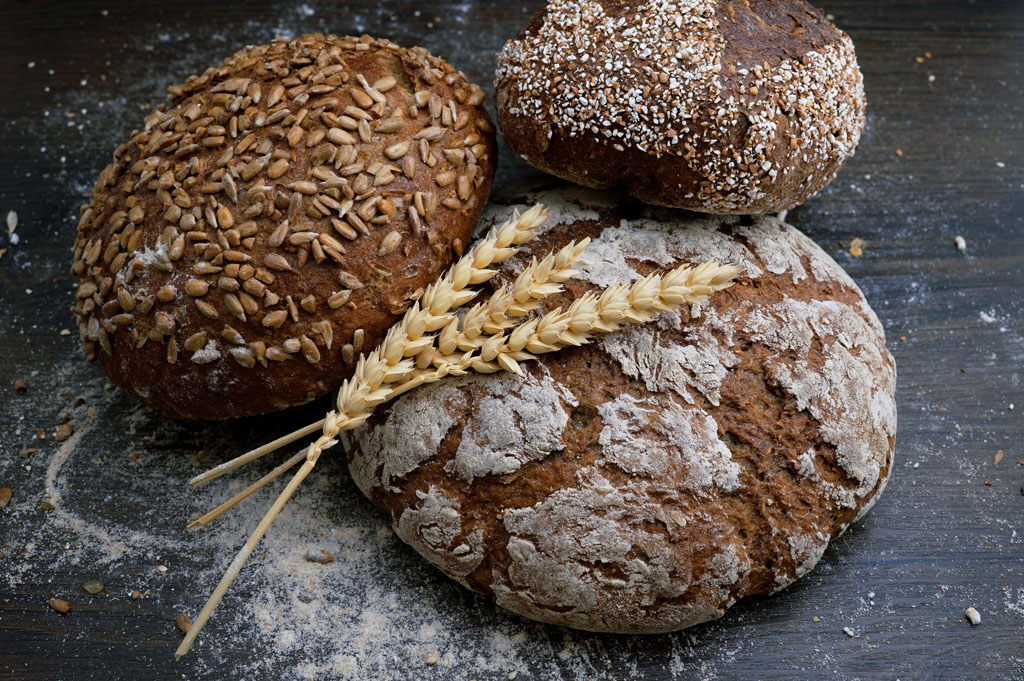
Jesus and the disciples went away again to rest and get refreshed. But once again, the crowds came. Even so, Jesus had compassion on them and began to teach them many things. They were spiritually hungry for His teachings. However, as evening came, they were also physically hungry. Rather than send them away to the nearby villages, Jesus took what He had—five loaves of bread and two fish—and blessed the food. Miraculously, all five thousand ate and were filled, with leftovers filling twelve baskets.
There may be times in your life when you look around and wonder, How am I going to make it? Look to Jesus. Ask Him to provide all of your needs for today. He cares for you, and He says to not worry about tomorrow because tomorrow has enough worries of its own. As you seek first His kingdom and His righteousness, He will provide for you both spiritually and physically. He is the God of miracles!
“Everyone ate and was filled. Then they picked up 12 baskets full of pieces of bread and fish.”
—Mark 6:42-43
FURTHER SCRIPTURE
- Psalm 81:10 — “I am Yahweh your God, who brought you up from the land of Egypt. Open your mouth wide, and I will fill it.”
- Matthew 6:34 — “Therefore, don’t worry about tomorrow, because tomorrow will worry about itself. Each day has enough trouble of its own.”
- Philippians 4:19 — “And my God will supply all your needs according to His riches in glory in Christ Jesus.”
Lesson and Daily Word
Each day has two parts: the Lesson and the Daily Word. Use these buttons to go from one to the other.
Teaching Notes and Questions
Next to the video, these tabs show the Teaching Notes and the Questions. Your answer to a question saves when you leave the answer box.
The Bible passage
This link opens the passage on Bible Gateway, and that gives the passage its tick. If you read it in your own Bible, tick it by hand in Progress.
Your progress on this lesson
A part ticks itself when you play the video or audio to the end, read the notes or the Daily Word to the end, or answer every question. You can also tick a part by hand here.
Downloads
Here you can save the video, the audio and the lesson as PDF files. Downloads do not count toward your progress.
Need help?
Use this button to send us a question or tell us about a problem. You can also take this tour again from there.