

Lesson
Audio Only
Teaching Notes
INTRO
Yesterday, we looked at Jesus’ prediction that He would die, be buried, and on the third day come back to life. In fact, Jesus made that prediction three times in the Gospel of Mark. James and John responded to Jesus’ prediction by asking if they could sit at His right and left, in places of honor. Jesus responded that if they wanted to get to that place, they would have to be willing to endure the suffering He would endure. Jesus said it wasn’t about being first, but it was about being last. Mark 11:1-11 covers Jesus’ triumphal entry into Jerusalem, which we’ve already talked about. Verse 11 says, “And He went into Jerusalem and into the temple complex.” He looked around, checked it out, and then went out to Bethany.
TEACHING
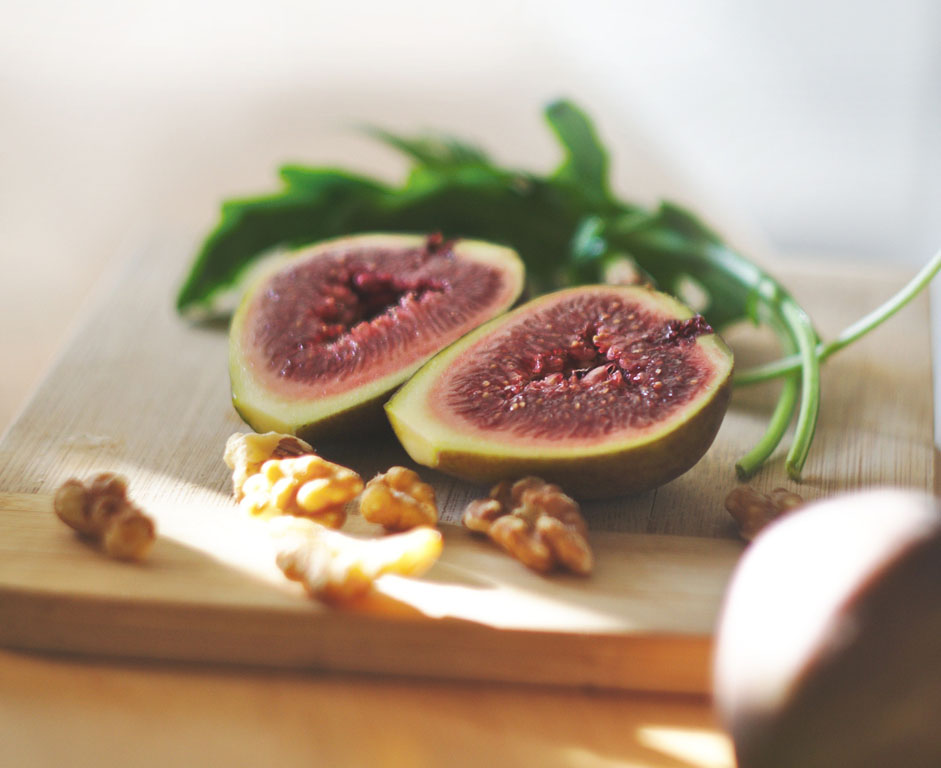
Mark 11:12-14: This is the beginning of another “sandwich” of content. We’ll look at the fig tree, then the events at the temple, and then the fig tree again. The next day Jesus left Bethany to go back to Jerusalem, and He was hungry (v. 12). This highlights Jesus’ humanity. He saw a fig tree with leaves and went to see if it had fruit on it because He was hungry (v. 13). However, there was no fruit on the tree because “it was not the season for figs.” Jesus said, “May no one ever eat fruit from you again!” (v. 14). The season for figs was May or June, and Passover was in March or April, so they weren’t even in the right season. However, in March, there are a number of buds that should be apparent that are edible. In April, the leaves appear, and later the fruit appears. When Jesus came up to the fig tree, He expected to find little, edible buds, but He found nothing. He wanted something to eat and found nothing.
Many commentators see this as a spiritual illustration about Israel. Normally, a fig tree is a symbol of Israel’s peace, prosperity, and provision (Micah 4:4; Zechariah 3:10). Now pause this story, and we’ll come back to it.
Mark 11:15-16: Jesus returned to the temple complex and “began to throw out those buying and selling in the temple” (v. 15). He had been there the night before, “looking around at everything,” and decided then what He was going to do the next day (v. 11). When Jesus arrived, He began immediately and “overturned the money changers’ tables and the chairs of those selling doves and would not permit anyone to carry goods through the temple complex” (vv. 15b-16). The temple complex was the high holy place and, “by cleansing the temple, Jesus clearly claimed authority equal to God who first filled this place with His glory.”1Jesus walked in a new authority (2 Chronicles 5:13-14). Jesus began to flip upside-down all things that were being done within the temple complex–the animals being sold for sacrifice, the money that had to be exchanged into temple currency to be able to make an offering, and even those who transported goods across the complex.
The moneychangers had an important role at the temple because people were coming from so many places and cultures who needed to exchange their currencies. The opportunity to make money off that need was great. Doves were sold to the poor for sacrifice, and the poor were being ripped off too. Rodney Cooper says Jesus demanded that people didn’t cut through the temple as a short cut because the temple was a holy, consecrated place in which to worship the Lord.2They were treating it like a convenience store. It had to be chaotic before, and especially after, Jesus cleared the temple.
Mark 11:17: In the middle of the chaos, Jesus began to teach, using two Old Testament prophets, Isaiah and Jeremiah. Isaiah 56:7 says, “I will bring them to My holy mountain and let them rejoice in My house of prayer. Their burnt offerings and sacrifices will be acceptable on My altar, for My house will be called a house of prayer for all nations.” Notice: A house of prayer for all nations! Jeremiah 7:11 says, “‘Has this house, which is called by My name, become a den of robbers in your view? Yes, I too have seen it.’ This is the Lord’s declaration.” Instead of a house of prayer, it had become a den of robbers. In verse 17, Jesus pulled these two ideas together and accused those who listened, of turning God’s house of prayer into a den of thieves. The Gentiles could only worship in the outer court, and the Jews were pushing them out of that area with all the animals they were selling for sacrifice and the moneychangers. Brooks says, “With the conversion of the court of gentiles into a bazaar with all its noise and commotion and stench, they were deprived of the only place in the temple where they could worship. By clearing out the trades, Jesus literally and symbolically provided a place for Gentiles in the temple of God.”3
The Jews had pushed out the Gentiles (John 1:10-12). Jesus moved everything out of the way to welcome the Gentiles (Acts 13:46-47). Cooper says the temple had become a refuge of unjust people, and the Jews felt secure in God’s acceptance because of rituals and laws.4Because of who they were, the Jews felt they could get away with anything they wanted. But the temple was becoming like the fig tree with no foliage.
Mark 11:18-19: The chief priests and scribes heard Jesus teaching with authority, and they were afraid of Him and wanted to destroy Him. Jesus had to leave the city at night for safety.
Mark 11:20-22: The next day Peter noticed that the fig tree Jesus had cursed the day before had “withered from the roots up” (v. 20). Jesus told him to “Have faith in God.”
How does all this fit together? Cooper says the religious system had many leaves but no fruit, and the surface piety was seen in the tithes, prayers, and fasts.5rituals were keeping out women, lepers, blind beggars, and those with demons, in order to make the religious elite look good. The foliage offered much promise but no fulfillment. As a fig-less tree could not satisfy Jesus’ hunger, neither could a religious system satisfy our spiritual hunger. When are we going to realize the system is broken? Obviously, the temple is no longer standing, so the Jews get a little grace here. But consider the church today. How are we becoming a religious system that is broken and not producing fruit?
Romans 11:11 says, “I ask, then, have they stumbled in order to fall? Absolutely not! On the contrary, by their stumbling, salvation has come to the Gentiles to make Israel jealous.”
Mark 11:23-26: How do we fix the broken system? Through more prayer and forgiveness in the church.
CLOSING
You want to know how to produce fruit today? By having faith that our prayers will be answered. It’s that simple.
Earl Radmacher, Ronald B. Allen, and H. Wayne House, eds., Nelson’s New Illustrated Bible Commentary(Nashville: Thomas Nelson’s Publishers, 1999), p. 1228.
Rodney Cooper, Holman New Testament Commentary: Mark(Nashville: Holman Publishers, 1991), Kindle location 4373.
James A. Brooks, Mark: An Exegetical and Theological Exposition of Holy Scripture(Nashville: Holman Publishers, 1991), p. 186.
Cooper, Kindle location 4381.
Cooper, Kindle location 4400.
Questions
-
The Pharisees told anyone who saw Jesus to tell them so that they could arrest Him (John 11:57). How do you see the courage of Jesus in Mark 11:7-11 despite these threats?
-
God is not pleased when we have the appearance of fruit but actually have no fruit at all. What’s the difference between bearing no fruit and bearing bad fruit? (Matthew 7:16-20; Mark 11:13-14)
-
What did Jesus say His Temple would be called and who was it for (Isaiah 56:7)? What did Jesus mean by remarking that they had turned the temple into a den of thieves? (Jeremiah 7:11)
-
What did Jesus say was the reason for the fig tree miracle (Mark 11:21-22)? Who should always be the object of our faith (Romans 3:26; Galatians 3:26; Hebrews 11:6)? Does this mean if we have enough faith God will do anything we ask (Mark 11:23-24)? Why or why not? (1 Corinthians 2:5; 13:2; 1 John 5:14)
-
Was Jesus evading the question the religious leaders asked Him in Mark 11:28-30? If not, why did He respond that way? Does it seem the religious wanted to know the truth about who Jesus was?
-
What did the Holy Spirit highlight to you in Mark 11 through the reading or the teaching?
Daily Word
Laura Martin Mark 11:12-13
“The next day when they came out from Bethany, He was hungry. After seeing in the distance a fig tree with leaves, He went to find out if there was anything on it. When He came to it, He found nothing but leaves, because it was not the season for figs.”
FURTHER SCRIPTURE
- Matthew 21:43 — “Therefore I tell you that the kingdom of God will be taken away from you and given to a nation producing its fruit.”
- Galatians 5:22-23 — “But the fruit of the Spirit is love, joy, peace, patience, kindness, goodness, faith, gentleness, self- control. Against such things there is no law.”
- John 15:5 — “I am the vine; you are the branches. The one who remains in Me and I in him produces much fruit, because you can do nothing without Me.”
Lesson and Daily Word
Each day has two parts: the Lesson and the Daily Word. Use these buttons to go from one to the other.
Teaching Notes and Questions
Next to the video, these tabs show the Teaching Notes and the Questions. Your answer to a question saves when you leave the answer box.
The Bible passage
This link opens the passage on Bible Gateway, and that gives the passage its tick. If you read it in your own Bible, tick it by hand in Progress.
Your progress on this lesson
A part ticks itself when you play the video or audio to the end, read the notes or the Daily Word to the end, or answer every question. You can also tick a part by hand here.
Downloads
Here you can save the video, the audio and the lesson as PDF files. Downloads do not count toward your progress.
Need help?
Use this button to send us a question or tell us about a problem. You can also take this tour again from there.