
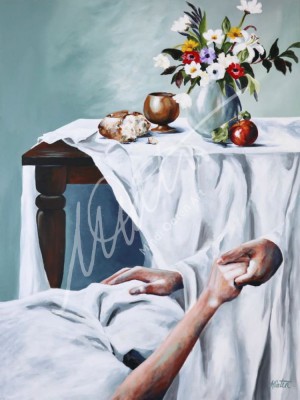
The Lord's Supper
Discover Jesus as: Son of Man Luke 22 Read on Bible Gateway (HCSB)
Lesson
Audio Only
Teaching Notes
INTRO
We are almost done with the Gospel of Luke! There are 24 chapters in Luke. We are wrapping up the synoptic Gospels. The book of Matthew describes Jesus as King, the book of Mark describes Him as Servant, and the book of Luke describes Him as Son of Man. We begin to see the humanity side of Jesus. We are going to walk through the Lord’s Supper. It is an incredible picture! Christ invites every one of us to join Him at the table!
TEACHING
Luke 22:1–6: The Festival of Unleavened Bread, also known as Passover, was approaching. We also see the fruition of the plot to kill Christ. Even in Mark, Jesus predicted His death three times.
Luke 22:7–13: How were they supposed to get ready for thePassover? Jesus asked His disciples to enter a city, find a guy carrying a jug, and stalk him! They were to ask this man where his guest room was where Jesus could celebrate the Passover with His disciples. The Lord goes before us to take care of the details (Exodus 12:13).
This Passover paints a picture of how Jesus remembered this time as a festival of the Lord and also honored the words of Moses. When we talk about the Lord’s Table, everything is about remembrance! This Passover was also a prediction of the future. Wiersbe wrote, “Passover commemorated the Exodus of Israel from Egypt centuries before, but He would accomplish a greater ‘exodus’ on the cross.”1(See Luke 9:31.)
Luke 22:14: When it came time for Jesus and the disciples to celebrate the Passover meal, they reclined at the table. Wiersbe wrote, “Jesus served as the host.”2Jesus always greeted His disciples with a traditional kiss of peace. John 13:23 shows us that John was on His right and Judas was on His left. He then kissed all the disciples. In Ephesians 2:20 it is written that the apostles were the 12 disciples. In John 13:1–20, we see that after the kiss and a greeting, Jesus picked up a towel and washed their feet. When Jesus washed their feet, He was modeling service and humility.
Luke 22:15: Jesus then revealed that this would be His last meal with them. He knew this was His last meal and that it was a fulfillment of what was to come. Jesus was pursuing the prophetic word (Matthew 5:17). In John 13:1, John wrote that Jesus loved His disciples and that He loved them until the end.
Luke 22:16: Jesus said, “This is my last meal!” Constable wrote, “Jesus announced that He would ‘never again eat’ another Passover meal until what the Passover anticipated, namely, His own sacrificial death, had transpired (cf. 9:31) . . . He would eat with them ‘again’ next in ‘the kingdom,’ specifically at the messianic banquet at the beginning of the kingdom.”3He would eat with the disciples again at the Messianic banquet in heaven. Revelation 19:9 is an incredible picture of the Messianic banquet. This is what Jesus was talking about!
Luke 22:17: Jesus took a cup, gave thanks, and then shared it with His disciples. There is debate about which cup, during the Passover meal, Jesus actually used because we know four cups are used. Here are the four types of cups: (1) Used with preliminary course to bless the day; (2) after a liturgical explanation of the day with singing of the Hallel Psalms; (3) following the meal of the lamb, unleavened bread, and bitter herbs; and (4) following the concluding portion of the Hallel Psalms.4The cup shared would have been a common cup––only one.
Luke 22:18: Once again, Jesus implied that He would not drink again with His disciples until the Messianic banquet. Jesus said, “This is my last one!”
Luke 22:19: Jesus took bread and gave thanks. The bread was a representation of His body. In Deuteronomy 16:3, the author shared that unleavened bread was a symbol of hardship and sin. Jesus gave the disciples bread, only one loaf of bread. I think it is important to note that it was one, representing one body of Christ. We forget that we are the body of Christ. We as Christians should not be so divided!
Remember that Passover was a sacrifice offering. This was His last one because after His death there would be no need for a sacrifice offering. Jesus was the ultimate sacrifice offering. (Leviticus 6:25, 7:15; 1 Corinthians 10:16; 11:26; Hebrews 10:14.) In Jeremiah 31:31, we see a transition to the New Covenant.
Luke 22:20: In the same way He took a cup, probably the third, which was the cup of redemption. Jesus said, “My time is coming.” Redemption only comes through the blood of Christ. Leviticus 17:11 says, “For the life of a creature is in the blood, and I have appointed it to you to make atonement on the altar for your lives, since it is the lifeblood that makes atonement.”
Luke 22:21–22: Jesus then shared that he would be betrayed by one of His disciples. The disciples were puzzled, as if hearing it for the first time. This wasn’t new news. Jesus previously predicted these betrayals in Matthew 17:22 and Matthew 20:18.
CLOSING
Why do we celebrate the Lord’s Supper? We've been asked to do three things.
We have been asked to remember.
Luke 22:19, “And He took bread, gave thanks, broke it, gave it to them, and said, ‘This is My body, which is given for you. Do this in remembrance of Me.’”
We have been asked to participate in how Christ lived His life.
1 Corinthians 10:16: “The cup of blessing that we give thanks for, is it not a sharing in the blood of Christ? The bread that we break, is it not a sharing in the body of Christ?”
John 6:53: “So Jesus said unto them, ‘I assure you: Unless you eat the flesh of the Son of Man, and drink his blood, you do not have life in yourselves.’”
Mark 8:34b: “If anyone wants to be My follower, he must deny himself, take up his cross, and follow Me.” This is how we participate in the bread and the cup.”
We must look to proclaim His death into the world.
1 Corinthians 11:25–26: “In the same way, after supper He also took the cup and said, ‘This cup is the new covenant established by My blood. Do this, as often as you drink it, in remembrance of Me.’ For as often as you eat this bread and drink the cup, you proclaim the Lord’s death until He comes.”
Warren Wiersbe. The Bible Exposition Commentary: New Testament (Colorado Springs, CO: David C. Cook, 2008), p. 265.
Wiersbe, p.265.
Thomas L. Constable, Expository Notes of Dr. Thomas Constable: Luke; p. 465; available at https:// planobiblechapel.org/tcon/notes/pdf/luke.pdf.
Darrell L. Bock. Messiah in the Passover (Grand Rapids, MI: Kregel Publications, 2017), p. 73.
Questions
-
Scripture prophesied that the Messiah would be betrayed by a friend. Do you think Judas or the chief priests and officers were familiar with this prophecy (Psalm 41:9; 55:12–14)?
-
Jesus stated in Luke 22:16 that He wouldn’t eat the Passover again until it was fulfilled in the kingdom of God. What does this mean (1 Corinthians 5:7)?
-
While with the 12 disciples, Jesus told them (Luke 22:26) that the greatest among them must become like the youngest. Do you think this is related to what He said about becoming like a child to enter the kingdom of heaven (Matthew 18:3; Luke 18:17)?
-
Peter stated with certainty that he would be willing to face prison or death for Jesus. Have you ever been afraid, as Peter was, and chose to allow fear to keep you silent or in denial to avoid persecution or suffering (Luke 22:33–34, 55–62)?
-
In Luke 22:69, Jesus again referred to Himself as the Son of Man. The council of elders asked Him directly if He was the Son of God. Jesus responded, “you say that I am” (v. 70). What was significant and scandalous to them about His response (Exodus 3:14, John 8:58)?
-
What did the Holy Spirit highlight to you in Luke 22 through the reading or the teaching?
Daily Word
Laura Martin Luke 22:19–20
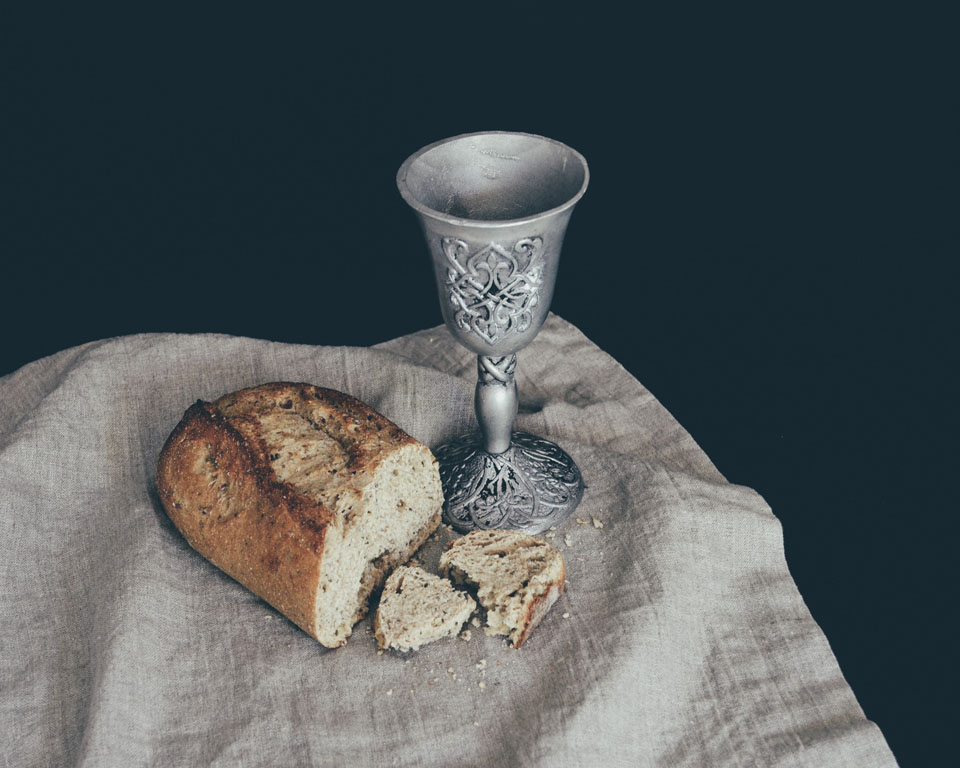
“And He took bread, gave thanks, broke it, gave it to them, and said, “This is My body, which is given for you. Do this in remembrance of Me. In the same way He also took the cup after supper and said, “This cup is the new covenant established by My blood; it is shed for you.”
FURTHER SCRIPTURE
- 1 Corinthians 11:24 — “Gave thanks, broke it, and said, ‘This is My body, which is for you. Do this in remembrance of Me.’”
- 1 Corinthians 11:26 — “For as often as you eat this bread and drink the cup, you proclaim the Lord’s death until He comes.”
- Hebrews 10:10, 14 — “By this will of God, we have been sanctified through the offering of the body of Jesus Christ once and for all . . . For by one offering He has perfected forever those who are sanctified.”
Lesson and Daily Word
Each day has two parts: the Lesson and the Daily Word. Use these buttons to go from one to the other.
Teaching Notes and Questions
Next to the video, these tabs show the Teaching Notes and the Questions. Your answer to a question saves when you leave the answer box.
The Bible passage
This link opens the passage on Bible Gateway, and that gives the passage its tick. If you read it in your own Bible, tick it by hand in Progress.
Your progress on this lesson
A part ticks itself when you play the video or audio to the end, read the notes or the Daily Word to the end, or answer every question. You can also tick a part by hand here.
Downloads
Here you can save the video, the audio and the lesson as PDF files. Downloads do not count toward your progress.
Need help?
Use this button to send us a question or tell us about a problem. You can also take this tour again from there.