
Unauthorized Offering
Discover Jesus as: Atonement Leviticus 10 Read on Bible Gateway (HCSB)
Lesson
Audio Only
Teaching Notes
INTRO
Leviticus points to the Messiah. Everywhere you look, our one word, Atonement, is seen. Remember, Leviticus 9 described Aaron’s first day on the job when he made all the offerings: the sin offering and the burnt offering for himself and then the fellowship offering and the grain offering that covered the Israelites. Afterward, Aaron blessed the people, and then he and Moses blessed the people again. Then the fire and glory of the Lord fell. Both pointed to the coming of the Messiah.
In Exodus 28:4, special garments were made for the priests. In Leviticus 8, Aaron and his sons were consecrated and ordained to do the work of the Lord. Yet in Leviticus 10, despite this special anointing, despite seeing the fire fall, Aaron’s sons still chose to do their own thing.
TEACHING
Leviticus 10:1: Nadab and Abihu presented unauthorized/strange fire to the Lord, which He had not commanded them to do. The entire tabernacle was one big commandment. Were these priests already tired of following all the commandments?
Leviticus 10:2: “Then fire came from the LORD and burned them to death before the LORD.” Immediately, a precedent was set: if you aren’t going to follow the Lord’s commands, then you’re done. Wiersbe described how these two guys were wrong in this situation.1First, , they were the wrong people to make this offering. The high priest, their father Aaron, was the only one who could make this offering (Exodus 30:7–10). Second, they used the wrong instruments, namely their own fire pans (Exodus 40:9). Third, it was the wrong time. This was only to be offered on the Day of Atonement (Leviticus 16:11). Fourth, they came with the wrong authority. They didn’t come with God’s authority but on their own. Fifth, they brought the wrong fire. The fire should have come from the altar itself, which had been lit when fire fell down from heaven (Leviticus 16:12). Sixth, they had the wrong motive; they were trying to get their own glory (Leviticus 10:3). Seventh, they came to the table with the wrong energy. There’s a good chance they were completely drunk (Leviticus 10:9).
Leviticus 10:3: When Moses said, “This is what the LORD meant when He said: ‘I will show My holiness to those who are near Me, and I will reveal My glory before all the people,’” Aaron kept quiet. Maybe his silence was caused by shock? Aaron (and
all the priests) had a responsibility to maintain. James 3:1 warns: “Not many should become teachers, my brothers, knowing that we will receive a stricter judgment.” There’s grace today, but teachers are held more accountable. We must take seriously the warning of 1 Corinthians 10:12: “Whoever thinks he stands must be careful not to fall.” Sin can creep in when we walk in pride, and it leads to a fall. Hebrews 12:28–29 advises, “Let us hold on to grace . . . [then] we may serve God acceptably.”
Leviticus 10:4–5: Moses called Mishael and Elzaphan to carry the brothers away from the tabernacle to a place outside the camp! The dead men could not be carried by immediate family because they would become unclean (Leviticus 21:1–2).
As a reminder, neither Moses nor Aaron were perfect; both had messed up. Aaron built the golden calf (Exodus 32), but now he was the high priest. Moses messed up in Numbers 20 and won’t be allowed to enter the Promised Land. In 1 Samuel 6:19, God struck down 70 men out of 50,000 because they looked into the Ark of the Covenant. It’s hard to understand how God chooses when He strikes people down and when He doesn’t. Why those 70? Why strike down Nadab and Abihu? Why couldn’t Moses go into the Promised Land, but Aaron could still be high priest?
Leviticus 10:6–7: Moses told Aaron and his sons, Eleazar and Ithamar, not to mourn their sons/brothers. However, the community would mourn over the tragedy of their deaths. Instead, Aaron and his surviving sons would serve the house of Israel. They weren’t allowed to leave the tent of meeting because the anointing oil of the Lord was on them. They had work to do.
God’s calling on your life is bigger than your family. In Luke 9:59-60, we see Jesus delivering a hard message to a potential follower about family and the kingdom of God. Jesus told His disciples to leave everything behind to follow Him. Sometimes in America, we elevate our family to the point that we skew what the Lord is calling us to do. It’s important to remember that God always has a bigger picture in mind.
Leviticus 10:8–11: God told Aaron that he and his sons could not drink wine or beer when they entered the tent of meeting or they would die. This was a permanent statute for Aaron’s family. Aaron (and all the priests) had to distinguish between the holy and the common, the clean and unclean. Aaron had to have a clear mind because he was going to teach the Lord’s statutes to the people. The priests had to have the gift of discernment, the ability “to distinguish between good and evil” (Hebrews 5:13–14). The priests were distinct from anyone else in the world. They functioned in holiness.
Leviticus 10:12–15: Aaron and his remaining sons, Eleazar and Ithamar, proceeded with the offerings to the Lord. They performed the grain offerings and the wave offerings.
Leviticus 10:16–18: When Moses realized Aaron and his sons didn’t eat the sin offering but had allowed it to burn up instead, he was angry with them. He wanted to know why they didn’t follow the instructions to eat the sin offerings in the sanctuary.
Leviticus 10:19–20: Aaron responded to Moses’ accusation (v. 19) about not following instructions by asking, “Since these things have happened to me, if I had eaten the sin offering today, would it have been acceptable in the LORD’s sight?” Constable said Aaron couldn’t eat the offering in good conscience, and he wasn’t going to try and fool God but instead chose to fast.2Aaron banked on God looking at his heart.
CLOSING
God wants our obedience, not just our sacrifice. As you walk out God’s calling on your life, He understands the seriousness of the calling. As you walk out the call, just breathe. If your heart and your intent is to serve the Lord, He’s going to extend grace.
Warren W. Wiersbe, The Bible Exposition Commentary: Genesis–Deuteronomy (Colorado Springs, CO: David C. Cook, 2001), p. 264.
Thomas Constable, Dr. Constable’s Expository (Study) Notes: Leviticus, p. 84; available online at https://planobiblechapel.org/tcon/notes/pdf/leviticus.pdf.
Questions
-
What was the unauthorized offering made by Aaron’s two sons in Leviticus 10:1–3? Do you think they meant to offer an unauthorized sacrifice? Do you think there was fear in Aaron’s family (the priests) of following suit?
-
Why do you think God chose to kill Nadab and Abihu (Leviticus 10:2)? Why does God choose to strike people down at times and at other times extend grace and give a second chance?
-
As priests, Aaron and his sons were held to a high standard. Read James 3:1 and 1 Corinthians 10:12. Are you held to this higher standard? (Matthew 18:6; Hebrews 5:11–14)
-
Why were Aaron and his sons Eleazar and Ithamar not allowed to mourn in Leviticus 10:6–7?
-
What motivated Aaron and his sons not to eat the sin offering that they were told to eat (Leviticus 10:16–20)? Was this the right decision?
-
What did the Holy Spirit highlight to you in Leviticus 10 through the reading or the teaching?
Daily Word
Laura Martin Leviticus 10:1-2
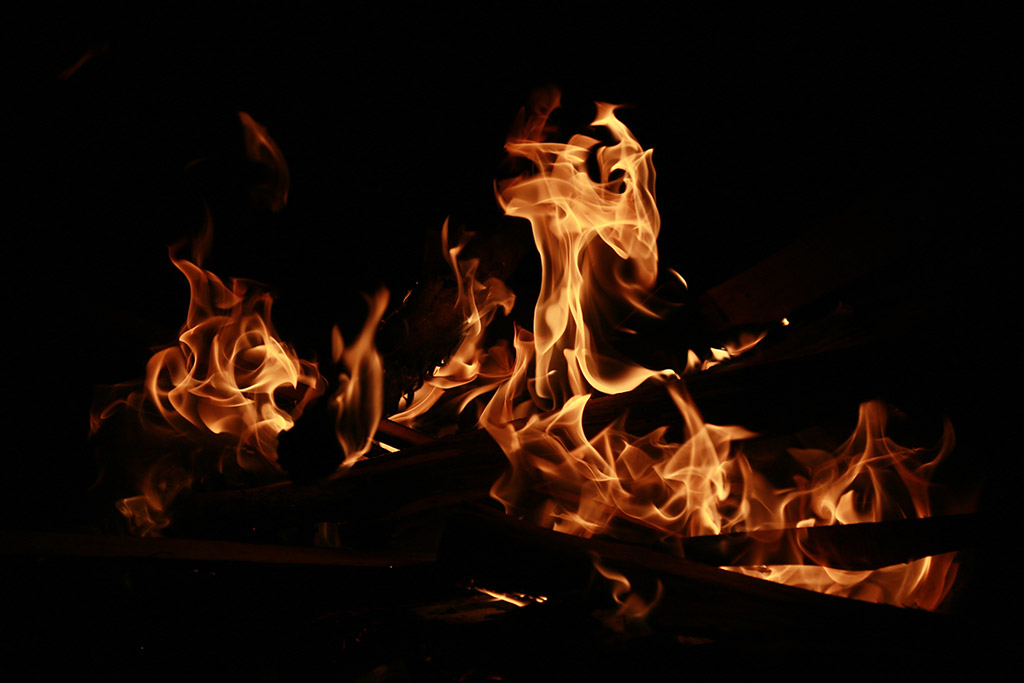
“Aaron’s sons Nadab and Abihu each took his own firepan, put fire in it, placed incense on it, and presented unauthorized fire before the LORD, which He had not commanded them to do. Then fire came from the LORD and burned them to death before the LORD.”
Even in the midst of the marvelous presentation of God’s glory, Aaron’s two sons, who were priests, went against the commands of the Lord and presented unauthorized fire before Him. The Lord gave them immediate judgment and burned them to death.
As a royal priesthood of Christ, even in the middle of doing the work of the Lord, you may be tempted to put “unauthorized fire” before God. You may be tempted to live selfishly in the area of addictions, pride, or the worship of other gods.
Remember, as Christ’s chosen priests, you are called out of darkness, out of sin, and into His marvelous light, filled with grace and power from the Lord. Resist the temptation to do your own thing. Today, may you draw strength from the Lord to stand strong.
“Aaron’s sons Nadab and Abihu each took his own firepan, put fire in it, placed incense on it, and presented unauthorized fire before the LORD, which He had not commanded them to do. Then fire came from the LORD and burned them to death before the LORD.”
— Leviticus 10:1–2
FURTHER SCRIPTURE
- Romans 6:22–23 — “But now, since you have been liberated from sin and have become en-slaved to God, you have your fruit, which results in sanctification —and the end is eternal life! For the wages of sin is death, but the gift of God is eternal life in Christ Jesus our Lord.”
- James 1:13–15 — “No one undergoing a trial should say, ‘I am being tempted by God.’ For God is not tempted by evil, and He Himself doesn’t tempt anyone. But each person is tempted when he is drawn away and enticed by his own evil desires. Then after desire has conceived, it gives birth to sin, and when sin is fully grown, it gives birth to death.”
- 1 Peter 2:9–10 — “But you are a chosen race, a royal priesthood, a holy nation, a people for His possession, so that you may proclaim the praises of the One who called you out of darkness into His marvelous light. Once you were not a people, but now you are God’s people; you had not received mercy, but now you have received mercy.”
Lesson and Daily Word
Each day has two parts: the Lesson and the Daily Word. Use these buttons to go from one to the other.
Teaching Notes and Questions
Next to the video, these tabs show the Teaching Notes and the Questions. Your answer to a question saves when you leave the answer box.
The Bible passage
This link opens the passage on Bible Gateway, and that gives the passage its tick. If you read it in your own Bible, tick it by hand in Progress.
Your progress on this lesson
A part ticks itself when you play the video or audio to the end, read the notes or the Daily Word to the end, or answer every question. You can also tick a part by hand here.
Downloads
Here you can save the video, the audio and the lesson as PDF files. Downloads do not count toward your progress.
Need help?
Use this button to send us a question or tell us about a problem. You can also take this tour again from there.