
Jeremiah 1-2
Discover Jesus as: New Covenant Jeremiah 1-2 Read on Bible Gateway (HCSB)
Lesson
Audio Only
Teaching Notes
INTRO
The prophet Jeremiah was the author of the book of Jeremiah, and it was written sometime between 627–580 B.C. Jeremiah was also the author of Lamentations. He was one of the five major prophets.1
Isaiah contains a little more hope than Jeremiah does. MacArthur observed that Jeremiah recorded more about his own life than any other prophet. He described his ministry, the reaction of his opponents, and his personal feelings. His name might mean “Jehovah Throws,” as in God has laid a foundation. It may also mean “Jehovah establishes, approves, or sends.” The Old and New Testaments quote Jeremiah seven times. For example, Daniel 9:2 referenced Jeremiah: “In the first year of his reign, I, Daniel, understood from the book according to the word of the Lord to Jeremiah the prophet that the number of years for the desolation of Jerusalem would be 70.”Matthew 2:18 quoted Jeremiah: “A voice was heard in Ramah, weeping, and great mourning, Rachel weeping for her children; and she refused to be consoled, because they were no more.”2
Jesus was the fulfilment of the Old Testament: “Don’t assume that I came to destroy the Law or the Prophets. I did not come to destroy but to fulfill” (Matthew 5:17). New Testament writers who reference the Old Testament add validity to Jesus’ claim. This fits our phrase for Jeremiah: New Covenant. “‘Look, the days are coming’—this is the Lord’s declaration—‘when I will make a new covenant with the house of Israel and with the house of Judah. This one will not be like the covenant I made with their ancestors when I took them by the hand to bring them out of the land of Egypt—a covenant they broke even though I had married them’—the Lord’s declaration. ‘Instead, this is the covenant I will make with the house of Israel after those days’—the Lord’s declaration. ‘I will put My teaching within them and write it on their hearts. I will be their God, and they will be My people’” (Jeremiah 31:31–33). The writer of Hebrews said, “By saying, a new covenant, He has declared that the first is old. And what is old and aging is about to disappear” (Hebrew 8:13). Jeremiah declared the New Covenant would be within the hearts of the people of God. In Ephesians, Paul prayed “that the Messiah may dwell in your hearts through faith” (Ephesians 3:17).
Jeremiah was the son of the priest, Hilkiah. This was likely not the Hilkiah who discovered the book of the Law in 2 Kings 22:8. He was from Anathoth, a city three miles northeast of Jerusalem within the territory allotted to Benjamin. Assisted by a scribe named Baruch, Jeremiah dictated his message to be recorded by Baruch (Jeremiah 36:4), who copied and held custody of Jeremiah’s writings.3
Jeremiah is known as “the weeping prophet”: “If my head were a spring of water, my eyes a fountain of tears, I would weep day and night over the slain of my dear people” (Jeremiah 9:1). In this way, Constable noted that Jeremiah’s ministry paralleled Jesus’. In Jesus’ day, people thought that Jesus may actually be Jeremiah: “And they said, ‘Some say John the Baptist; others, Elijah; still others, Jeremiah or one of the prophets” (Matthew 16:14).4 Jeremiah’s prophecies about the soon-to-invade Babylonians didn’t win him any friends among his own people in the Southern Kingdom. MacArthur noted, “He was threatened, tried for his life, put in stocks, forced to flee from King Jehoiakim, publicly humiliated by a false prophet, and thrown into a pit.”5
Jeremiah prophesied over five decades. His ministry began in the thirteenth year of King Josiah (627 B.C.) all the way to the fall of Babylon (586 B.C.). MacArthur noted that after Jerusalem fell to Babylon, Jeremiah fled with a remnant to Egypt. Even though he initially fled to Egypt, Babylon eventually conquered Egypt as well. A rabbinic note claims Jeremiah was then taken captive to Babylon where he would write the book’s closing scene in 561B.C.6
MacArthur outlined four main pictures in Jeremiah’s prophecies: “(1) his people’s sin; (2) the invader God would send; (3) the rigors of the siege; and (4) calamities of destruction.” Judgment is the chief theme of Jeremiah 1—29 and Jeremiah 30—33 depicts the future Messianic Kingdom. While much of Jeremiah deals with judgment, “a secondary theme is God’s willingness to spare and bless the nation only if the people repent.”7
TEACHING
Jeremiah 1:1-3: The first three verses give context to Jeremiah.8 His ministry began during the reign of Josiah. Jeremiah and Josiah must have had some kind of relationship because Jeremiah sang at Josiah’s funeral: “Jeremiah chanted a dirge over Josiah, and all the singing men and singing women still speak of Josiah in their dirges to this very day” (2 Chronicles 35:25).
Jeremiah 1:4–10: These verses describe the choice of Jeremiah.9 God chose Jeremiah as a prophet before he even took up residence in his mother’s womb (v. 5a). “For it was You who created my inward parts; You knit me together in my mother’s womb. I will praise You because I have been remarkably and wonderfully made. Your works are wonderful, and I know this very well. My bones were not hidden from You when I was made in secret, when I was formed in the depths of the earth” (Psalm 139:13–15).
God set Jeremiah apart to be a “prophet to the nations” (v. 5b), but Jeremiah protested, saying that he was too young. At this time, Jeremiah would have likely been between 20–25 years old. The Lord assured Jeremiah he would certainly be His prophet and charged him to not be afraid. MacArthur pointed out, “The power backing Jeremiah’s service was God’s presence and provision.”10
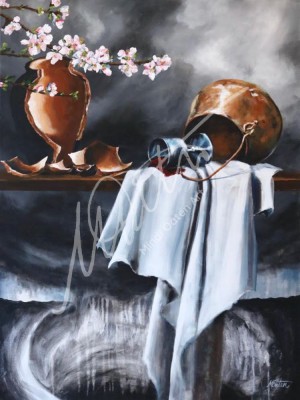
Jeremiah 1:11–19: These verses contain Jeremiah’s charge. Almond trees were known as the “wakeful tree” because they bloomed in January, earlier than all the other tress. Here they were a symbol of the Lord’s early judgment. Jeremiah also saw a boiling pot that symbolized the threat of Babylon.11
CLOSING
The Lord sent a warning through Jeremiah that he was commanded to speak to Judah. God promised to give Jeremiah the words and the strength to pronounce His judgment.
John MacArthur, The MacArthur Bible Commentary (Nashville: Thomas Nelson Publishers, 2005), p. 844.
MacArthur, p. 844.
MacArthur, p. 844.
Thomas Constable, Dr. Constable’s Expository Study Notes: Jeremiah, p. 5; available from https://planobiblechapel.org/tcon/notes/pdf/jeremiah.pdf.
MacArthur, p. 844.
MacArthur, p. 84-845.
MacArthur, p. 845.
MacArthur, p. 847.
MacArthur, p. 847.
MacArthur, p. 848.
MacArthur, p. 848.
Questions
-
Have you ever thought much about what the Lord said in Jeremiah 1:5a? He knew you before He formed you! Take a moment and really think about that verse. Thank the Lord of the universe for that miracle.
-
Study what the Lord said in Jeremiah 2:13. How would you explain this verse to an unbeliever? Where else in Scripture is a fountain of living waters used to describe the Lord? (Jeremiah 17:13; Zechariah 14:8–9)
-
Worshipping idols was referenced several times in Jeremiah 2:14–37. Israel was even compared to an unfaithful wife. In your opinion, why is this story and other stories just like this repeated over and over throughout history?
-
What did the Holy Spirit highlight to you in Jeremiah 1—2 through the reading or the teaching?
Daily Word
Laura Martin Jeremiah 1:4–5
“The word of the LORD came to me: I chose you before I formed you in the womb; I set you apart before you were born. I appointed you a prophet to the nations.”
FURTHER SCRIPTURE
- Psalm 139:13–16 — “For it was You who created my inward parts; You knit me together in my mother’s womb. I will praise You because I have been remarkably and wonderfully made. Your works are wonderful, and I know this very well. My bones were not hidden from You when I was made in secret, when I was formed in the depths of the earth. Your eyes saw me when I was formless; all my days were written in Your book and planned before a single one of them began.”
- Jeremiah 1:6–9 — “But I protested, ‘Oh no, Lord, God! Look, I don’t know how to speak since I am only a youth.’ Then the Lord said to me: Do not say, ‘I am only a youth,’ for you will go to everyone I send you to and speak whatever I tell you. Do not be afraid of anyone, for I will be with you to deliver you. This is the Lord’s declaration. Then the Lord reached out His hand, touched my mouth, and told me: ‘I have now filled your mouth with My words.’”
- Luke 12:12 – “For the Holy Spirit will teach you at that very hour what must be said.”
Lesson and Daily Word
Each day has two parts: the Lesson and the Daily Word. Use these buttons to go from one to the other.
Teaching Notes and Questions
Next to the video, these tabs show the Teaching Notes and the Questions. Your answer to a question saves when you leave the answer box.
The Bible passage
This link opens the passage on Bible Gateway, and that gives the passage its tick. If you read it in your own Bible, tick it by hand in Progress.
Your progress on this lesson
A part ticks itself when you play the video or audio to the end, read the notes or the Daily Word to the end, or answer every question. You can also tick a part by hand here.
Downloads
Here you can save the video, the audio and the lesson as PDF files. Downloads do not count toward your progress.
Need help?
Use this button to send us a question or tell us about a problem. You can also take this tour again from there.