
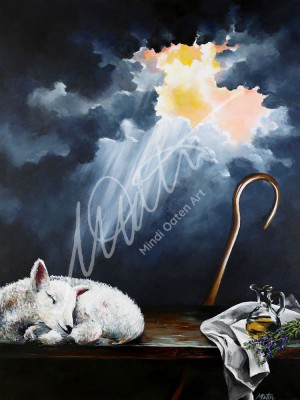
Moses & the Burning Bush
Discover Jesus as: Deliverer Exodus 2-3 Read on Bible Gateway (HCSB)
Lesson
Audio Only
Teaching Notes
INTRO
In Exodus, our word is Deliverer. The Lord is going to deliver us through the Lamb, the staff, the hyssop and the oil, and the sky. Moses wrote the first five books of the Bible, the Pentateuch—Genesis, Exodus, Leviticus, Numbers, and Deuteronomy. So now, we get to hear straight from Moses about his own life.
TEACHING
Exodus 2:1–11: The Israelites kept multiplying so Pharaoh commanded that all Hebrew sons be thrown into the Nile River. During this time, Amram and Jochebed, a married Hebrew couple, had a son. Jochebed, his mother, hid the baby for three months, but he became too big to continue hiding so she put him in a basket and placed it among the reeds in the Nile River. In some ways, Jochebed had obeyed what the king said; she just added some things to help her child survive, like a basket covered in “asphalt and pitch” (v. 3). Pharaoh’s daughter went to bathe in the river. She saw the child and took pity on him. The baby’s sister, who was watching from a distance, offered to help find a Hebrew woman to watch the baby and brought his mother. Pharaoh’s daughter thought it was a great idea. In fact, she agreed to pay the nurse. The sister’s name was Miriam. The baby also had an older brother named Aaron. Pharaoh’s daughter named the baby Moses, which means, “drawn out of the water.” That is such a prophetic name—Moses’ life revolved around water and wilderness. God was just setting the stage. Years later, Moses went to observe his people. Pharaoh had forced the Hebrew people into slavery. Moses saw his people being oppressed. After he witnessed cruelty, Moses killed the Egyptian taskmaster.
Exodus 2:15–23: Pharaoh heard about the man whom Moses had murdered and wanted Moses dead. Moses went from being drawn out of the water to fleeing. On his journey, Moses helped some daughters water their flocks at a well and was invited to dinner. Moses stayed with the family and married Zipporah. They gave birth to a son named Gershom, which means, “a foreigner in a foreign land.” While Moses was away on his journey, Pharaoh (most likely Thutmos III) died. He was the one who had imposed the difficult labor onto the Israelites.
Exodus 2:24–25: God heard the cries of the people because of their intense labor (Numbers 20:16; Deuteronomy 26:7). Wiersbe wrote, “God’s delays aren’t evidence of unconcern, for He hears our groans, sees our plights, feels our sorrow, and remembers His covenant. What He promised, He will perform, for He never breaks His covenant with His people. When the right time comes, God immediately goes to work.”1In the 400-plus years, God remembered His covenant 14 times! He still remembers His covenant with His people, the Israelites (Psalm 105:8). He remembered His holy covenant (Luke 1:72). You and I can play a role in gently reminding the Lord what He has promised us.
Exodus 3:1–2: Moses was tending to his flock with Jethro, Moses’ father-in-law. Some people think Jethro was his priest name. He was called “Reuel” in verse 18, which was his fatherly house name. Moses went to Horeb, which was also known as Mount Sinai, the Mountain of God. God continually used Bethel, Shechem, and Beersheba. You’ll see God do that with Mount Sinai all throughout Exodus.
When God calls us to something, sometimes we go into a period of waiting. Moses wasn’t simply sitting around waiting for God to show up. He was working with the flock when “the Angel of the Lord appeared to him in a flame of fire within the bush” (v.2). Moses had been shepherding for 40 years—much like Joseph had to wait 13 years and Paul waited three years. Wiersbe wrote, “It’s significant that God calls people who are busy: Gideon was threshing grain (Judges 6), Samuel was serving in the tabernacle (1 Samuel 3), David was caring for sheep (1 Samuel 17:20), Elisha was plowing (1 Kings 19:19–20), four of the apostles were managing their fishing business (Mark 1:16–20), and Matthew was collecting taxes (Matthew 9:9).”2The point is that these guys were just doing life, and God showed up. God wants to use willing and obedient people (Proverbs 24:30–33.) The Angel of the Lord appeared to Moses while he was taking care of the sheep. During this time, it was common to see bushes on fire. The uncommon part was that this bush wasn’t consumed. The Angel of the Lord showed up to all kinds of people: Abraham (Genesis 22); Jacob (Genesis 31); Moses (Exodus 3); Gideon (Judges 6); Samson’s father (Judges 13); Hagar (Genesis 16).
Moses saw this bush not being destroyed and was perplexed. Fire usually brings: (1) Destruction: Think Sodom and Gomorrah (Genesis 18:16-19:29). (2) Purification: The burning coal purifies Isaiah’s mouth (Isaiah 6:6-7). There is also purification through burning sacrifice. (3) Presence: God is a consuming fire (Hebrews 12:28-29). The lamp was to never go out as a symbol of God’s presence (Exodus 27:20–21).
Exodus 3:3–6: Moses’ name was called twice, to which he replied, “Here I am.” God gave very clear direction. He said, “You’re going to be in My presence.” I want you to know this is not normal! God remembered His covenant with Abraham, Isaac, and Jacob! This hadn’t happened since Jacob had an encounter at the end of Genesis. God was reminding them that He was still there and that He had their backs. Moses hid his face, in reverence and awe. Remember, Moses became afraid after killing the Egyptian (Exodus 2:12–14). Moses realized this was the presence of God and it was special. He knew he was experiencing a special moment in his life. In Deuteronomy 33:16, Moses was praying over the Josephites, asking for the favor of Him who was in the burning bush, to be shown to Joseph’s descendants.
Exodus 3:7–10: God responded, “Deliverance is coming!” Nelson’s commentary states, “The listing of the peoples reminds the reader of three things: (1) The land was not just a figure of speech; it was a real place with real people living in its borders. (2) For the inhabitants, their time was nearly up; their cup of iniquity was now full, and God’s judgment was about to fall on them (Genesis 15:16). (3) While the land was God’s gift, it was not vacant property; the land would have to be seized from the inhabitants. This could be done with the power of God.”3God told Moses to go so he could lead the Israelites, God’s people, out of Egypt.
Exodus 3:11–15: Moses came up with five excuses. We’ll look at two today. First, “I’m a nobody” (v. 11). Wiersbe wrote, “[Moses] argued with the Lord and tried to escape the divine call to rescue Israel from slavery. In Egypt, 40 years before, Moses had acted like an impetuous horse and rushed ahead of God, but now he is acting like a stubborn mule and resisting God (Psalm 32:9).”4God responded with the promise, “I will be with you” (v. 12). Moses’ second excuse was, “I don’t know your name” (v. 13). God gave him the answers that “I AM WHO I AM” (v. 14), and “I AM has sent me to you”. God was with us, is with us, and will always be with us. “The God of Abraham (Genesis 26:24), the God of Isaac, and the God of Jacob has sent me to you.” After 400 years of bondage, God is still reminding them of His promise.
Exodus 3:16–22: God was making a connection with the Hebrews. The land of milk and honey is a real place, but they would have to actually engage the people living there. In verse 18, it says the Israelites wanted to worship God on a neutral site so they could worship in purity. As Moses received the plan to free the Israelites, God told them you will not go empty-handed! Just as the Israelites came into Egypt with wagons, they will leave Egypt with plunder (vv. 21-22).
CLOSING
God is going to deliver the Israelites from Egypt, using Moses, or in Hebrew, Moshe. God said don’t worry; I will always be with you. When I hear this phrase, I AM, I think of how Jesus talked about being I AM as well.
In John 8:52, Jesus was interacting with a group of folks, and the Jews accused Him of having a demon. They said this because Jesus said He would never die. Even Abraham died. Jesus responded, “I do know Him, and I keep His word” (v. 55). Abraham had an encounter with Jesus (v. 56): “Before Abraham was, I am” (v. 58). By using these two words, Jesus just equated Himself as the God of the burning bush.
Eight times in the Gospel of John, Jesus said, “I am” (John 6:35; 8:12, 58; 10:7, 11; 11:25; 14:6; 15:1). Everything is pointing to Jesus being the Deliverer. But it started in Exodus with Moses.
Warren W. Wiersbe, Be Delivered (Colorado Springs, CO: David C. Cook, 1998), p. 23-24.
Wiersbe, p. 24.
Earl D. Radmacher, Ronald B. Allen, and H. Wayne House, eds. Nelson’s New Illustrated Bible Commentary (Nashville, TN: Thomas Nelson, Inc. 1999), p. 92.
Wiersbe, p. 24-25.
Questions
-
How do you see God using a tragic situation for His purpose in Exodus 2:1–10? (Romans 8:28)
-
What blessing from God did Moses’ mother receive for her obedience (Exodus 2:9)?
-
Why do you think Moses made the decision to flee the luxury (sin) of Egypt (Hebrews 11:24–27)? Give an example of a time when you walked away from worldly wealth for the cause of Christ.
-
What is an example in Exodus 2 of God listening, caring, and acting on behalf of the Israelites? Have you experienced God doing this in your life? (Exodus 3:7; 6:5; 1 Peter 5:6–7)
-
What evidence is given in Exodus 3:6 that God gives us life after death? (Matthew 22:32; Mark 12:26–27; Luke 20:37–38)
-
What characteristic does God reveal about Himself in Exodus 3:14? How does this point to Jesus? (John 8:24, 28, 58)
-
What did the Holy Spirit highlight to you in Exodus 2—3 through the reading or the teaching?

Daily Word
Laura Martin Exodus 2:23-25
“After a long time, the king of Egypt died. The Israelites groaned because of their difficult labor, and they cried out; and their cry for help ascended to God because of the difficult labor. So God heard their groaning, and He remembered His covenant with Abraham, Isaac, and Jacob. God saw the Israelites, and He took notice.”
The Israelites cried out to the Lord while in bondage in Egypt. God heard their groaning and remembered His promises. The story of deliverance began as the Lord heard the cry of their hearts.
When we cry out to the Lord, it means we get honest with God. We turn to Him with every-thing. Be honest with God about the situation you find yourself in today. He will bring you deliverance and set you free from bondage. In Christ there is freedom. Just be honest with the Lord today.
“After a long time, the king of Egypt died. The Israelites groaned because of their difficult labor, and they cried out; and their cry for help ascended to God because of the difficult labor. So God heard their groaning, and He remembered His covenant with Abraham, Isaac, and Jacob. God saw the Israelites, and He took notice.”
— Exodus 2:23-25
FURTHER SCRIPTURE
- Exodus 3:7–8 — “Then the LORD said, ‘I have observed the misery of My people in Egypt, and have heard them crying out because of their oppressors, and I know about their sufferings. I have come down to rescue them.’”
- Psalm 107:13–14 — “Then they cried to the LORD in their trouble, He saved them from their distress. He brought them out of darkness and gloom and broke their chains apart.”
- Galatians 5:1 — “Christ has liberated us to be free. Stand firm then and don’t submit again to a yoke of slavery.”
Lesson and Daily Word
Each day has two parts: the Lesson and the Daily Word. Use these buttons to go from one to the other.
Teaching Notes and Questions
Next to the video, these tabs show the Teaching Notes and the Questions. Your answer to a question saves when you leave the answer box.
The Bible passage
This link opens the passage on Bible Gateway, and that gives the passage its tick. If you read it in your own Bible, tick it by hand in Progress.
Your progress on this lesson
A part ticks itself when you play the video or audio to the end, read the notes or the Daily Word to the end, or answer every question. You can also tick a part by hand here.
Downloads
Here you can save the video, the audio and the lesson as PDF files. Downloads do not count toward your progress.
Need help?
Use this button to send us a question or tell us about a problem. You can also take this tour again from there.