
Israel at Mt. Sinai – God’s Treasure, Kingdom of Priests & Holy Nation
Discover Jesus as: Deliverer Exodus 19-20 Read on Bible Gateway (HCSB)
Lesson
Audio Only
Teaching Notes
INTRO
Many will say Exodus 19 is the heart of the Pentateuch. We’ve gone through the Abrahamic Covenant and seen how, through Abraham, Isaac, and Jacob, God had a special plan for His people (Genesis 12:1–3). The Abrahamic Covenant does not stop until the Messiah comes back. But as the Abrahamic Covenant continues on, God decided to interject another covenant, the Mosaic Covenant. This is where Moses was used as a deliverer for God’s people and for His Seed. The Israelites had been through the plagues and the parting of the Red Sea. They had daily manna and quail, and now God said, “I want to show you now that I am with you.” Here Moses began to hear the voice of God even more clearly.
TEACHING
Exodus 19:1–3: The Israelites were in the wilderness of Sinai, where Moses was looking for the mountain God promised! Can you imagine what it would have been like for two million people to camp at the base of this mountain? The southeast part of Sinai Peninsula is called Jebel Musa, the “mountain of Moses.” Josephus recorded that it was the highest mountain in the Peninsula. Verses 3–6 are the heart of the Pentateuch. God gave Moses the message to give to the Israelites. This was the same guy who said he couldn’t talk, and now God was telling him to go communicate to everyone.
Exodus 19:4–5: Moses had his own speechwriter–God! Why use the imagery of the eagle? Wiersbe wrote, “The adult birds [eagles] stay near the fledglings and, if they fall, carry them on their strong wings until the young birds learn how to use their wings, ride the air current, and enjoy the abilities God gave them.”1Wiersbe also says, “Eaglets illustrate three forms of freedom: (1) Freedom from (they are out of the nest, which to us is redemption). (2) Freedom in (they are home in the air, which to us is maturity). (3) Freedom to (they can fulfill their purpose in life, which to us is ministry).”2God viewed the Israelites three ways. First, they were God’s special treasure.3(Deuteronomy 7:6; 14:2; Psalm 135:4). They didn’t do anything to deserve it; God has chosen them. This was the Mosaic Covenant: Israel as God’s treasured possession. God has not stopped viewing them as His treasured possession. God’s hand was so clearly on Israel right here.
The Abrahamic Covenant is unconditional; it’s by faith. God will pour out His blessing, making the descendants endless. The Mosaic Covenant is a conditional covenant, a covenant for a limited period of time. It began with Moses and ends with Christ. When Jesus came, the law was replaced with the New Covenant. The Mosaic Covenant that was being established was a means for sanctification, rules for living, and redemption for the people (Galatians 3:19.) The Mosaic Law was instituted until the Messiah would come. We needed something to serve as a guideline for our sins. The Mosaic Covenant was a track. The Israelites now had a responsibility to fulfill in order to receive God’s blessings. The difference in this conditional covenant is that they were still God’s people; they just missed out on what He had in store for them.
Exodus 19:6: Second, they were God’s kingdom of priests.4This is the first time you’ll see “kingdom” referring to God’s rule through man on earth.5 This happened as priests depended on their faith in God. The priests’ role is to stand between God and the people. They were going to become a nation of mediators between God and other nations. They were to be a nation that is different—a serving nation, not a ruling nation.6 Isaiah 61:6: “But you will be called the Lord’s priests; they will speak of you as ministers of our God; you will eat the wealth of the nations, and you will boast in their riches.” They had to change their mindset to “we’re not going to have kings, but priests.” Aaron and his sons became priests (Exodus 28—29). Aaron would carry the 12 tribes in stones on his breast piece every time he went before the Lord.
Third, they were God’s holy nation.7The word “holy” means set apart or different.They were holy because they weredevoting themselves to God and separating themselves from sin.Six times in Leviticus it says, “Be holy for I am holy!”God reiterated inExodus 22:31, “Be My holy people.”The Israelites were going to reflect God’s holiness. It is important to remember these three phrases are the heart of the Pentateuch: God’s special treasure, His kingdom of priests, and His holy
6John J. Durham, Exodus, p. 263; quoted in Dr. Constable’s Expository Notes: Exodus, p. 174; available online at https://planobiblechapel.org/tcon/notes/pdf/exodus.pdf.
nation. God has not stopped viewing Israel as a holy nation, as a kingdom of priests, or as a special treasure. Constable wrote, “Israel could have become a testimony to the whole world, of how to live under the government of God.”8But the problem was, over the course of time, they only experienced a partial blessing because they only showed a partial time of obedience.
Exodus 19:7–12: Moses delivered this speech with his three talking points: special treasure, kingdom of priests, holy nation. “However, they overestimated their own ability to keep the covenant, and they underestimated God’s standards for them.”9Because the Israelites agreed to these things, they needed to start this process. In verse 10, the Lord told Moses to “Consecrate the people today and tomorrow” by the Israelites bathing themselves and changing their clothes, which reflected a new beginning. On the third day, God would come down. Wiersbe points out that Moses put up barriers to keep the people away from the mountain and posted guards with authority to kill anyone who crossed the barriers.10
Exodus 19:13–15: God continued to put things in order to keep the Israelites from touching the mountain. At this point, all the Israelites knew that God could not be touched. But when the Messiah comes, it’s the complete opposite! John 1:14 says, “The Word became flesh.” In the Mosaic Covenant, there was a distance required to stay away from Yahweh the Almighty God. Matthew 1:23 emphasizes, “God with us.” I understand why Jewish people sometimes have a hard time turning to the Messiah. Their mindset has always been that God is holy and can’t be approached. But through the New Covenant, Jesus provides a way for us to approach God with boldness (Hebrews 10:19-25). No longer do we have this mountain or distance in front of us. Remember it took three days for this process to be completed. God issued a temporary prohibition against sexual relations as the Israelites went through the process of cleansing. God was not saying sex is bad but to keep their eyes on Him.
Exodus 19:16–25: The Israelites had to be consecrated. They’d washed their clothes, abstained from sexual relations, and had not touched the mountain. The cloud covered the mountain, and Moses shuddered (Hebrews 12:21). Moses spoke and the Lord addressed him. Again, Moses was back and forth from the people and back up to God on the mountain. Who were the priests at this point? Aaron and his sons hadn’t been instituted yet. They were probably young men who offered sacrifices before God, probably the firstborns (Exodus 24:5). Exodus 19 shows us a covenant that was beginning to take place. There were two types of covenants in Moses’ day11: Parity (a formal contract between two equals), and Suzerainty (a covenant between a sovereign and his subjects). The Suzerainty covenant had a preamble (v. 3), historical prologue (v. 4), statement of general principles (v. 5), consequences of obedience (vv. 5–6), and consequences of disobedience. The covenant here was totally familiar to the Israelites.
CLOSING
Exodus 20 outlines the Ten Commandments. There were a whole lot more than just ten. Wiersbe wrote, “They had documented 613 commands in the law, 248 positive and 365 are negative.”12Over time, the Israelites begin to see that they couldn’t keep this pace up. A Deliverer was needed to come in and pull them from this covenant to ultimately set them free.
Warren W. Wiersbe, Be Delivered (Colorado Springs, CO: David C. Cook Publishing, 1998), p. 120.
Wiersbe, p. 120.
Thomas L. Constable, Dr. Constable’s Expository Notes: Exodus, p.173; available online at https://planobiblechapel.org/tcon/notes/pdf/exodus.pdf.
Constable, p. 173.
Constable, pp. 173-174.
Constable, p. 174.
Constable, p. 174.
Constable, p. 175.
Wiersbe, p. 124.
Constable, p. 176.
Warren W. Wiersbe, The Wiersbe Bible Commentary: Old Testament (Colorado Springs, CO: David C. Cook Publishing, 2007), p. 66.
Questions
-
What is the Mosaic covenant (begins in Exodus 19)? Has the Mosaic covenant ended? If so, when?
-
How did God see the Israelites according to Exodus 19:5–6? Do you see parallels to Christians today? (1 Peter 2:4–5, 9–10)
-
Do you think the Israelites responded to Moses’ message of what the Lord commanded with honesty in Exodus 19:7–8?
-
Name the Ten Commandments. Why do you think God chose to put these in place?
-
Why did Jesus quote the Ten Commandments listed in Exodus 20:1–17 during His ministry? (Matthew 5:27; 15:4; 19:18–19)
-
How could you use the Ten Commandments to share Christ with someone?
-
What did the Holy Spirit highlight to you in Exodus 19—20 through the reading or the teaching?
Daily Word
Laura Martin Exodus 19:18-19
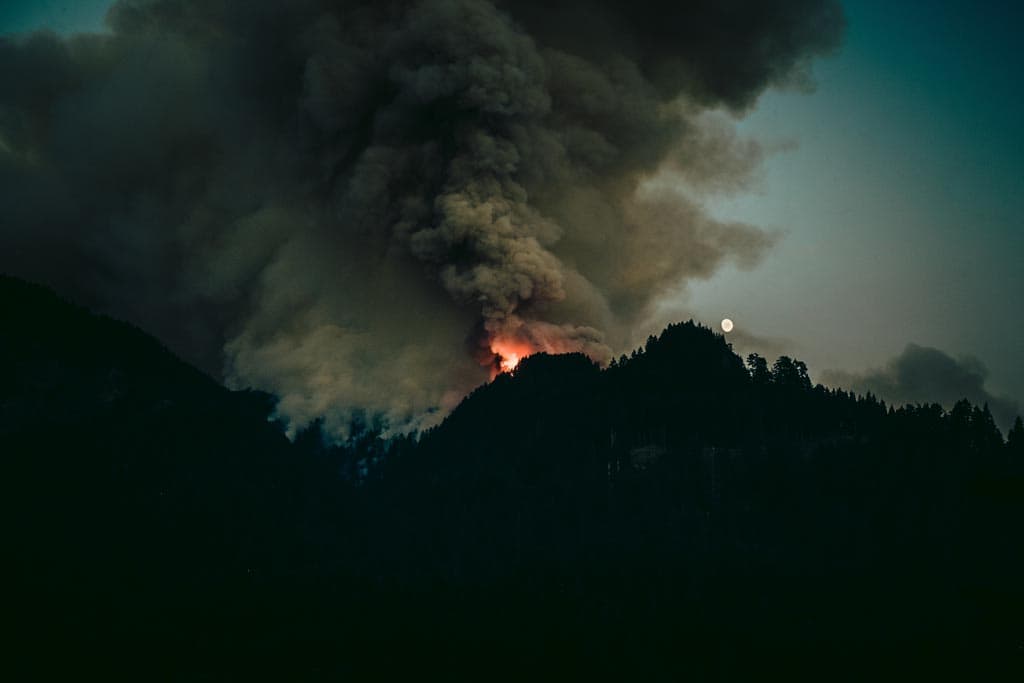
“Mount Sinai was completely enveloped in smoke because the Lord came down on it in fire. Its smoke went up like the smoke of a furnace, and the whole mountain shook violently. As the sound of the trumpet grew louder and louder, Moses spoke and God answered him in the thunder.”
Three months after their deliverance from Egypt, the children of Israel set up camp at Mount Sinai. God reminded them of their deliverance with a picture of His tender love for them, saying, “How I carried you on eagles’ wings and brought you to Me.” Then on the third day, as the consecrated people stood at the foot of the mountain, God revealed Himself in a powerful display. The mountain was in smoke. The Lord descended upon it in fire. The whole mountain quaked violently. The sound of a trumpet grew louder and louder.
Pause for a minute and imagine this: the tender love of a Heavenly Father and the majestic power of an Almighty God. He alone is exalted over all. As you seek the Lord today, watch for Him to reveal Himself to you in tender love and powerful splendors.
“Mount Sinai was completely enveloped in smoke because the LORD came down on it in fire. Its smoke went up like the smoke of a furnace, and the whole mountain shook violently. As the sound of the trumpet grew louder and louder, Moses spoke and God answered him in the thunder.”
— Exodus 19:18–19
FURTHER SCRIPTURE
- Exodus 19:4— “You have seen what I did to the Egyptians and how I carried you on eagles’ wings and brought you to Me.”
- 1 Chronicles 29:11 — “Yours, LORD, is the greatness and the power and the glory and the splendor and the majesty, for everything in the heavens and on earth belongs to You. Yours, LORD, is the kingdom, and You are exalted as head over all.”
- Isaiah 40:31— “But those who trust in the LORD will renew their strength; they will soar on wings like eagles; they will run and not grow weary; they will walk and not faint.”
Lesson and Daily Word
Each day has two parts: the Lesson and the Daily Word. Use these buttons to go from one to the other.
Teaching Notes and Questions
Next to the video, these tabs show the Teaching Notes and the Questions. Your answer to a question saves when you leave the answer box.
The Bible passage
This link opens the passage on Bible Gateway, and that gives the passage its tick. If you read it in your own Bible, tick it by hand in Progress.
Your progress on this lesson
A part ticks itself when you play the video or audio to the end, read the notes or the Daily Word to the end, or answer every question. You can also tick a part by hand here.
Downloads
Here you can save the video, the audio and the lesson as PDF files. Downloads do not count toward your progress.
Need help?
Use this button to send us a question or tell us about a problem. You can also take this tour again from there.