
The Passover
Discover Jesus as: Deliverer Exodus 12-13 Read on Bible Gateway (HCSB)
Lesson
Audio Only
Teaching Notes
INTRO
The Passover was really the death of the firstborn of the Egyptians, but the Lord passed over the Israelites. Moses and Aaron helped deliver God’s people; that ultimately pointed to the Deliverer, the Messiah. God brought about ten plagues: (1) water turned to blood; (2) frogs; (3) gnats; (4) flies; (5) death of livestock; (6) boils; (7) hail; (8) locusts; (9) darkness; and (10) death of the firstborn. Exodus 12 records God’s instructions for the Passover and the death of the firstborn. Because Pharaoh’s heart was hardened, God used the plagues to make His name known (Romans 9:17).
TEACHING
Exodus 12:1–2: God instructed Moses and Aaron to establish a new religious calendar for the Israelites that began in the month of the Passover, the March/April time frame. This month was called Abib, which means “ear month”, when grain was in the ear, meaning it was almost harvest time.1At the end of the Babylonian captivity, this month was renamed Nisan (Nehemiah 2:1; Esther 3:7). Today, the Israelites use a civil calendar that begins at Rosh Hashanah in September/ October. God was starting something new for Israel, which was marked by a change in the calendar. This makes me think that when you embrace Messiah as your Savior, you get a whole new calendar, a whole new beginning.
Exodus 12:3–5: God instructed each household to select an unblemished one-year-old male animal (sheep or goat) on the tenth day of the month. Smaller families were instructed to join together and choose an animal “according to what each person will eat.” To be considered unblemished, the animal could have no faults, no defects, and no injuries.
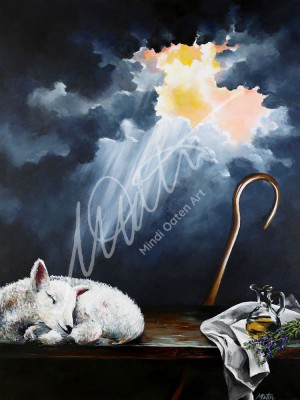
Exodus 12:6: This animal was kept until the fourteenth day of the month, and then the whole community slaughtered the animals at twilight. Keeping the animals for four days allowed them to be sure they were perfect. Then the sacrifice of these animals would protect the Israelites in the Passover. The lamb reminds us of the time when God asked Abraham to sacrifice Isaac and Isaac’s question to Abraham as they made preparations: “Where is the lamb for the burnt offering?” (Genesis 22:7).
This sacrificial lamb also foreshadows Christ as the sacrificial lamb. When John the Baptist saw Jesus approach him for baptism, he said, “Here is the Lamb of God, who takes away the sin of the world” (John 1:29). When the Ethiopian eunuch read from Isaiah 53, he wanted to know who was “led like a sheep to the slaughter” (Acts 8:32), so Philip told him the good news about Jesus. Just as Isaiah 53:7 described, Jesus “was oppressed and afflicted, yet He did not open His mouth. Like a lamb led to the slaughter and like a sheep silent before her shearers, He did not open His mouth.” Peter described Jesus as a lamb without defect or blemish (1 Peter 1:18–20). In Revelation 5:5–6, John “saw One like a slaughtered lamb” standing before the throne of God. Scripture tells us that Jesus met the qualifications of an unblemished lamb. Jesus did not know sin (2 Corinthians 5:21). “He did not commit sin, and no deceit was found in His mouth” (1 Peter 2:22). There was no sin in Him (1 John 3:5). Jesus is the Lamb of God. He’s perfect. He’s God in human form.
Exodus 12:7: They were told to take some of the blood of the innocent lamb and put it on the top (lintel) and sides (posts) of the door. Wiersbe said, “It wasn’t the life of the lamb that saved the people from judgment, but the death of the lamb.”2Likewise, Jesus’ death is what gives us life. Jesus came “to give His life—a ransom for many” (Matthew 20:28). When Jesus established the New Covenant, He said, “This is My blood that establishes the covenant; it is shed for many for the forgiveness of sins” (Matthew 26:28). Jesus is the good shepherd who “lays down his life for the sheep” (John 10:11). We have been redeemed and forgiven through His blood (Ephesians 1:7), for Jesus gave Himself as a ransom for all (1 Timothy 2:5–6). “Without the shedding of blood there is no forgiveness” (Hebrews 9:22–23), so Jesus redeemed people for God by His blood (Revelation 5:9). Exodus 12 is a complete foreshadow of Christ’s sacrifice for our sins.
Exodus 12:8–11: God gave specific instructions for consuming the Passover meal. The lamb had to be roasted and eaten that evening, along with unleavened bread and bitter herbs. Every part of the lamb, including the head, legs, and inner organs had to be consumed. Any leftovers had to be burned up. The Lord’s Passover had to be eaten in a hurry, and the Israelites had to be dressed for travel with sandals on their feet and staff in hand.
Exodus 12:12–13: God passed through the land of Egypt that night to execute His judgment against all the gods of Egypt by striking the firstborn male of both man and beast. The Israelites would be protected from this plague by the distinguishing mark of the lamb’s blood on their doorposts and lintels.
Exodus 12:14–20: God instructed Israel to celebrate the Passover every year as a memorial to this night. They were instructed to remove all yeast from their homes and eat only unleavened bread for seven days. For this entire week they would “observe the Festival of Unleavened Bread” to remember how God brought them out of Egypt. They could do no work other than preparing food, and on the first and seventh days, they were commanded to hold “a sacred assembly.” Those who disobeyed these instructions were to be cut off from Israel.
Exodus 12:21–23: Moses instructed the Israelites to select and slaughter the Passover animal, then dip a cluster of hyssop into the blood and spread the blood over the doorposts and lintels of their homes. When the Lord passed through Egypt, He would “not let the destroyer enter your houses to strike you” when He saw the blood. Wiersbe said, “Our faith may be as weak as the hyssop, but it’s not faith in our faith that saves us, but faith in the blood of the Savior.”3
Could “the destroyer” in verse 23 be the pre-incarnate Christ?4In Numbers 22:31, “the Lord opened Balaam’s eyes, he saw the Angel of the Lord (Jesus) standing in the path with a drawn sword in His hand. Balaam knelt and bowed with his face to the ground.” In Isaiah 37:36, “the angel of the Lord went out and struck down 185,000 in the camp of the Assyrians.” Exodus 23:20–23 said God would send an angel before the Israelites to protect them and bring them into the Promised Land, and to wipe out the Amorites, Hittites, Perizzites, Canaanites, Hivites, and Jebusites. To protect may mean to defend Israel and kill the enemy. Jesus could be the Destroyer preparing the way to point to Himself. Jesus had all kinds of roles in the Old Testament. He wasn’t always speaking; maybe He was wrestling, revealing Himself in a burning bush, wiping out people in order to prepare a way for His people. Revelation 19:11–14 reveals Jesus as a powerful warrior who “judges and makes war in righteousness” as He leads the armies of heaven in battle. Jesus is not always this peaceful person; He’ll do what it takes to deliver His people.
Exodus 12:24–28: Moses conveyed God’s command to observe this Passover ritual every year so they could teach their children how God struck the Egyptians and delivered them from captivity. So, the Israelites did as God commanded.
Exodus 12:29–36: Passover happened. The Israelites were set free through a perfect little lamb. God struck the firstborn in Egypt, and Pharaoh drove the Israelites out of Egypt.Just as God had promised, the Egyptians gave the Israelites silver and gold jewelry and clothing as they sent them out of Egypt. And that lamb would eventually become Jesus.
Exodus 12:37–42: The Israelites began the journey to the Promised Land. Josephus said there could have been up to 2 million people (600,000 men plus their families) who traveled with their flocks and herds. The “ethnically diverse crowd” could have included Egyptians who married Jews or Egyptians who feared God. These are the people who, over time, had become part of the Israelite community though they were from other lands. “Then He brought Israel out with silver and gold, and no one among His tribes stumbled. Egypt was glad when they left, for the dread of Israel had fallen on them” (Psalm 105:37–38). After 430 years in Egypt, the Israelites were delivered! They were going to the Promised Land.
Jude 1:5 explains, “Now I want to remind you, although you once fully knew it, that Jesus, who saved a people out of the land of Egypt, afterward destroyed those who did not believe.” So, who delivered the people out of Egypt? The Lord! Jesus! God will go to any extremes, through Jesus Christ, to save His people.
Exodus 13: This chapter restated God’s command to consecrate the firstborn to Him (v. 2), described their route out of Egypt (vv. 17–18), revealed that Moses brought Joseph’s bones with them (v. 19), and emphasized that the Lord went ahead of them in a pillar of cloud/fire to lead them (vv. 21–22). But there’s no pillar without the blood of the lamb.
CLOSING
God is in the business of deliverance, and my prayer is that each one of you have been delivered from the bondage of sin and death through the blood of Christ.
Tom Constable, Dr. Constable’s Expository (Study) Notes: Exodus, p. 105; available online at https://planobiblechapel.org/tcon/notes/pdf/exodus.pdf.
Warren W. Wiersbe, The Bible Exposition Commentary: Genesis–Deuteronomy (Colorado Springs, CO: David C. Cook, 2001), p. 198.
Wiersbe, p. 199.
Earl Radmacher, Ronald B. Allen, and H. Wayne House, eds., Nelson’s New Illustrated Bible Commentary (Nashville: Thomas Nelson, 1999), p. 108.
Questions
-
Exodus 12:12 states, “and against all the gods of Egypt I will execute judgments––I am the Lord”. We know they were false gods with no power, so what do you think this verse means?
-
According to Exodus 12:2, the Lord instructed Moses to reset the calendar to begin with the month of their deliverance out of Egypt. Why do you think God established this?
-
In Exodus 12, the Passover lamb was a type pointing to Christ, the Lamb of God (John 1:29). What details about the Passover lamb can you find that point to a detail about Christ? (Psalm 34:20; John 19:36; 2 Corinthians 5:21; 1 Peter 1:18–20; Revelation 5)
-
What do you think was the significance of the ordinance not allowing any foreigners to partake in the Passover feast? (Exodus 12:43; Numbers 9:14; 1 Corinthians 11:26–27)
-
Moses instructed the people that on the first day of the Feast of Passover, all leaven was to be removed from their houses (Exodus 12:14–15), for whoever ate anything leavened would be cut off from Israel. What was the importance of removing the leaven? (Exodus 12:15, 20; 13:3; John 6:48, 51; 1 Corinthians 5:7-8)
-
Explain what it meant when the Lord told Moses, “the first offspring of every womb among the sons of Israel, both of man and beast; it belongs to Me” (Exodus 13:2).
-
In addition to the Passover lamb, what other deliverer do you see in chapter 12? (Exodus 12:51; Acts 7:36; 13:17)
-
What did the Holy Spirit highlight to you in Exodus 12—13 through the reading or the teaching?

Daily Word
Laura Martin Exodus 13:17-18a
“When Pharaoh let the people go, God did not lead them along the road to the land of the Philistines, even though it was nearby; for God said, ‘The people will change their minds and return to Egypt if they face war.’ So He led the people around toward the Red Sea along the road of the wilderness.”
After the tenth plague, Pharaoh finally let the Israelites go. As the Israelites began their journey out of Egypt, the Lord was very intentional. First God led them on a specific route, not the shortest, but the best one for His people. Then God said He would take care of His people. Finally God went be-fore the people to lead them.
Remember, God is the same yesterday, today, and forever. Therefore, the same is true for your own journey. The Lord’s path is the best one for you, even if it’s not the shortest or the easiest. The Lord will care for you. The Lord is going before you and is with you day and night. So keep on walking one step at a time!
“When Pharaoh let the people go, God did not lead them along the road to the land of the Philistines, even though it was nearby; for God said, ‘The people will change their minds and return to Egypt if they face war.’ So He led the people around toward the Red Sea along the road of the wilderness.”
— Exodus 13:17–18a
FURTHER SCRIPTURE
- Exodus 13:21 — “The LORD went ahead of them in a pillar of cloud to lead them on their way during the day and in a pillar of fire to give them light at night, so that they could travel day or night.”
- Hebrews 13:8 — “Jesus Christ is the same yesterday, today and forever.”
- Proverbs 3:5–6 — “Trust in the LORD with all your heart, and do not rely on your own under-standing; think about Him in all your ways, and He will guide you on the right paths.”
Lesson and Daily Word
Each day has two parts: the Lesson and the Daily Word. Use these buttons to go from one to the other.
Teaching Notes and Questions
Next to the video, these tabs show the Teaching Notes and the Questions. Your answer to a question saves when you leave the answer box.
The Bible passage
This link opens the passage on Bible Gateway, and that gives the passage its tick. If you read it in your own Bible, tick it by hand in Progress.
Your progress on this lesson
A part ticks itself when you play the video or audio to the end, read the notes or the Daily Word to the end, or answer every question. You can also tick a part by hand here.
Downloads
Here you can save the video, the audio and the lesson as PDF files. Downloads do not count toward your progress.
Need help?
Use this button to send us a question or tell us about a problem. You can also take this tour again from there.