
Lesson
Audio Only
Teaching Notes
INTRO
Today we wrap up our study of Amos, one of the minor prophets. The minor prophets were not designated “minor” because of a lack of importance but rather for their shorter length. Amos’ message was for the ten tribes in the northern kingdom. In the southern kingdom were Judah, Benjamin and their capital, Jerusalem. Historically, both David and his son Solomon ruled over the united kingdoms, but after Solomon’s forty-year reign, the united kingdoms were split into two.
The minor prophets spoke into these kingdoms as they moved further and further away from the Lord. The reality was that none of the people of either kingdom embraced the words of the minor and major prophets, which called them to return to God.
Amos 7—8 is a message of judgment. The word for the entire book of Amos that reflects Jesus is Restorer, and it is found at the very end of Amos.
TEACHING
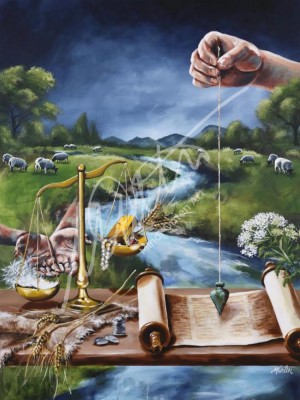
Amos 7-8: In chapter 7 God gave Amos a vision in which he watched something happen before him. The vision was a swarm of locusts from God, coming during the spring crop, that ate all the vegetation in the land. Amos understood that the locusts represented God’s judgment and questioned how Jacob (meaning the northern kingdom) would survive. So, God agreed not to make the judgment happen (vv. 1-3).
God then gave Amos a second vision of fire that devoured the land. Again, Amos pleaded for the nation, and God relented of His coming judgment (vv. 4-6).
The third vision was then shown. God was holding a plumb line in his hand next to a vertical wall. God told Amos He would use the plumb line to judge His disobedient people (vv. 7-9). His judgment would come against the house of King Jeroboam.
When the priest Amaziah heard about Amos, he sent word of Amos’ conspiracy against the king and the kingdom to Jeroboam. Amaziah also told Amos to go away to Judah and give his messages there. Amos replied that he spoke God’s message to Israel as he had been called to do (vv. 10-16). Amos then prophesied that Amaziah’s wife would become a prostitute, his sons and daughter would die, the land would be divided up, and Amaziah and others would be taken into exile (v. 17).
Amos 8:1-14: The fourth vision is in chapter 8. Amos saw a basket of summer fruit. Wiersbe explains, “Just as this fruit was ripe for eating, the nation of Israel was ripe for judgment.”1 God said the end had come for His people Israel (vv. 1-2). Verses 3-8 tell of the evils that Israel had committed. Therefore, God would turn their feasts into mourning, and they would all be in sackcloth in grief (v. 10). J. Vernon McGee summarizes verses 11-14 as “dark days would come.”2
Amos 9:1–10: In his fifth vision, Amos saw the Lord standing beside the altar (v. 1a). This sounds like a hopeful statement, but the fifth vision was worse than the others. Verses 1-10 are about judgment and destruction. The temple would be destroyed, and the people would try unsuccessfully to escape. It didn’t matter where they tried to hide. It didn’t matter if they went to the depths of Sheol or the highest place in the universe, heaven. It didn’t matter if they could go to Mount Carmel, the highest place in their area or to the sea floor, the lowest. God said He would command the sea serpent to bite them if they tried to hide on the sea floor. Even if they were taken into captivity, God would find them and pass judgment on them (vv. 1b-4). In Romans 8:38-39, Paul wrote that nothing could separate us from the love of God through Christ our Lord.
Amos described God’s power—as creator, He can touch the earth and it will melt. MacArthur explains, “Like the Nile River, which annually provided water and rich soil deposits for farmers by greatly overflowing its banks, so judgment would overflow the land of Israel for the unrighteous arrogance of the nation.”3
In verse 7 God told the Israelites they were the same as the Cushites, the Philistines, and the Arameans—other sinful nations. However, the judgment of the Israelites would not be as bad as it would be for those nations, because God would not totally destroy Israel. The eyes of the Lord were on the nation of Israel (v. 8). He was going to shake the house of Israel through other nations, but He would preserve a remnant of Israel (v. 9). Sadly, those who, in their ignorance and sin, thought they could never face disaster would die by the sword (v. 10).
Amos 9:11–15: However, despite the dire warnings, there was hope in Amos’ message. There will be a remnant from David that will be restored (v. 11). The land would be rebuilt, and the remnant would be given power over the nations that defeated Israel. The Lord would make all this happen (v. 12).
Verse 13 begins a picture of prosperity. The plowmen, those who tread grapes, and those who sowed seeds will be back at work. The mountains and hills will flow with produced wine. The fortunes of the people will be restored, and they will rebuild their cities, vineyards, and gardens (v. 14). God promised He would plant the remnant on their land, and they would never be uprooted again (v. 15).
Verses 11-15 are a picture of the millennial kingdom to come. When Jesus comes back the second time, after the seven years of tribulation, He will usher in a thousand-year reign. That reign is what is described in these verses.
CLOSING
Amos goes from judgment to restoration. When Christ returns, He will plant the Jews back in their land. They will never again be uprooted because Jesus is the ultimate Restorer.
Warren W. Wiersbe, The Exposition Bible Commentary (Colorado Springs: David C. Cook, 2002), p. 365.
J. Vernon McGee, “Outline for Amos”; available at https://www.blueletterbible.org/Comm/mcgee_j_vernon/notes-outlines/amos/amos-outline.cfm.
John MacArthur, The MacArthur Bible Commentary (Nashville: Thomas Nelson Publishers, 2005), p. 999; see note for Amos 8:8.
Questions
-
How did Amos intercede for the people when God showed him the first vision (Amos 7:1-3)? What other characters in Scripture also interceded for the people? (Genesis 18:22-32; Exodus 32:30-32; Romans 9:1-3)
-
What were the five visions the Lord gave Amos? (Amos 7:1-9, 8:1-3, 9:1-6)
-
Why do you think Amos interceded for the people on the first two visions but did not intercede for them on the last three? (Jeremiah 7:16; 11:14; 14:11)
-
How did the priest Amaziah react to Amos’ prophecy (Amos 7:10-13)? What did Amos recognize about his calling from God?
-
How did the Lord encourage Amos after both a hard encounter with Amaziah and giving him tough visions to speak (Amos 9:11-15)? How did God encourage some others in Scripture after going through tough times (Acts 18:9-11; 27:21-26; 2 Timothy 4:16-17)? Think of a time when the Lord encouraged you while going through something hard or coming out of it.
-
What did the Holy Spirit highlight to you in Amos 7—9 through the reading or the teaching?
Daily Word
Laura Martin Amos 7:14–15
“So Amos answered Amaziah, ‘I was not a prophet or the son of a prophet; rather, I was a herdsman, and I took care of sycamore figs. But the Lord took me from following the flock and said to me: Go, prophesy to My people Israel.’”
As Amos walked obediently with the Lord, proclaiming messages to Israel, he faced opposition from Amaziah. Amos’s role as prophet for the Lord may not have made sense to others because he worked as a herdsman and didn’t come from a family heritage of prophets. However, Amos stood confidently in his calling and continued receiving visions and proclaiming the messages from the Lord.
Has the Lord called you into something? Perhaps you work at a factory or are an elementary teacher. Maybe you are even retired. And yet the Lord has called you to teach and proclaim His Word to this next generation. You may question this calling because you don’t come from a family of pastors or haven’t been to seminary. Even so, remember, when the Lord calls you into something, He will provide. He will guide you. He will strengthen you. Beware of opposition from the world and lies from the enemy. Stand firm as a child of God and follower of Christ. He will be your confidence and keep your foot from slipping. He who calls you is faithful and will always be faithful.
“So Amos answered Amaziah, ‘I was not a prophet or the son of a prophet; rather, I was a herdsman, and I took care of sycamore figs. But the Lord took me from following the flock and said to me: Go, prophesy to My people Israel.’”
— Amos 7:14–15
FURTHER SCRIPTURE
- Proverbs 3:26 — “For the Lord will be your confidence and will keep your foot from a snare.”
- John 15:16 — “You did not choose Me, but I chose you. I appointed you that you should go out and produce fruit and that your fruit should remain, so that whatever you ask the Father in My name, He will give you.”
- 1 Thessalonians 5:24 — “He who calls you is faithful, who also will do it.”
Lesson and Daily Word
Each day has two parts: the Lesson and the Daily Word. Use these buttons to go from one to the other.
Teaching Notes and Questions
Next to the video, these tabs show the Teaching Notes and the Questions. Your answer to a question saves when you leave the answer box.
The Bible passage
This link opens the passage on Bible Gateway, and that gives the passage its tick. If you read it in your own Bible, tick it by hand in Progress.
Your progress on this lesson
A part ticks itself when you play the video or audio to the end, read the notes or the Daily Word to the end, or answer every question. You can also tick a part by hand here.
Downloads
Here you can save the video, the audio and the lesson as PDF files. Downloads do not count toward your progress.
Need help?
Use this button to send us a question or tell us about a problem. You can also take this tour again from there.