
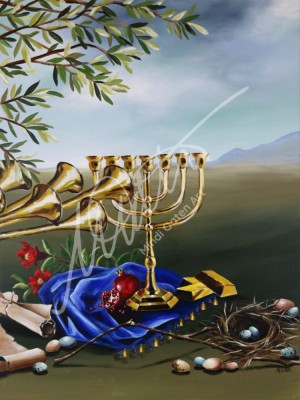
Becoming Desensitized to God's Word
Discover Jesus as: Royal Throne 2 Chronicles 25-27 Read on Bible Gateway (HCSB)
Lesson
Audio Only
Teaching Notes
INTRO
I hope as we continue to study the historical books, you will see it is profitable to look at and review the kings and prophets in Scripture. We have saw the deceit and conspiracy, and yet there are those whom God still used to bring light to the kingdom. The theme of 2 Chronicles is Royal Throne and refers to the establishment of God’s kingdom on earth through Jesus Christ. We continue to work on the establishment of His kingdom today through faith. In our study of 2 Chronicles 25—27, we’ll study three kings: Amaziah, Uzziah, and Jotham.
TEACHING
2 Chronicles 25:1-8: King Amaziah, the son of Joash, began his reign at the age of 25, and he reigned 29 years (v. 1). Amaziah did right in the sight of the Lord, but he did not have a perfect heart—he did not have complete belief in God and lacked the passion to walk out his calling completely (v. 2). Amaziah killed his father’s servants who took his father’s life (v. 3), however, based on the book of Moses, he did not kill their children. He knew the principles of his faith (v. 4). Amaziah then organized the men of Judah into groups and counted those who were 20 years or older, finding 300,000 choice soldiers (v. 5). Amaziah also hired 100,000 men from Israel, the northern kingdom (v. 6). Scripture does not state whether or not Amaziah made a political alliance with Israel, but a man of God (a prophet) told Amaziah God was not with Israel, and he would lose in battle if he took the Israelite soldiers with him (vv. 7-8).
What is God’s part in how all this played out? “God has the power to help” and the power “to make one stumble” (v. 8). What happens lies in the difference of obedience (or not) to what God has spoken.
2 Chronicles 25:9-27: Amaziah pointed out he already paid for the Israelite soldiers, but the man of God stated that God would give much more support than his paid army (v. 9). Therefore, Amaziah separated out the Israelite soldiers that sent them home, however they were angry with the nation of Judah because they would not receive the spoils from the war (v. 10). Amaziah led his army against Seir to victory (v. 11). Amaziah wanted to be obedient to God, but he, also, brought back the gods of the Seirites and worshipped them (v. 14). God’s anger was kindled by Amaziah’s actions and the declining faith in Judah (something we’ll see in all three of these chapters). God sent a prophet to ask Amaziah why he was seeking out the pagan gods who had no power when God gave them the victory (v. 15).
In anger and pride, Amaziah took advice (from his counselors, not God's prophets) and called for King Jehoash of Israel to meet with him (vv. 16-17). Amaziah tried to form an alliance with Jehoash which was rejected. This led to war, the defeat of Judah and Amaziah’s capture. He was eventually killed in Lachish (vv. 18-27).
2 Chronicles 26:1-23: Amaziah’s son Uzziah became the next king at the age of 16 and restored Judah, reigning 52 years (vv. 1-3). Uzziah did right in God’s sight, seeking God (v. 4). In spite of the fact Uzziah was a good king, there seemed to be a desensitizing of the people of what God expected. Uzziah sought God through Zechariah (not the prophet who has a book in the Old Testament); Uzziah prospered as long as he sought God's will (vv. 5-6). When he became successful, Uzziah also became arrogant and went into the temple and burned incense (v. 16). The priests told Uzziah he had no right to offer incense to the Lord because he was not a priest (vv. 17-18). Uzziah was angry, and leprosy struck him at that moment while he was still in the temple (vv. 19). God needs cooperation and obedience, not arrogance and pride. As a leper, Uzziah was removed from Jerusalem and lived out his days in quarantine (vv. 20-23).
2 Chronicles 27:1-14: Uzziah’s son Jotham became the next king at the age of 25 and reigned 16 years (v. 1). Jotham did what was right in the Lord and did not enter the temple as his father had done, yet the people acted corruptly (v. 2). He did right, but what was his normal? We have to have a baseline in the Word of God as a moral compass to know how to draw lines and be in balance with God. However, we too can become desensitized to God’s Word and His calling. We’re fooling ourselves if we believe we are not living in a desensitized world.
CLOSING
There was continual work of the kings that demonstrated a level of power. How that power was handled was significant. Power can lead to pride, idolatry, self-reliance and self-governance, lack of honor for leadership, and corruption in people.
John 10:10 states, “A thief comes only to steal and to kill and to destroy. I have come so that they may have life and have it in abundance.” We have to decide to whom we will be devoted and consecrated. The enemy continues to work. Who will you follow?
Questions
-
Amaziah started out doing right, but after defeating the Edomites, he brought their gods back, set them up as his gods, bowed down to them, and burned incense to them. Why do you think he forsook the Lord and worshipped these gods? Have you witnessed people in your life forsake the Lord and turn to other “gods”? If so, what did you do?
-
What was Amaziah’s response to the prophet the Lord sent to him (2 Chronicles 25:15–16)? Have you ever avoided being confronted with your sin because you weren’t willing to change? If so, what was the outcome?
-
2 Chronicles 26:5b says, as long as he sought the Lord, God prospered him. Do you think this verse could support someone with a “works-based” belief system? How would you refute that idea with other Scripture passages?
-
King Uzziah’s pride caused him to act corruptly and be unfaithful to the Lord. What was the outcome of his unfaithfulness (2 Chronicles 26:19)? Are consequences for unfaithfulness meant to punish us, or do they serve another purpose? What Scripture passage would you use to support your answer?
-
What did the Holy Spirit highlight to you in 2 Chronicles 25—27 through the reading or the teaching?

Daily Word
Laura Martin 2 Chronicles 26:15–16
“He made skillfully designed devices in Jerusalem to shoot arrows and catapult large stones for use on the towers and on the corners. So his frame spread even to distant places, for he was marvelously helped until he became strong. But when he became strong, he grew arrogant and it led to his own destruction. He acted unfaithfully against the LORD his God by going into the LORD’s sanctuary to burn incense on the incense altar.”
The Lord made King Uzziah of Judah very powerful, and his fame spread as far as Egypt. King Uzziah tore down walls, built cities, found victory in battle, and led a mighty army. A marvelous and strong leadership evolved into King Uzziah becoming arrogant. Consequently, he acted unfaithfully against God, which led to his own destruction. King Uzziah stopped depending on the Lord as he became strong in himself. His leadership crumbled, ultimately leading to his death.
From the moment you said yes to Jesus as your Savior and Lord, you were saved through faith, not by any works of your own. As you go through life with your eyes on Christ, your strength, success, and accomplishments come from the Lord alone. Although some people trust in the things of this world, as a follower of Christ, you trust only in the name of the Lord your God. The Lord says if you remain humble, He will lift you up in due time. Therefore, you do not need to exalt yourself. Don’t even waste time giving yourself credit. Honor the Lord and give thanks for His great faithfulness, strength, and might! No matter how powerful you become from the world’s perspective, may the Lord receive all the glory!
“He made skillfully designed devices in Jerusalem to shoot arrows and catapult large stones for use on the towers and on the corners. So his frame spread even to distant places, for he was marvelously helped until he became strong. But when he became strong, he grew arrogant and it led to his own destruction. He acted unfaithfully against the LORD his God by going into the LORD’s sanctuary to burn incense on the incense altar.”
—2 Chronicles 26:15–16
FURTHER SCRIPTURE
- Proverbs 16:5 — “Everyone with a proud heart is detestable to the Lord; be assured, he will not go unpunished.”
- Ephesians 2:8–9 — “For you are saved by grace through faith, and this is not from yourselves; it is God’s gift—not from works, so that no one can boast.”
- 1 Peter 5:6 — “Humble yourselves, therefore, under the mighty hand of God, so that He may exalt you at the proper time.”
Lesson and Daily Word
Each day has two parts: the Lesson and the Daily Word. Use these buttons to go from one to the other.
Teaching Notes and Questions
Next to the video, these tabs show the Teaching Notes and the Questions. Your answer to a question saves when you leave the answer box.
The Bible passage
This link opens the passage on Bible Gateway, and that gives the passage its tick. If you read it in your own Bible, tick it by hand in Progress.
Your progress on this lesson
A part ticks itself when you play the video or audio to the end, read the notes or the Daily Word to the end, or answer every question. You can also tick a part by hand here.
Downloads
Here you can save the video, the audio and the lesson as PDF files. Downloads do not count toward your progress.
Need help?
Use this button to send us a question or tell us about a problem. You can also take this tour again from there.