
Paul's Letters 1 Thessalonians
The Day Of The Lord
Discover Jesus as: Coming Lord 1 Thessalonians 5 Read on Bible Gateway (HCSB)
Lesson
Audio Only
Teaching Notes
INTRO
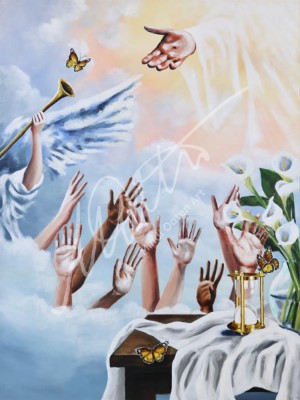
Yesterday, we only scratched the surface in talking about the rapture. Today, we’ll dig a little deeper. I’m not an expert to say that the rapture has to be pre-tribulation, mid-tribulation, or post-tribulation. The rapture is described in 1 Thessalonians 4:16-17. There will be an unbelievable heavenly party in the clouds when we are raised up to meet Jesus in the air—seems like it would be in the first heaven because we’re still in the earth’s atmosphere. This is the rapture. When will that happen? The Lord could come back at any given moment. This should not frighten us, but it should give us hope and drive us to tell others about Christ. Remember, our theme for 1 Thessalonians is Coming Lord. Please get ready; He is coming back.
TEACHING
1 Thessalonians 5:1: Why did Paul create this theological stir by saying they did not need anything written to them about the times and seasons? Paul talked about the rapture because they needed to get ready for it, but since they didn’t know when Jesus was coming back, they needed to walk out their sanctification. In Acts 1:7, Jesus told His followers, “It is not for you to know times or periods that the Father has set by His own authority.” Though they could not know when Jesus would come back, in the meantime, He gave them (and us) the power of the Holy Spirit (Acts 1:8). Scripture says that until all the Gentiles have a chance to hear the gospel, Jesus is not coming back. So we are holding Him back because we have not done what He commissioned us to do.
1 Thessalonians 5:2: When you think about the day of the Lord, what do you think of? In Genesis, there was some discussion that sometimes a day means twenty-four hours; sometimes a day actually means a whole week. It might not mean, instantly, everything takes place and unfolds in twenty-four hours. We have to recognize that God’s timetable is completely not on our clock—we can’t even grasp what that implies. But let’s talk about this day of the Lord mentality. Nelson’s Commentary says that there are two things implied: (1) we’ll see God’s judgment against sinful people, and (2) we’ll see God’s eternal reign over His people.1 The day of the Lord “is that time when God will judge the world and punish the nations. At the same time, God will prepare Israel for the return of Christ to earth to establish His kingdom.”2 The day of the Lord could imply Jesus’ second coming. When some people refer to the day of the Lord, they go to Jeremiah 30:7 and call this day, the time of Jacob’s trouble. Some people say the day of the Lord could be called the tribulation because as soon as Jesus comes, the tribulation starts. When the day of the Lord occurs, you can expect the birth of the kingdom to take place.3 The image of “the Day of the Lord will come just like a thief in the night” (v. 2b) is used by Jesus in Matthew 24:42-44, “you also must be ready, because the Son of Man is coming at an hour you do not expect.”
1 Thessalonians 5:3-7: The words “When they say” in this verse, refer to the unsaved, the unbelievers. Judgment is coming to those who don’t trust Christ (v. 3). But believers won’t be surprised because they are aware of His coming (v. 4). Believers are “sons of light and sons of the day” (v. 5) who “must stay awake and be serious” (v. 6). If you are functioning in drunkenness, then you won’t be prepared for His return (v. 7). For twenty centuries, we have been given the promise that the Lord could come back at any time.4 Peter wrote: “Dear friends, don’t let this one thing escape you: With the Lord one day is like a thousand years, and a thousand years like one day” (2 Peter 3:8). God is on a completely different calendar, so we have to live like Jesus could return any day. Several passages in Isaiah talk about the birthing pains. In Matthew 24:8, we’re told that birthing pains are the beginning of birth pains.
1 Thessalonians 5:8-11: We have to be constantly functioning in faith, hope, and love (v. 8). We put on the armor of faith by believing that God will show up and Jesus is the Messiah. We put love on our chests by exemplifying Christ and giving up our lives for others. We put on the helmet of the hope of salvation by knowing that He is coming back for us in this process. Wiersbe said, “It is time to wake up, clean up, and dress up.”5 Regardless of when the rapture happens, when we meet Him in the clouds, “we will live together with Him” (v. 10). It doesn’t matter if it happens before the tribulation, during the tribulation, or after the tribulation—we will be with Christ. If there’s a chance we’re going to have to go through tribulation, we need to be prepared for that.
1 Thessalonians 5:12-28: These verses talk about how to lead your family, how to integrate and partner with your family, and how to do this with the body of Christ.
Let’s review some information about the tribulation. Most people describe the tribulation as a seven year period when the Antichrist comes into play and initiates peace. For the first three and one-half years, it’s calm and good and the temple is rebuilt. In the middle of the seven years, the Antichrist says he is God. For the next three and one-half years, it’s all-out tribulation and wrath.
People who believe that the rapture is coming before the seven years of tribulation, cite 1 Thessalonians 1:10, which says Jesus rescues us from the coming wrath, and 1 Thessalonians 5:9, which says God did not appoint us to wrath. This pre-tribulation view says that if God did not appoint us to wrath, then we won’t have to go through the seven years of tribulation. Wiersbe takes this view because (1) it’s the nature of the church that we will not taste God’s wrath (John 5:24); and (2) the promise of Christ’s imminent return, instead of being an unknown time, would have a time line established by the signing of the peace treaty.6 One valid argument against this is that Christ suffered, and He allowed believers who suffered to trust in Him and glorify God.
Second Thessalonians 2:3 says, “[That day of the Lord] will not come unless the apostasy comes first and the man of lawlessness is revealed.” This verse says we have to see the Antichrist come into play. So, this verse would validate the mid-tribulation or post-tribulation or pre-wrath viewpoints of the rapture. The abomination of desolation (Matthew 24:15) takes place when the Antichrist reveals himself and claims to be God.
Revelation 6:16-17 implies that there are believers going through the tribulation, because they want to be hidden from the face of God and the wrath of the Lamb. These verses support the mid-tribulation and post-tribulation viewpoints. Revelation talks about seven seals that Jesus breaks open, and that God’s wrath is not poured out until the seventh seal.
Revelation 7:9 and 14 describe a great multitude standing before the throne and before the Lamb (v. 7). They were identified as “the ones coming out of the great tribulation” (v. 14). This comes after Revelation 6, and the sixth seal being opened, stating the day of wrath had come. Revelation 7 describes 144,000 who were sealed to go through the wrath and the rapture. The term “great tribulation” was language that Jesus used in Matthew 24:15 for the part of the tribulation that comes after the abomination of desolation. This supports the argument that the rapture takes place mid-tribulation or post-tribulation.
Matthew 24:29-31 says, “Immediately after the tribulation of those days . . . they will see the Son of Man coming . . . and they will gather His elect from the four winds.” Possibly verses 30-31 describe the rapture as coming after the tribulation. This is a great argument for a post-tribulation or pre-wrath view.
CLOSING
We don’t know if we’ll meet Christ pre-tribulation, mid-tribulation, or post-tribulation, but it should cause every one of us to get ready.
Earl Radmacher, Ronald B. Allen, and H. Wayne House, eds., Nelson’s New Illustrated Bible Commentary (Nashville: Thomas Nelson Publishers, 1999), p. 1580.
Warren Wiersbe, The Bible Exposition Commentary: New Testament (Colorado Springs, CO: David C. Cook, 1989), p. 723.
Wiersbe, p. 723.
Wiersbe, p. 723.
Wiersbe, p. 724.
Wiersbe, p. 725.
Questions
-
How will the day of the Lord come? In what two ways was the day of the Lord characterized in the Old Testament? (Isaiah 2:1-3; 11:1-9; 30:23-26; Joel 2:1-2; Amos 5:18-20; Zephaniah 1:14-17; Zechariah 14:1, 7-11)
-
How does Christ both unite and divide? (John 7:43; 9:16; 10:19; 1 Corinthians 1:10; Galatians 3:28; 1 Thessalonians 4:17)
-
In 1 Thessalonians 5:6, what did Paul mean by the word sleep? What should the believer in Christ be doing instead? (Romans 14:10–11; 1 Corinthians 3:11-15; 9:24-27; 2 Corinthians 5:10)
-
What has God not appointed for believers (Revelation 6:12-17)? What has He appointed for them instead (1 Thessalonians 1:10)? In light of these truths, does this spur you on to share your faith with others?
-
What three things did Paul say are God’s will for you in Christ Jesus? What five admonitions did Paul give relating to the Spirit and prophecies?
-
What did the Holy Spirit highlight to you in 1 Thessalonians 5 through the reading or the teaching?
-
What did the Holy Spirit highlight to you in 1 Thessalonians 5 through the reading or the teaching

Daily Word
Laura Martin 1 Thessalonians 5:5–8
“For you are all sons of light and sons of the day. We do not belong to the night or the darkness. So then, we must not sleep, like the rest, but we must stay awake and be serious. For those who sleep, sleep at night, and those who get drunk are drunk at night. But since we belong to the day, we must be serious and put the armor of faith and love on our chests, and put on a helmet of the hope of salvation.”
Jesus is returning. That is a fact. You just don’t know exactly when. Paul thought it would be in his lifetime. You may think it will be in your lifetime. The question to ask is . . . are you living as though Jesus could return today? You are called to live ready for His return. Are you walking in the light or the darkness? Are you awake or sleeping as a follower of Christ? Are you filled with the Spirit or drunk and unaware? Are you equipped for the battle that wages war around you? Paul made it pretty clear: Live in the light. Stay awake and be serious for Jesus. Put on the armor of faith. You are in a battle. It’s real, and it’s happening. If you had a houseguest arriving tonight, wouldn’t you get ready? The same is true for Christ’s return. Live ready!
How do you live ready? God longs for you to pursue what is good for one another. God’s will is for you to rejoice always, pray constantly, and give thanks in everything. As you prepare yourself for Jesus’ return, focus on these things: rejoicing, praying, and giving thanks. By doing so every day, you will be ready for His return and others will see the light of Christ in you. Live ready!
“For you are all sons of light and sons of the day. We do not belong to the night or the darkness. So then, we must not sleep, like the rest, but we must stay awake and be serious. For those who sleep, sleep at night, and those who get drunk are drunk at night. But since we belong to the day, we must be serious and put the armor of faith and love on our chests, and put on a helmet of the hope of salvation.”
— 1 Thessalonians 5:5–8
FURTHER SCRIPTURE
- Matthew 24:27 — “For as the lightning comes from the east and flashes as far as the west, so will be the coming of the Son of Man.”
- Romans 13:12 — “The night is nearly over, and the daylight is near, so let us discard the deeds of darkness and put on the armor of light.”
- 1 Thessalonians 5:16–18 — “Rejoice always! Pray constantly. Give thanks in everything, for this is God’s will for you in Christ Jesus.”
Lesson and Daily Word
Each day has two parts: the Lesson and the Daily Word. Use these buttons to go from one to the other.
Teaching Notes and Questions
Next to the video, these tabs show the Teaching Notes and the Questions. Your answer to a question saves when you leave the answer box.
The Bible passage
This link opens the passage on Bible Gateway, and that gives the passage its tick. If you read it in your own Bible, tick it by hand in Progress.
Your progress on this lesson
A part ticks itself when you play the video or audio to the end, read the notes or the Daily Word to the end, or answer every question. You can also tick a part by hand here.
Downloads
Here you can save the video, the audio and the lesson as PDF files. Downloads do not count toward your progress.
Need help?
Use this button to send us a question or tell us about a problem. You can also take this tour again from there.