
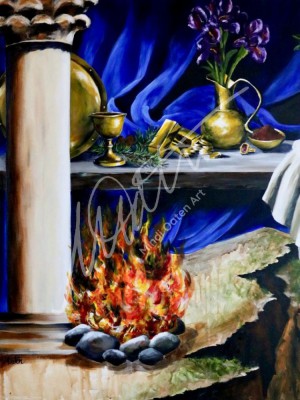
Solomon Sinned Against God
Discover Jesus as: Something Greater 1 Kings 11-12 Read on Bible Gateway (HCSB)
Lesson
Audio Only
Teaching Notes
INTRO
Yesterday, , we looked at how wealthy Solomon had become in both wisdom and money. Even the Queen of Sheba was made breathless when she saw his wisdom in person, but that all changed in 1 Kings 11 as the chapter describes the sad close to his brilliant reign. Solomon’s life was taken over by the sin of having many wives. He faced adversaries, things that had not been an issue earlier in his life, but became a problem later on. Wiersbe outlined chapter 11 with these divisions: “Solomon disobeyed God’s Word (vv. 1–8); Solomon ignored God’s warning (vv. 9–13); Solomon resisted God’s discipline (vv. 14–25); Solomon opposed God’s servant (vv. 26–43).”1Today, we will continue to look at Something Greater than Solomon.
TEACHING
1 Kings 11:1-8: Solomon Disobeyed God’s Word. Solomon loved many foreign women, and he knew what he did went against God’s instructions (Deuteronomy 7:1–3). His love of these women turned his heart from God, a warning God gave in Deuteronomy 17:17 (Proverbs 19:3). Besides the number of wives, Solomon married foreign women who worshipped other gods. Scripture is clear about not marrying unbelievers—do not yoke yourself with a nonbeliever. By marrying foreign women, Solomon went back into bondage of the world. Wiersbe states, “First, he was friendly with the world (James 4:4), then spotted by the world (James 1:27), and then he came to love the world (1 John 2:15–17) and conformed to the world (Romans 12:2).”2This is a slippery slope that a lot of us can slide down if we don’t keep our eyes on the Lord (vv. 1–3). When Solomon was old, he allowed his many wives to seduce him into worshipping other gods—gods whose worship included unspeakably violent and/or sexual acts (vv. 4–8).
1 Kings 11:9-13: Solomon Ignored God’s Warning. When we conform to the world, God always gives us another chance. Solomon ignored God’s warning and anger, and continued with his sin. Therefore, God said He would tear the kingdom away from Solomon’s son, leaving him only the tribe of Judah and the city of Jerusalem to continue the Davidic covenant. The rest of Israel would be given to His servant, Jeroboam.
1 Kings 11:14-15: Solomon Resisted God’s Discipline. The Lord raised enemies against Solomon. First, God raised up Hadad the Edomite. In 2 Samuel 8:13–14, David had his commander, Joab, kill every male in Edom. But Hadad had fled to Egypt as a small boy. Later, Pharaoh gave his wife’s sister to Hadad as his bride. When Hadad heard that both David and Joab were dead, he was ready to return to his own country (vv. 14–22). Then, the Lord raised up Rezon of Damascus as another enemy. Rezon had also fled from his master, the king of Zobah, and gathered an army. Rezon hated Israel and was Solomon’s enemy (vv. 23–25).
1 Kings 11:26-43: Solomon Opposed God’s Servant. Solomon saw Jeroboam was capable and put him in charge of all the laborers in the house of Joseph. Wiersbe explains Jeroboam was an Ephraimite and was placed over forced laborers who were from the tribes of Ephraim and Manasseh, while the people of Israel tired of Solomon’s forcing laborers, especially Jews, to do his work.3During that time, the prophet Ahijah came to Jeroboam on the road. Ahijah took the new cloak he was wearing and tore it into twelve pieces. Ahijah told Jeroboam to take ten pieces and explained God was going to tear the kingdom out of Solomon’s hands and give ten tribes to Jeroboam to rule (vv. 26–33). The prophet was releasing the word to Jeroboam that Solomon would lose his kingdom because Solomon had become friendly with the world. God explained Solomon’s son would keep part of the kingdom, a sign of His mercy for and promise to David (vv. 34–37). God then made the same promise to Jeroboam. If he walked in God’s ways, God would remain with him and his house would become a great dynasty (vv. 38–39.
Solomon didn’t like Jeroboam and tried to kill him. Jeroboam fled to Egypt and stayed until Solomon died. The last verses (vv. 41–43) give the closing data on Solomon’s reign. Solomon’s son Rehoboam became king after his father died. At the death of Solomon, his kingdom was split into two kingdoms:
Judah, the Southern Kingdom (the tribe of Judah and city of Jerusalem) under King Rehoboam
Israel, the Northern Kingdom (the ten tribes located in the north) under King Jeroboam
This all came to be because Solomon disobeyed the Lord.
CLOSING
Why was Solomon’s kingdom split up? Moses gave clear instructions to Jewish kings:
- The king must not acquire many horses (Deuteronomy 17:16). Solomon had 1,400 chariots and 12,000 horsemen (1 Kings 10:26).
- The king must not acquire many wives (Deuteronomy 17:17a). Solomon had 700 wives and 300 concubines (1 Kings 11:3).
- The king must not acquire excessive silver and gold (Deuteronomy 17:17b). Solomon had excessive amounts of gold, even gold drinking vessels and utensils, but no silver since it was worthless in comparison (1 Kings 10:21).
The Lord was angry with Solomon (1 Kings 11:9–11), so Solomon was not the one. Jesus, however, is the One:
Jesus did not have excessive silver and gold. He gave it all up so we might be rich (2 Corinthians 8:9).
Jesus did not have many horses, but used a borrowed donkey (John 12:14).
Jesus did not have many wives, but only had one bride—the Church (Ephesians 5:25–27).
Zechariah 9:9 puts this all together of Something Greater: “Rejoice greatly, Daughter Zion! Shout in triumph, Daughter Jerusalem! Look, your King is coming to you; He is righteous and victorious, humble and riding on a donkey, on a colt, the foal of a donkey.” All of this is describing the coming King—Jesus!”
Warren W. Wiersbe, The Exposition Bible Commentary: 1 Kings (Colorado Springs: David C. Cook, 2003), pp. 439–443.
Wiersbe, p. 441.
Wiersbe, p. 443.
Questions
-
In 1 Kings 11:14, God began to raise up adversaries against Solomon. Do you believe God raises up adversaries against us when we seek other gods in our own lives? If so, can you think of a time when this happened to you?
-
In 1 Kings 11:31–32, why did God save one tribe for the sake of David? (2 Samuel 7:12–13; Matthew 1:1–17)
-
Why do you think King Rehoboam asked for advice from the elders and then didn’t follow it? Has there ever been a time when you asked for advice and didn’t follow it? If so, why not?
-
What would make Jeroboam think the people of Israel would kill him just because they went to the house of the Lord in Jerusalem to worship? (1 Kings 12:26–27)
-
1 Kings 12:28–31 speaks of Jeroboam returning to idol worship. Why do you believe he did this? Do we still do this today? Who and/or what are the idols in your life?
-
In 1 Kings 12:33, do you think there was any significance to the date Jeroboam instituted a feast for the sons of Israel or in that he “devised it in his own heart? (Jeremiah 17:9; Matthew 12:34)
-
What did the Holy Spirit highlight to you in 1 Kings 11—12 through the reading or the teaching?

Daily Word
Laura Martin 1 Kings 11:3–4
“He had 700 wives who were princesses and 300 concubines, and they turned his heart away from the LORD. When Solomon was old, his wives seduced him to follow other gods. He was not completely devoted to Yahweh his God, as his father David had been.”
FURTHER SCRIPTURE
- Matthew 7:13–14 — “Enter through the narrow gate. For the gate is wide and the road is broad that leads to destruction, and there are many who go through it. How narrow is the gate and difficult the road that leads to life, and few find it.”
- Romans 12:2 — “Do not be conformed to this age, but be transformed by the renewing of your mind, so that you may discern what is the good, pleasing, and perfect will of God.”
- 1 John 2:27 — “The anointing you received from Him remains in you, and you don’t need anyone to teach you. Instead, His anointing teaches you about all things and is true and is not a lie; just as He has taught you, remain in Him.”
Lesson and Daily Word
Each day has two parts: the Lesson and the Daily Word. Use these buttons to go from one to the other.
Teaching Notes and Questions
Next to the video, these tabs show the Teaching Notes and the Questions. Your answer to a question saves when you leave the answer box.
The Bible passage
This link opens the passage on Bible Gateway, and that gives the passage its tick. If you read it in your own Bible, tick it by hand in Progress.
Your progress on this lesson
A part ticks itself when you play the video or audio to the end, read the notes or the Daily Word to the end, or answer every question. You can also tick a part by hand here.
Downloads
Here you can save the video, the audio and the lesson as PDF files. Downloads do not count toward your progress.
Need help?
Use this button to send us a question or tell us about a problem. You can also take this tour again from there.