

Reasons to Fast
Discover Jesus as: Son of David 1 Chronicles 10 Read on Bible Gateway (HCSB)
Lesson
Audio Only
Teaching Notes
INTRO
I find it humbling that you have allowed Revive School to enter your life every day. We’re now three-fourths of the way through the first year of this study. I have a request for you. Would you take a picture of where you study, where you watch the video or listen to the audio, and send it to us at info@reviveSchool.org? Our team would love to see that. You don’t have to say anything. I’m always intrigued to see where people spend time with the Lord. Chronicles has been a tough study for us as well, so your pictures would also encourage us.
Let’s briefly review. The nation of Judah had sinned against God. The nation was conquered and the people exiled to Babylon. In Chronicles, the people had finally been freed from captivity and were returning to Judah and Jerusalem. In the first nine chapters of 1 Chronicles, the genealogies of the twelve tribes were recorded—to remind the people of their sin and demonstrate that God’s plan was still intact and His promises would be fulfilled. Yesterday, we looked at how the people were returning in groups (the Israelites, the priests, the Levites, and the temple servants) to reinstate where they were in the Lord.
TEACHING
1 Chronicles 10:1–6: Verse 1 describes the massacre of Israel’s men on Mount Gilboa. In the massacre, Saul and his sons Jonathan, Abinadab, and Malchishua were all killed (v. 2). In 1 Chronicles 8, we read that Saul had four sons. The fourth son (Esh-baal) is listed in 1 Chronicles 9:39. In 2 Samuel 2:8, the fourth son is called Ish-bosheth, meaning “man of shame,” which was possibly changed since Esh-baal didn’t die in battle.
Saul was severely wounded by an arrow, so he asked his armor-bearer to use his sword to kill him before the Philistines could finish his death (vv. 3-4a). However, when his armor-bearer refused, Saul fell on the sword and killed himself (v. 4b). When the armor-bearer saw Saul die, he killed himself with the same sword (v. 5). In verse 6, the chronicler proclaimed that Saul’s whole house died.
Did Saul really trust the Lord if he felt he had to take his own life? MacArthur stated, “Saul’s suicide is the ultimate expression of his faithlessness towards God at this moment in his life.”1Suicide was a rare occurrence in the Old Testament (2 Samuel 17:23; 1 Kings 16:18). God can always redeem us from anything we’ve experienced. Suicide is not of God. We always have hope!
1 Chronicles 10:7-10: When those in the valley below the battle heard that Saul and his sons were dead, they fled from their cities. The Philistines then moved into the cities and settled there (v. 7). The Philistines found the bodies of Saul and his sons (v. 8). They stripped Saul, cut off his head, and sent news throughout the land that they had conquered the Israelites (v. 9). They placed his armor in the temple of their gods and hung his skull in the temple of the god Dagon (v. 10). The temple of Dagon was where the Philistines had placed the ark of the covenant they stole from the Israelites one hundred years earlier.2
1 Chronicles 10:11–12: The brave men of Jabesh-gilead heard what had happened to the bodies of Saul and his sons, so they went and retrieved the bodies. They buried the bones under an oak tree and then fasted for seven days to mourn their deaths (1 Samuel 31:12-13).
1 Chronicles 10:1314: Saul died because he had been unfaithful to the Lord. He had even consulted a medium, an act that was punishable by death (Leviticus 20:27) and hadn’t consulted the Lord. At his death, Saul’s kingdom was turned over to David. God allowed Saul to kill himself for his disobedience and unfaithfulness. Because of Saul’s actions, God turned His ear and would not listen to the cries of Saul (Jeremiah 7:13-16). Remember, Saul was under the old covenant, but, praise God, we are under the new covenant. It doesn’t matter if we’ve consulted a medium or been disobedient because we can repent and find forgiveness of sin through Jesus Christ.
CLOSING
Blogger Kristen Feole gives three reasons why believers don’t fast: (1) fear, (2) ignorance, and (3) rebellion. But she emphasizes, “Fasting prepares you for the work God has ordained for you.”3What are the reasons to fast?
- To prepare for ministry (Matthew 4:1-17; Mark 1:12-13)
- To seek God’s wisdom (Acts 14:23)
- To show grief (Nehemiah 1:1-4)
- To seek deliverance or protection (Ezra 8:21-23)
- To repent (Jonah 3:6-10)
- To gain victory (Judges 20:26)
- To worship God (Luke 2:36-38)
Bill Bright (founder of Campus Crusade Ministries) has fasted often in his life. He says that fasting restores him to his first love of Jesus Christ even while it humbles him and reveals his true spiritual condition. He says it quickens God’s Word in his heart, increases his prayer life, and brings about personal revival.4Fasting costs nothing, and yet it costs everything. When the Israelites were waiting for their new king, they fasted. I believe this is a prophetic word for us as well.
John MacArthur, The MacArthur Bible Commentary (Nashville: Thomas Nelson Publishers, 2005), p. 347.
Earl Radmacher, Ronald B. Allen, and H. Wayne House, eds., Nelson’s New Illustrated Bible Commentary (Nashville: Thomas Nelson Publishers, 1999), p. 506.
Kristen Feole, Why Should I Fast? Seven Examples of Fasting in the Bible; available at https://www.faithgateway.com/why-should-i-fast-7-examples-fasting-bible/#.W6qPW34pBPM.
Bill Bright, 7 Basic Steps to Successful Fasting & Prayer (Wayne, NJ: New Life Publications, 1995), n.p..
Questions
-
What was the name of Saul’s son who was not killed along with his brothers (1 Chronicles 8:33)? How was he killed? (2 Samuel 4:5-7)
-
What happened with the Israelites when King Saul was killed? Do you see a comparison with this act and when Jesus was arrested and killed? (Mark 14:27)
-
What were some of Saul’s sins? How many people, if any, were affected by Saul’s sins? Do you ever think about how your sin effects more than just you?
-
Why did the mighty men of Jabesh-Gilead treat Saul’s body with honor? (1 Samuel 11:1-11)
-
What did the Holy Spirit highlight to you in 1 Chronicles 10 through the reading or the teaching?
Daily Word
Laura Martin 1 Chronicles 10:13–14
“Saul died for his unfaithfulness to the LORD because he did not keep the LORD’s word. He even consulted a medium for guidance, but he did not inquire of the LORD. So the LORD put him to death and turned the kingdom over to David son of Jesse.”
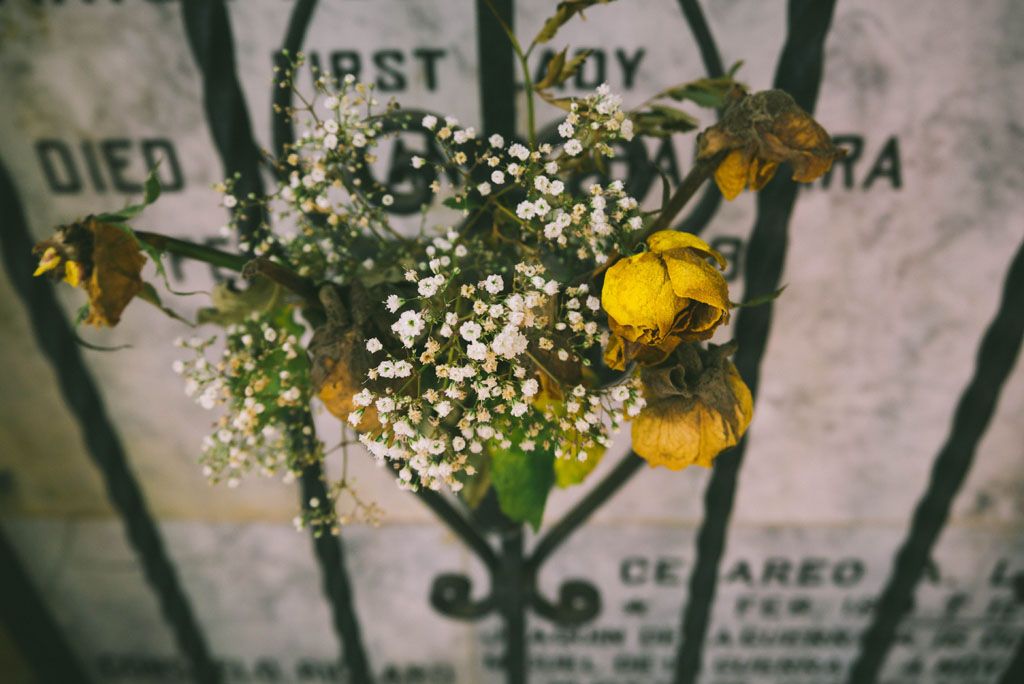
In just a few sentences, the chronicler summarizes King Saul’s life for the people of Israel. It’s like they wrote a eulogy of Saul’s life.
As you read this summary of Saul’s life, think about what your eulogy would be. If your life ended tomorrow, how would people describe you in a few sentences? Are you living your life the way you hope to be remembered? Live your life with no regrets. Don’t hold back. Don’t wait for tomorrow. Be who the Lord created you to be. Go and do the thing on your heart you’ve wanted to do but just haven’t yet. Reach out to that friend. Forgive that person. Have that party. Go after that career change. Stop the busy schedule, and spend your day in solitude with Jesus. Just do it! As you do, trust in the Lord with all your heart, and follow Him. Let go of the fear, and live in faith. Walk humbly with your God. Jesus will hold you in His loving hands. Go for it!
“Saul died for his unfaithfulness to the Lord because he did not keep the Lord’s word. He even consulted a medium for guidance, but he did not inquire of the Lord. So the Lord put him to death and turned the kingdom over to David son of Jesse.”
—1 Chronicles 10:13–14
FURTHER SCRIPTURE
- Psalm 118:24 — “This is the day the Lord has made; let us rejoice and be glad in it.”
- Psalm 119:73–74 — “Your hands made me and formed me; give me understanding so that I can learn Your commands. Those who fear You will see me and rejoice, for I put my hope in Your word.”
- Micah 6:8 — “Mankind, He has told you what is good and what it is the Lord requires of you: to act justly, to love faithfulness, and to walk humbly with your God.”
Lesson and Daily Word
Each day has two parts: the Lesson and the Daily Word. Use these buttons to go from one to the other.
Teaching Notes and Questions
Next to the video, these tabs show the Teaching Notes and the Questions. Your answer to a question saves when you leave the answer box.
The Bible passage
This link opens the passage on Bible Gateway, and that gives the passage its tick. If you read it in your own Bible, tick it by hand in Progress.
Your progress on this lesson
A part ticks itself when you play the video or audio to the end, read the notes or the Daily Word to the end, or answer every question. You can also tick a part by hand here.
Downloads
Here you can save the video, the audio and the lesson as PDF files. Downloads do not count toward your progress.
Need help?
Use this button to send us a question or tell us about a problem. You can also take this tour again from there.